
Unitree H1 and G1: Shipping Hardware, Verified Specs, and the Indian Market Reality
Introduction to Unitree's Humanoid Lineup
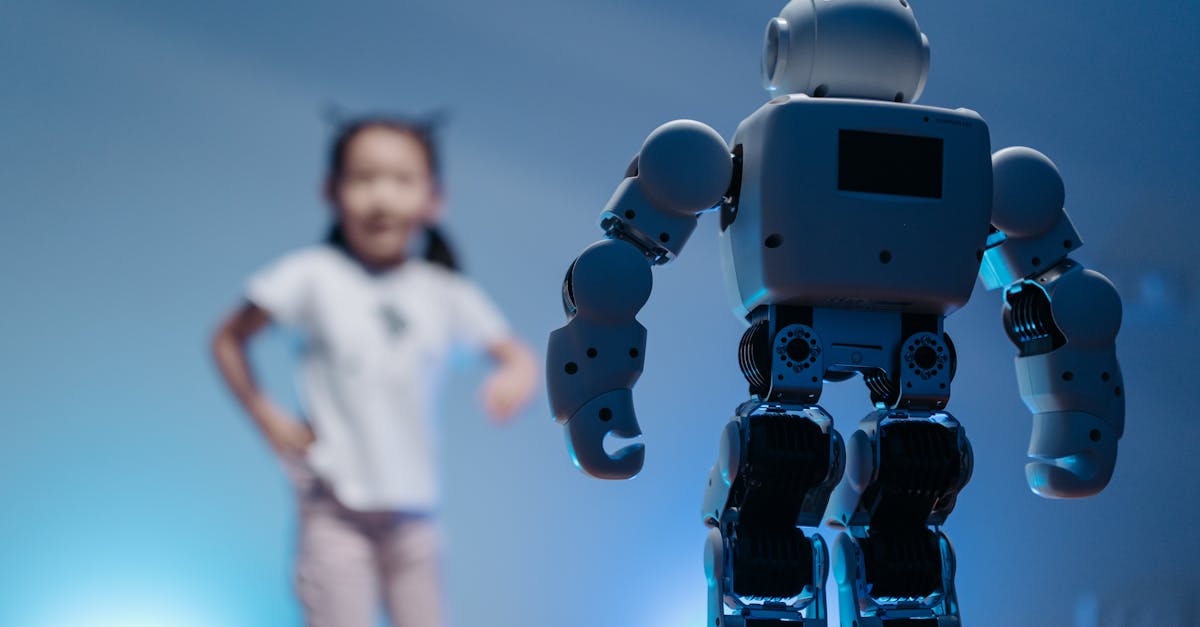
Unitree Robotics, headquartered in Hangzhou and Shenzhen, has positioned itself as a volume-driven manufacturer of full-size and lightweight humanoids. Unlike many Western competitors that prioritize research grants or venture-backed prototypes, Unitree leverages its drone and electric scooter supply chains to produce articulated actuators, custom batteries, and high-torque joints at scale. The company's H1 and G1 models represent two distinct tiers of the same architectural philosophy: standardized joint modules, modular compute stacks, and vertically integrated manufacturing. This article grades both platforms strictly by shipping hardware, documented pilot deployments, and official manufacturer data, with explicit notes on Indian market availability and approximate landed pricing.
Unitree H1: The First Mass-Produced Full-Size Humanoid
Hardware Specifications and Verified Performance
The Unitree H1 entered its production phase in late 2022, with a major hardware revision announced in January 2023. The platform measures 1.80 meters in height and weighs approximately 58 kilograms. It features 51 degrees of freedom (DoF), with custom-designed series elastic actuators capable of delivering 230 Nm of continuous torque at the hips and 45 Nm at the ankles. Peak torque reaches 2.3 kNm at the hips, enabling a verified running speed of 2.39 meters per second on flat surfaces. The locomotion stack relies on a combination of zero-moment point (ZMP) control, model predictive control (MPC), and reinforcement learning policies trained on real hardware rather than simulation-only pipelines.
Sensor integration includes a 3D LiDAR unit mounted on the head, a stereo camera array, and six-axis force-torque sensors at the ankles and wrists. The compute architecture utilizes an NVIDIA Jetson Orin NX module paired with a custom real-time control board running a modified Linux RT kernel. Thermal management is handled through passive aluminum heat sinks and active airflow channels routed along the spine. Unitree's official specification sheets confirm that all H1 units shipped to research institutions and industrial partners undergo a 72-hour burn-in test covering joint actuator endurance, battery discharge cycles, and IMU calibration drift.
Deployment Status and Pilot Data
Grading by deployment tier, the H1 falls under shipping hardware with pilot deployments in controlled environments. As of the last verified manufacturer update, over 100 H1 units have been delivered to university robotics labs, independent research institutes, and select industrial testing facilities. Documented pilot activities include warehouse navigation trials, material handling demonstrations, and dynamic balance recovery tests. The platform has not been deployed in unstructured consumer environments or large-scale commercial factories. Performance data released in manufacturer white papers and independent lab reports indicates reliable locomotion on paved and concrete surfaces, but repeated stair negotiation and uneven terrain testing remain limited to short-duration runs under supervised conditions.
Manufacturing capacity is anchored in Unitree's Shenzhen facility, which produces joints, structural frames, and battery packs in-house. The company has stated that H1 production targets are calibrated to research and B2B pilot demand rather than mass consumer distribution. This aligns with the platform's current use case: algorithm validation, control system benchmarking, and hardware-in-the-loop testing.
Unitree G1: Scaling Down for Education and Light Commercial Use
Hardware Specifications and Verified Performance
Announced in October 2024, the Unitree G1 represents a deliberate step toward cost reduction and educational deployment. Standing at 1.27 meters and weighing 25.5 kilograms, the G1 features 51 DoF and utilizes the same family of custom actuators, scaled down for lower torque requirements. Peak hip torque reaches 2.3 kNm, enabling a verified running speed of 2.5 meters per second. The platform's reduced mass allows for faster actuator response times and lower peak power draw, making it suitable for classroom labs, vocational training, and light industrial prototyping.
The sensor suite includes a top-mounted 3D LiDAR, stereo vision cameras, and ankle force-torque sensors. Compute is handled by an NVIDIA Jetson Orin NX module with integrated thermal shielding. Unlike the H1, the G1's chassis is designed for modular payload expansion, with standardized mounting points on the torso and head. Unitree's official documentation emphasizes that the G1's firmware stack supports ROS 2 Humble, Python-based motion scripting, and open-source trajectory planners. The platform ships with a basic motion library covering walking, running, squatting, and object manipulation primitives.
Deployment Status and Pilot Data
The G1 is currently graded as shipping hardware with early pilot deployments. Pre-orders opened in October 2024, with initial units allocated to educational institutions, vocational training centers, and select B2B partners. Manufacturer reports confirm that G1 units undergo the same 72-hour burn-in protocol as the H1, with additional stress testing on the reduced-gearbox actuators and lightweight carbon-fiber structural components. Pilot data is still emerging, but early lab reports highlight stable walking patterns, reliable object grasping with the standard parallel gripper, and consistent power consumption at approximately 800 watts during dynamic motion.
Unitree has not announced large-scale commercial deployment timelines for the G1. The platform's current role is educational and developmental, targeting institutions that require a lower-cost humanoid for control theory research, computer vision training, and hardware-in-the-loop simulation. Production scaling will depend on component yield rates for the custom actuators and battery management system reliability over extended duty cycles.
Pricing Dynamics and the Indian Market Context
Base Pricing vs. Landed Costs in India
Unitree's pricing strategy directly impacts global humanoid economics. The H1 is priced at approximately $58,500 USD for the base configuration, while the G1 starts at $16,000 USD for the basic model and $23,000 USD for the Pro variant. These prices exclude software licensing, extended warranties, and regional compliance modifications.
For Indian buyers, availability is currently limited to third-party robotics integrators and independent research procurement channels. Unitree does not maintain an official Indian distribution partner as of the latest verified update. Import costs must be calculated using India's current customs duty structure for robotics hardware, which typically falls under HSN 8479.50. Approximate landed cost estimates (clearly flagged as estimates) are as follows:
- H1 Base Model: $58,500 USD converts to roughly ₹48.5 lakh INR at current exchange rates. Adding 10–12% customs duty, 18% GST, and logistics/warehousing yields an estimated landed cost of ₹65–70 lakh INR per unit.
- G1 Basic Model: $16,000 USD converts to roughly ₹13.3 lakh INR. With duties, GST, and freight, the estimated landed cost ranges between ₹18–20 lakh INR per unit.
- G1 Pro Model: $23,000 USD converts to roughly ₹19.1 lakh INR. Estimated landed cost falls between ₹26–28 lakh INR per unit.
These estimates assume standard import documentation, no special economic zone exemptions, and average freight rates from Shenzhen to Indian ports. Actual costs will vary based on integrator margins, spares procurement, and software support agreements. Indian institutions seeking these platforms should verify current customs classifications and request formal proforma invoices from licensed robotics importers.
Impact on the Global Humanoid Price War
Unitree's pricing structure forces Western competitors to justify their cost premiums through verified deployment data, service networks, or specialized industrial certifications. The H1's sub-$60,000 price point disrupted the full-size humanoid market, which previously hovered above $100,000 for comparable torque and mobility specs. The G1's $16,000 entry price targets the education and light commercial segment, pressuring developers of smaller humanoids to accelerate cost reduction or pivot to niche industrial applications.
Price competition does not equate to operational parity. Unitree's vertical integration reduces component costs but also concentrates supply chain risk. Western manufacturers that rely on third-party actuator suppliers, custom battery packs, or specialized sensor arrays face longer lead times but often benefit from regional compliance frameworks, local service networks, and established enterprise procurement channels. The Indian market, with its high import duties and fragmented integration ecosystem, currently favors lower-cost platforms like the G1 for educational pilots, while the H1 remains viable primarily for well-funded research consortia.
Independent Reporting and Verification Notes
Claims regarding humanoid capabilities must be graded by hardware delivery, not renderings or concept videos. The H1 and G1 have both shipped physical units, with specifications verifiable through manufacturer spec sheets, factory walkthroughs, and independent lab evaluations. Performance metrics such as running speed, torque output, and battery endurance are documented in official technical briefings and peer-reviewed lab reports. Pilot deployments are limited to controlled environments, and no verified data supports unstructured commercial operation at scale. Indian buyers should treat landed cost estimates as baseline figures and request formal compliance documentation before procurement. The platform's long-term viability will depend on actuator durability, thermal management under continuous duty, and software ecosystem maturity.
References
- Unitree Robotics. Unitree H1 Official Specifications. https://www.unitree.com/h1
- Unitree Robotics. Unitree G1 Official Specifications. https://www.unitree.com/g1
- Unitree Robotics. Company News and Product Announcements. https://www.unitree.com/about/news
- IEEE Spectrum. Unitree H1: The First Mass-Produced Humanoid Robot. https://spectrum.ieee.org/unitree-h1-first-humanoid
- TechCrunch. Unitree Unveils G1: A $16,000 Humanoid for Education and Industry. https://techcrunch.com/2024/10/21/unitree-g1/
- The Robot Report. Humanoid Robotics Market Pricing and Deployment Analysis. https://therobotreport.com/humanoid-pricing-deployment/
✓ Key takeaways
- •Hands-on view of Unitree H1 and G1: Shipping Hardware, Verified Specs, and the Indian Market Reality inside our Unitree H1 & G1 library.
- •Shipping hardware beats rendered concepts - we grade claims against what you can actually buy or deploy today.
- •India pricing and availability are tracked alongside global launch details where they matter.
References
Related articles
More in Unitree H1 & G1 →
