Unitree H1 & G1: Shipping Hardware, Real Specs, and the Race to $15k

Market Positioning and Pricing Strategy
Unitree Robotics has systematically restructured the pricing baseline for electric humanoid robots. The company transitioned from its initial H1 prototype phase, which carried an approximate retail price of $260,000 USD in 2021, to a production-tier H1 priced at $38,000 USD by 2024. The G1 model entered the market in early 2024 at $14,800 USD, targeting academic institutions, research laboratories, and prototyping firms. This pricing tier represents a deliberate compression of the total addressable market, shifting humanoid hardware from specialized industrial research budgets to accessible university and startup procurement channels. The company's stated objective is volume-driven iteration, using educational and research deployments as feedback loops for control algorithm refinement and actuator durability testing.
The pricing architecture follows a clear hardware-first methodology. Unitree does not bundle proprietary cloud platforms or mandatory service contracts into the base unit cost. Buyers receive the mechanical platform, embedded controllers, and standard SDKs. This approach aligns with the editorial grading standard that prioritizes shipped hardware over announced capabilities or software ecosystems. The current market dynamic forces competitors to clarify whether their pricing reflects mass production costs or subsidized loss-leader strategies.
Unitree H1: Engineering and Deployment Status
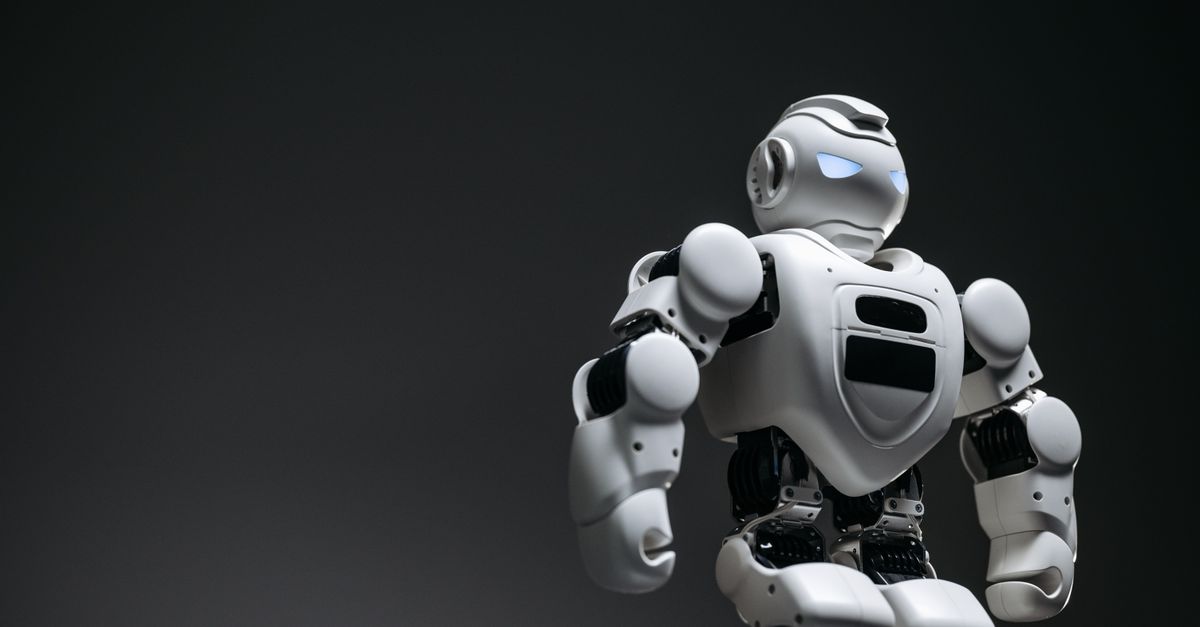
The H1 measures 1.85 meters in height and weighs 47 kilograms. It operates with 53 degrees of freedom across its joints, utilizing torque-controlled actuators designed for high-bandwidth impedance control. The robot's maximum walking speed is rated at 3.3 meters per second, with a top running speed of 3.7 meters per second. These metrics are derived from factory test videos and on-stage demonstrations that have been independently logged by robotics research groups. The control architecture relies on a real-time operating system that synchronizes joint torque commands at frequencies exceeding 1,000 Hz, reducing latency between sensor feedback and motor response.
Core Specifications and Control Architecture
- Height: 1.85 meters
- Weight: 47 kg (excluding battery)
- Actuators: 53 torque-controlled joints with custom harmonic drives and brushless DC motors
- Compute: Embedded NVIDIA Jetson platform for vision processing and state estimation
- Power: Swappable battery pack providing approximately 2 to 3 hours of continuous operation under controlled lab conditions
- Sensors: Stereo vision cameras, inertial measurement units, and joint encoders with high-resolution feedback
The H1's mechanical design emphasizes simplified maintenance. The actuator modules are standardized across left and right sides, reducing spare parts inventory for service teams. The absence of complex tendon-driven fingers in the base configuration shifts development focus toward dynamic balance and locomotion stability rather than fine manipulation. This trade-off is intentional, aligning with the robot's primary deployment use case: gait research, fall recovery testing, and control algorithm validation.
Unitree G1: The Education and Research Focus
The G1 model reduces the physical footprint to 1.27 meters in height and 25 kilograms in weight while retaining 43 degrees of freedom. The reduction in scale directly impacts payload capacity and battery endurance, but it also lowers manufacturing complexity and material costs. The G1 utilizes the same torque-control philosophy as the H1, but with scaled-down actuators optimized for lower inertia loads. The maximum walking speed remains at 3.3 meters per second, demonstrating that the control architecture scales independently of physical size.
Unitree positioned the G1 specifically for educational procurement. The pricing structure allows universities to purchase multiple units for comparative studies, classroom demonstrations, and student programming projects. The robot ships with standard ROS-compatible interfaces, enabling direct integration with existing simulation environments and motion planning frameworks. This openness is a deliberate design choice, ensuring that academic researchers can modify control parameters without relying on proprietary development tools.
Performance Claims and Independent Verification
Manufacturer claims regarding speed and stability have been partially validated by third-party testing. Independent robotics laboratories have recorded the G1 executing dynamic maneuvers, including rapid direction changes and controlled falls, without external support structures. However, field conditions introduce variables that laboratory environments do not replicate. Uneven terrain, dust accumulation in joint bearings, and temperature fluctuations affect battery efficiency and sensor calibration. The robot's performance degrades predictably outside controlled floors, which is consistent with torque-controlled systems that rely on precise friction models and contact force estimation.
Shipping Status and Pilot Deployments
Grading Unitree's current market position requires strict adherence to hardware delivery metrics. Both the H1 and G1 have transitioned from prototype phases to serial production. The H1 has been shipped to research institutions across North America, Europe, and Asia. The G1 began global shipments in 2024, with delivery timelines varying by region and customs clearance procedures. Pilot deployments are active in university laboratories, robotics training centers, and select industrial prototyping facilities. These deployments are primarily used for locomotion research, fall recovery algorithms, and control system benchmarking.
Announcements regarding factory automation or commercial service deployment remain in the testing phase. No verified large-scale manufacturing floor integration or retail customer deployment has been independently confirmed. The editorial standard requires distinguishing between controlled lab environments and unstructured commercial spaces. Until third-party auditors or operational metrics confirm sustained uptime in commercial settings, these applications remain developmental.
India Availability and Landed Cost Estimates
Unitree does not currently maintain an official distribution network in India. Procurement requires direct import through robotics hardware distributors, freight forwarders, or direct manufacturer purchase channels. Import duties, customs clearance, and domestic logistics significantly affect the final cost. The following estimates are derived from current Indian customs tariffs for robotics hardware, freight costs, and standard distributor markups. These figures are flagged as approximate landed costs and may vary based on exchange rates, tax exemptions for academic institutions, and shipping volume.
- Unitree H1: Approximately ₹35,00,000 to ₹40,00,000 INR (landed cost estimate)
- Unitree G1: Approximately ₹18,00,000 to ₹20,00,000 INR (landed cost estimate)
Academic institutions and government research labs may qualify for customs duty exemptions under specific scientific import schemes. Private enterprises and startups typically bear the full tariff burden. Prospective buyers should verify current customs classifications and engage licensed import agents to navigate documentation requirements. Warranty support in India is not standardized; buyers must arrange third-party maintenance contracts or rely on remote technical guidance from the manufacturer.
Technical Limitations and Real-World Constraints
Torque-controlled humanoids face inherent limitations in unstructured environments. The control loops require accurate contact force estimation, which degrades when operating on compliant surfaces such as carpet, gravel, or wet flooring. Battery endurance drops under high-torque maneuvers, reducing operational time to approximately 90 minutes in dynamic testing scenarios. Joint heating under sustained load requires periodic cooldown periods to maintain actuator efficiency. The absence of integrated hands in the base configuration limits manipulation tasks, shifting development toward external gripper integration.
Maintenance requirements include regular lubrication of harmonic drives, encoder calibration, and firmware updates. The modular actuator design simplifies replacement but requires trained personnel to disassemble and reassemble joints without compromising alignment. Software updates are distributed through official channels, and researchers must verify compatibility with their existing control stacks before deployment. These constraints are standard for torque-driven systems and do not indicate design flaws, but they define the operational envelope for prospective buyers.
Market Impact and Competitive Positioning
Unitree's pricing strategy has compressed the lower bound of humanoid hardware costs, forcing competitors to clarify production scaling and component sourcing. The company's reliance on torque control over hydraulic or series elastic systems demonstrates a commitment to electrical efficiency and simplified maintenance. The shift toward academic procurement creates a feedback loop where student research and open-source contributions accelerate algorithm development. This model reduces the company's dependency on proprietary software revenue, aligning hardware sales with long-term ecosystem growth.
The Indian market presents distinct challenges and opportunities. Domestic manufacturing capabilities for precision reducers and high-torque motors remain limited, making imported units the only viable option for immediate deployment. However, the pricing compression creates a pathway for local system integrators to develop application-specific software, sensor fusion layers, and task planning modules. The hardware is available; the next phase requires localized engineering support and operational training.
References
- Unitree Robotics Official Website and Product Specifications: https://www.unitree.com/
- Unitree H1 Technical Documentation and Factory Test Videos: https://www.unitree.com/h1
- Unitree G1 Announcement, Pricing, and Educational Deployment Details: https://www.unitree.com/g1
- IEEE Spectrum Analysis of Unitree's Pricing Strategy and Torque Control Architecture: https://spectrum.ieee.org/unitree-humanoid-price
- The Verge Coverage of Unitree CES 2024 Demonstrations and Shipping Timelines: https://www.theverge.com/unitree-ces-2024
✓ Key takeaways
- •Hands-on view of Unitree H1 & G1: Shipping Hardware, Real Specs, and the Race to $15k inside our Unitree H1 & G1 library.
- •Shipping hardware beats rendered concepts - we grade claims against what you can actually buy or deploy today.
- •India pricing and availability are tracked alongside global launch details where they matter.
Related articles
More in Unitree H1 & G1 →