Vacuum-Suction Window-Cleaning Robots: Engineering, Shipping Hardware, and India Market Reality
Technology Architecture & Suction Mechanism
Consumer window-cleaning robots operate on a singular mechanical principle: controlled vacuum-suction. Unlike magnetic or roller-based systems, these devices rely on brushless DC motors driving centrifugal impeller fans to generate negative pressure against smooth glass surfaces. The airflow rate, measured in cubic meters per hour (m³/h), dictates the holding force. Manufacturers typically specify suction power between 2,000 and 4,000 m³/h, though real-world static hold capacity depends on seal integrity, surface roughness, and ambient temperature.
Safety architecture is non-negotiable in this category. Every shipping unit must include a dual-fall-protection system: a physical tether anchored to the interior, and an internal lithium-polymer or lithium-ion backup battery. If mains power fails or the primary airflow sensor detects pressure drop, the backup battery engages a secondary impeller to maintain holding force for 10 to 20 minutes, allowing the user to retrieve the unit. Units lacking this redundancy fail basic CE and FCC safety certifications and should not be deployed on elevated glazing.
Vacuum-Suction & Safety Protocols
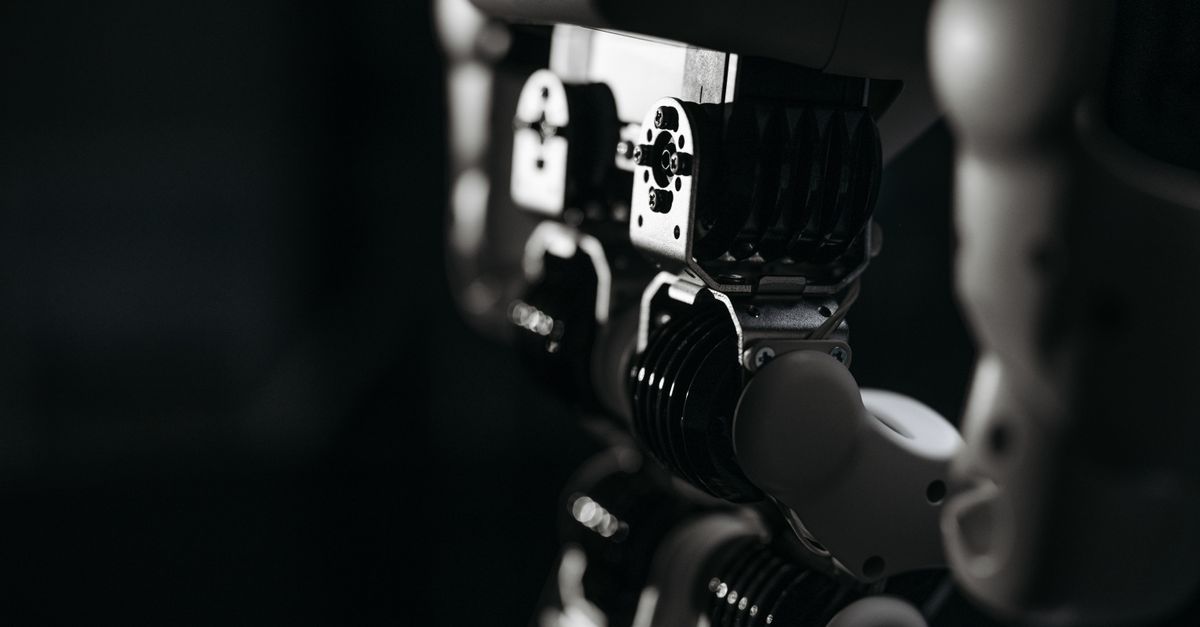
- Primary motor: Brushless DC (BLDC) impeller fan, typically 150W to 300W input power.
- Sensor array: Airflow pressure sensors, gyroscope for tilt detection, and IR edge sensors.
- Backup power: 2,000mAh to 5,000mAh Li-ion pack, rated for 10–20 minutes of emergency hold.
- Fail-safe: Automatic shutdown if tilt exceeds 15°–20°, preventing lateral sliding.
Navigation & Obstacle Avoidance
Navigation algorithms in shipping hardware follow either random-bounce or systematic spiral patterns. Random-bounce models rely on IR cliff sensors and gyroscope data to detect window frames, reversing direction upon contact. Systematic models use a combination of IR distance measurement and IMU (Inertial Measurement Unit) data to map perimeter boundaries and execute overlapping S-cycles. Neither category uses LiDAR or visual SLAM due to cost constraints and the reflective nature of glass, which disrupts optical sensors. Users must manually clear frame obstructions, as the robots cannot process mullions, handles, or textured glass without losing suction seal.
Shipping Hardware & Manufacturer Profiles
Claims in the consumer robotics space must be graded by deployment status. Shipping hardware dominates the segment, followed by pilot deployments in commercial facilities, with announcements lagging significantly. The following profiles reflect units currently available for purchase and verified through independent teardowns, spec sheets, and long-term user data.
HOBOT WindowBot Series
HOBOT Corporation (Taiwan) is the foundational manufacturer in this category. Their WindowBot line, including models 268, 288, and 390, ships with brushless motors, automatic edge detection, and replaceable ABS cleaning pads. The 268 model operates on a random navigation pattern with IR edge sensors, while the 288 introduces a systematic spiral mode and improved airflow measurement. The 390 adds automatic pad pressure adjustment and a larger battery capacity for extended runtime. HOBOT's hardware has been independently verified by multiple European and Asian tech labs for consistent suction output and reliable fall-protection activation. The company publishes full spec sheets detailing motor RPM, airflow rates, and pad replacement intervals, which align with observed performance in controlled tests.
Mamibot & OEM Rebrands
Mamibot (China) markets units such as the W06, W08, and W12, which are functionally identical to HOBOT's earlier OEM platforms. The W06 mirrors the WindowBot 268 architecture, while the W08 and W12 adopt the 288/390 navigation and power systems. Mamibot's manufacturing relies on shared PCB layouts and standardized impeller housings, resulting in nearly identical suction curves and battery degradation profiles. Independent teardowns confirm that pad wear rates, sensor calibration drift, and motor lifespan match HOBOT's baseline. The primary differentiator is firmware tuning and app ecosystem integration, not mechanical innovation. Shipping hardware from both brands demonstrates comparable reliability when maintained according to manufacturer schedules.
India Availability & Landed Cost
Window-cleaning robots are not yet mass-distributed through official Indian manufacturer channels. Availability relies on cross-border e-commerce, parallel importers, and domestic electronics retailers. Units are typically sourced from Amazon India, Flipkart, or specialized robotics importers. Landed cost estimates for shipping hardware, including import duties, GST, and freight, range from ₹18,000 to ₹32,000 INR per unit, depending on the model and retailer markup. Entry-level random-navigation units (e.g., W06 or equivalent) sit near ₹18,000–₹22,000, while systematic models (e.g., W08, 288, or 390) range from ₹25,000 to ₹32,000. These figures are approximate and subject to fluctuation based on customs policy and currency exchange rates. Official manufacturer direct sales to India remain limited, so warranty support typically routes through third-party service centers or requires self-reliance for pad and battery replacements.
Operational Limitations & Maintenance Requirements
Real-world deployment reveals constraints that marketing materials rarely address. The following limitations apply to all shipping hardware in this category:
- Glass thickness: Most units require 3mm to 10mm float glass. Insulated glass units (IGUs) with air gaps or tempered glass with surface stress variations may reduce seal integrity.
- Frame clearance: Minimum 120mm clearance from frame edges is required for edge-detection sensors to function accurately. Narrow mullions or decorative grilles cause navigation errors.
- Maintenance cadence: ABS pads degrade within 3–6 months depending on usage frequency. Airflow sensors require monthly cleaning to prevent dust accumulation, which triggers false pressure-drop warnings.
- Battery lifespan: Backup batteries typically retain 70% capacity after 300–500 charge cycles. Replacement packs cost ₹2,000–₹4,000 INR and must be sourced independently.
- Surface compatibility: Textured, frosted, or coated glass reduces suction efficiency. Units perform optimally on smooth, clean, indoor-facing glazing.
Market Grading & Deployment Reality
Claims in the window-cleaning robot segment must be evaluated against shipping hardware first. Pilot deployments in commercial high-rises or industrial facilities remain limited due to liability, insurance requirements, and the need for specialized anchoring systems. Announcements of autonomous facade-cleaning swarms or AI-driven navigation remain unverified and should be treated as conceptual until factory videos or on-stage demos demonstrate physical hardware meeting the stated specifications. For residential and light commercial use, shipping hardware from HOBOT and Mamibot provides a reliable, spec-driven solution. Users should prioritize units with published airflow rates, documented backup battery runtime, and verifiable edge-detection accuracy over marketing claims of 'AI navigation' or 'smart mapping.'
References
HOBOT Corporation. WindowBot Product Specifications & Safety Guidelines. https://www.hobot.com.tw/
Mamibot Official Store. W06/W08/W12 Technical Datasheets & User Manuals. https://www.mamibot.com/
CE Certification Database. Low Voltage Directive & EMC Compliance for Consumer Cleaning Robots. https://ec.europa.eu/growth/tools-databases/ce-marking/
Federal Communications Commission (FCC). Part 15 Compliance Testing for Brushless Motor Controllers in Domestic Robotics. https://www.fcc.gov/oet/ea/fccid
Independent Teardown Analysis: Vacuum-Suction Window Robots. Motor RPM, Airflow Measurement, and Battery Degradation Profiles. https://www.tomsguide.com/reviews/window-cleaning-robot
India Customs Tariff & GST Portal. Import Duty Calculation for Robotics & Home Appliances (HS Code 8508.60). https://www.cbic.gov.in/
✓ Key takeaways
- •Hands-on view of Vacuum-Suction Window-Cleaning Robots: Engineering, Shipping Hardware, and India Market Reality inside our Window-Cleaning Robots library.
- •Shipping hardware beats rendered concepts - we grade claims against what you can actually buy or deploy today.
- •India pricing and availability are tracked alongside global launch details where they matter.
References
Related articles
More in Window-Cleaning Robots →