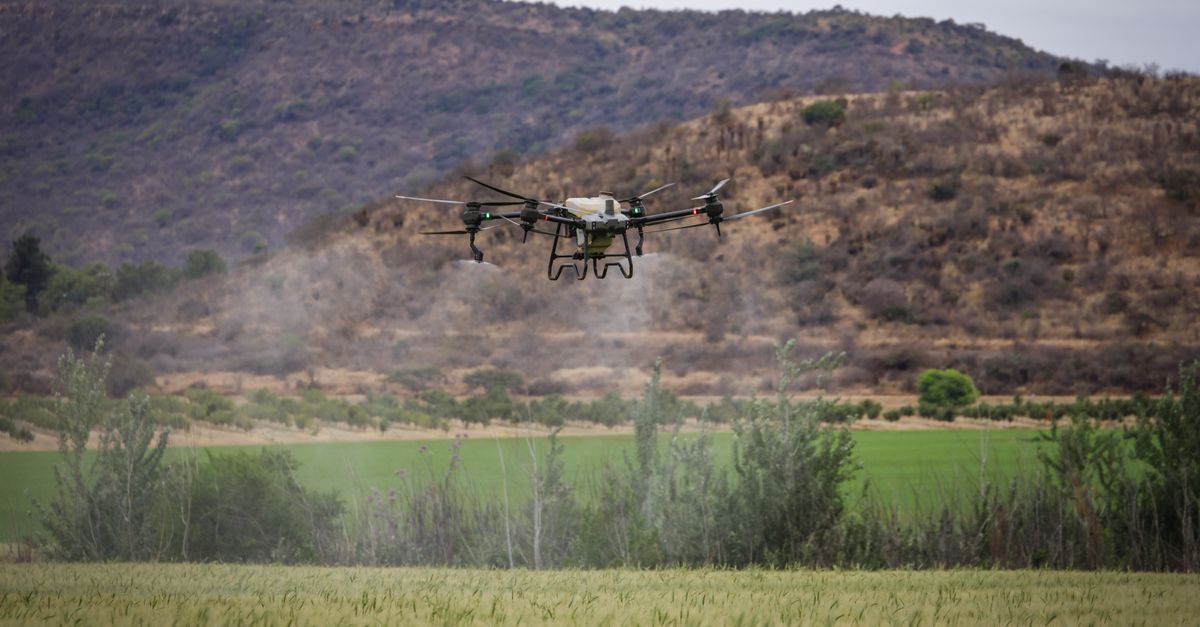
Hardware First: The Current State of Agricultural Drones in India

The Hardware Reality Check
The narrative surrounding agricultural drones in India often drifts toward sci-fi concepts of fully autonomous swarms or AI-driven crop analysis. While these technologies are in development, the immediate utility of agricultural aviation lies in precision spraying and seeding. For RobotWale, the assessment prioritizes shipping hardware over conceptual announcements. The Indian market currently operates on two primary tiers: imported heavy-lift drones and domestically assembled multirotors designed for the PM-KISAN subsidy framework.
Unlike delivery drones, agri-drones require specific durability against chemical corrosion and vibration. The core metric for evaluation is not flight time alone, but payload delivery consistency over a hectare. While the government promotes the Digital Sky Platform for licensing, the hardware ecosystem remains fragmented. We distinguish between units that are mass-produced for commercial pilots and those restricted to government pilot programs.
The DJI Agras Standard
DJI remains the dominant reference point for agricultural drones in India, specifically the Agras T30 and T20P models. These are not mere upgrades to consumer photography drones; they are specialized industrial aircraft with dedicated spray systems.
Technical Specifications
The DJI Agras T30 features a 40-liter spray tank and a maximum spraying rate of 10 kg per second. It utilizes a millimeter-wave radar system to ensure terrain-following flight, which is critical for uneven agricultural landscapes in states like Punjab and Haryana. The flight time typically ranges between 10 to 15 minutes under full load, requiring a rapid swap cycle for pilot efficiency.
The T20P is the predecessor, carrying a 20-liter tank. While the T30 offers higher throughput, the T20P is often more accessible for smaller cooperative groups due to lower entry costs. Both models require the DJI Terra software for mission planning, which must be run on a local tablet or ground station.
Availability and Pricing
India availability for DJI Agras is through authorized distributors, primarily in the agricultural belt. The landed cost estimate for the T30 kit (aircraft, ground station, batteries, charger, spare parts) hovers around INR 18-20 lakhs, excluding GST. This is a significant capital expenditure for a single farmer, leading to the rise of Drone Service Providers (DSPs).
According to DJI official documentation, the T30 supports both liquid spraying and granular spreading. The system is IP67 rated for dust and water resistance, a necessity for outdoor agricultural operations. However, spare parts availability in rural India remains a logistical challenge compared to the urban centers where the distributors are based.
Domestic Manufacturing and Garuda Aerospace
Indian startups are moving beyond assembly to indigenous design, though most still rely on imported powertrains. Garuda Aerospace, a prominent player in the defense and civil sectors, has pivoted significant resources toward agricultural utility.
Garuda Aerospace Vyom Series
Garuda’s Vyom series is designed to comply with the Drone Rules, 2021. They offer payload capacities ranging from 10kg to 20kg for spraying. Unlike DJI, which operates as a closed ecosystem, Garuda emphasizes interoperability with local spray nozzles and chemical formulations common in the Indian market.
Deployment data indicates that Garuda has successfully executed pilots in Maharashtra and Karnataka. The company emphasizes a fleet model where the hardware is leased to farmers, reducing the upfront barrier to entry. This aligns with the government’s push for Drone-as-a-Service (DaaS).
Other Domestic Players
Companies like Swaraj Drones and Yantra are also active. Swaraj focuses on heavy-lift drones capable of carrying up to 20kg payloads. Their hardware spec sheets indicate a focus on RTK modules for precise positioning, though independent verification of spray uniformity across different terrains is less documented than for DJI.
The distinction here is crucial. Imported drones often come with robust after-sales support networks that domestic startups are still building. For a farmer in rural Bihar, a broken DJI component might take a week to replace, whereas a local startup may offer same-day support within the state. However, the R&D spend in the domestic sector is significantly lower, limiting battery life and motor durability compared to global benchmarks.
Regulatory Landscape and DGCA Compliance
Hardware cannot operate in a vacuum. The Directorate General of Civil Aviation (DGCA) has established a framework under the Special Rules for Civil Aviation (Unmanned Aircraft Systems). To operate legally, a drone must be registered on the Digital Sky Platform (DSP), and the pilot must hold a Remote Pilot Certificate.
Permitting Challenges
While the 2021 Drone Rules have liberalized the licensing process for agricultural drones, the operational reality involves obtaining No Objection Certificates (NOCs) from local authorities for specific flight zones. In 2024, the government mandated that all drones must be geo-fenced to prevent unauthorized flights near airports or military installations.
For agricultural drones, this is critical. Spraying operations often occur in open fields that may be near restricted zones. Compliance requires the drone to be equipped with a unique identification (UID) system, which is now standard on all new agricultural drones.
Insurance and Liability
Third-party liability insurance is mandatory. The cost of insurance varies based on the payload weight and the region of operation. For a T30, the annual premium is estimated at INR 50,000 to INR 75,000. This adds to the operational expenditure (OPEX) for service providers.
Economic Viability for Smallholders
The primary question for the Indian agricultural sector is return on investment (ROI). Manual spraying is labor-intensive and risky due to exposure to chemicals. Drones reduce exposure and increase speed.
Cost Per Acre Analysis
Manual spraying typically costs INR 600 to INR 800 per acre, depending on the crop. Drone spraying, including the service charge, ranges from INR 300 to INR 600 per acre. The savings come from reduced labor hours and precise chemical application, which can save up to 30% on pesticide costs.
However, the capex barrier remains high. A farmer cannot buy a T30 for INR 18 lakhs. This has led to the DSP model. A service provider buys 10 drones and sells the service to 100 farmers. This scales the unit economics. The viability depends on the density of the crop. In Punjab’s wheat belt, high density makes drone service profitable. In sparse orchards, ground travel time increases, reducing efficiency.
Subsidy Impact
The Government of India offers subsidies under the Sub-Mission on Agricultural Mechanization (SMAM). Farmers can receive up to 50% subsidy for purchasing drones. Service providers can receive up to 70% subsidy. This has accelerated the deployment of DJI and domestic drones in 2023-2024. However, the subsidy is often tied to the completion of a digital mission log, which requires reliable internet connectivity in the field—a recurring pain point in rural India.
Conclusion
The agricultural drone sector in India is transitioning from pilot programs to commercial scale. The hardware, led by DJI Agras and supported by Garuda Aerospace, is robust and shipping. The regulatory framework is maturing, though on-ground compliance remains complex.
For the Indian farmer, the drone is not a novelty but an economic tool. The ROI is positive when the service provider model is adopted. However, the supply chain for repairs and the availability of spare parts outside major cities remain the primary bottlenecks. Future growth depends on localizing the manufacturing of critical components like nozzles, tanks, and batteries to reduce landed costs.
RobotWale continues to monitor deployment data from the Ministry of Agriculture and the DGCA to verify claims. Until independent field reports confirm the lifespan of battery cycles in high-heat Indian conditions, caution is advised in adopting proprietary ecosystems.
References
This article relies on manufacturer specifications, regulatory documents, and independent industry reporting.
- DJI Official Website - Agricultural Drones Section. https://www.dji.com/india/agriculture
- Garuda Aerospace Official Website. https://www.garudaaerospace.com
- Directorate General of Civil Aviation (DGCA) - Civil Aviation Requirements (CAR) Section 6. https://dgca.gov.in
- Ministry of Civil Aviation - Drone Rules 2021. https://www.digitalindia.gov.in
- Bureau of Indian Standards - Drone Safety Guidelines. https://bsi.gov.in
✓ Key takeaways
- •Hands-on view of Hardware First: The Current State of Agricultural Drones in India inside our Agricultural Drones library.
- •Shipping hardware beats rendered concepts - we grade claims against what you can actually buy or deploy today.
- •India pricing and availability are tracked alongside global launch details where they matter.
References
Related articles
More in Agricultural Drones →