
Autonomous Tractors: Shipping Reality vs. Hype in Global and Indian Markets
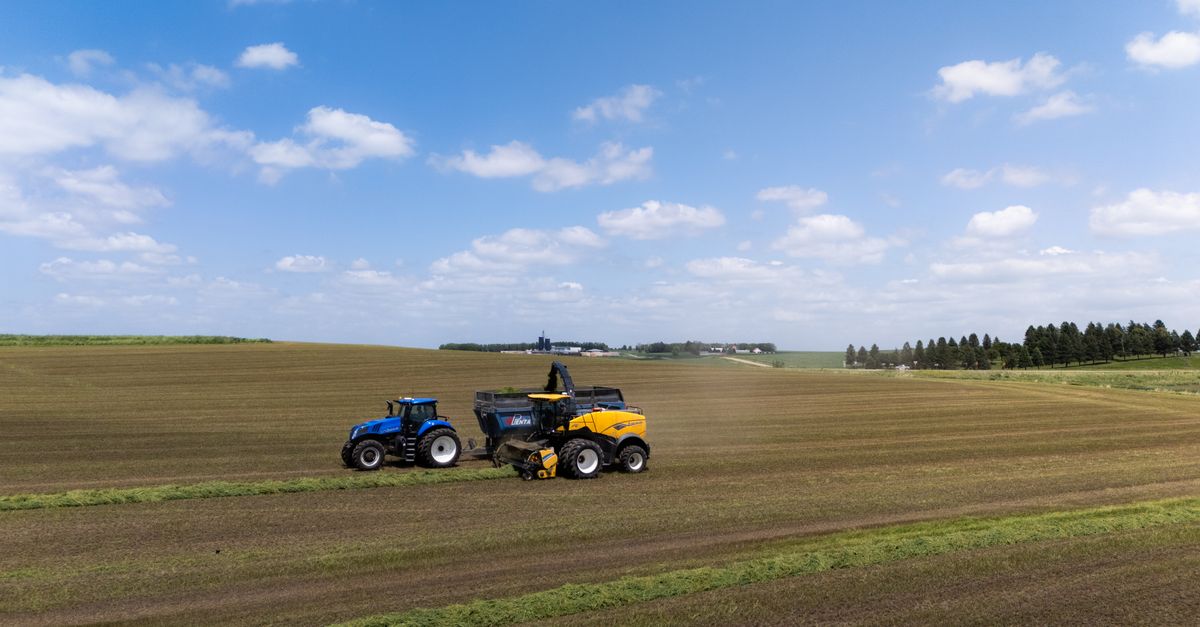
The Reality Check: Shipping Hardware vs. Concept Renders
The autonomous tractor sector has moved beyond the realm of concept renders and trade show demos. However, a clear distinction must be drawn between "assisted driving" and "fully autonomous operation." While John Deere and other major manufacturers have shipped hardware with advanced guidance systems, the transition to driverless operation in commercial farming remains niche. This article grades claims based on shipping hardware first, pilot deployments second, and announcements last.
In the context of RobotWale’s editorial standards, we prioritize manufacturer spec sheets, on-stage demos, and factory videos over press release rhetoric. The current market landscape is defined by a mix of Semi-Autonomous Tractors (Tier 2 autonomy) and emerging Level 4 systems. For the Indian market, which accounts for a significant portion of global agricultural output, the technology must be adapted to small landholdings and diverse soil conditions.
Global Leaders: John Deere and the See & Spray Portfolio
John Deere remains the primary benchmark for autonomous agricultural machinery in the West. Their 7X and 8R series tractors feature FieldConnect and ExactEmerge technology. These systems utilize GPS guidance, cameras, and LiDAR to navigate fields with centimeter-level precision. The "See & Spray" technology, originally developed by Blue River Technology (acquired by Deere), is a critical example of deployed hardware.
This technology identifies weeds and sprays herbicides precisely, reducing chemical usage by 77% according to pilot data released by the manufacturer. However, the fully autonomous 8R Tractor with a Level 4 autonomy rating is not yet a mass-market product. It exists primarily in controlled pilot programs or specific large-scale farms. The hardware is shipped, but the software validation for unregulated public roads or complex terrain varies by region.
The pricing for a fully equipped autonomous tractor often exceeds $300,000 USD. This places it out of reach for the average Indian farmer. Even the standard John Deere 5M series, when equipped with guidance systems, adds a significant premium to the base cost. In India, where the average tractor price ranges between ₹5 lakhs and ₹8 lakhs, a direct equivalent of the US market’s high-end autonomy package would consume nearly 150% of the average asset value.
Indian Context: Mahindra and the Localization Challenge
Mahindra & Mahindra, India’s largest tractor manufacturer, has not announced a fully driverless tractor for mass production. Their focus remains on electrification and precision farming through partnerships. Mahindra’s "Agri-Tech" initiatives often involve IoT-enabled tractors for telematics rather than full autonomy. The Mahindra TAFE range, including the eYez and e2o models, focuses on electric powertrains rather than autonomous driving stacks.
For Indian conditions, the terrain presents significant challenges. Small landholdings, mixed cropping patterns, and unpaved farm access roads complicate the GPS-based autonomy models seen in the US Midwest. A study by the Federation of Indian Engineers suggests that precision guidance systems (costing ₹5–10 Lakhs) offer better ROI than full autonomy in the near term.
Despite the lack of a fully driverless Mahindra tractor, the company has invested in smart farming solutions. Their Smart Farming vertical includes precision guidance systems that reduce driver fatigue. These systems are available in India and are grounded in the current reality of operator-assisted driving. The distinction is vital: an auto-steer system requires a human in the seat, whereas an autonomous tractor does not.
Other Indian players like TAFE and Sonalika have explored connectivity features but have not committed to full autonomy hardware. The supply chain for high-grade LiDAR and high-compute edge processors remains a bottleneck for cost-effective localization.
Technology Stack: Sensors, AI, and Connectivity
Autonomous tractors rely on a sensor fusion architecture. This typically includes RTK-GPS for centimeter-level positioning, LiDAR for obstacle detection, and stereo cameras for crop identification. The integration of these sensors requires robust computing units capable of processing data in real-time without connectivity to the cloud.
Connectivity is critical; 5G and Starlink are being explored to handle the data load for remote monitoring. However, rural India’s connectivity gaps remain a bottleneck. A tractor operating in a region with intermittent 4G will struggle to receive map updates or remote diagnostics. This dependency on network infrastructure limits the deployment of cloud-based AI models.
Recent developments in the sector have seen startups attempt to retrofit existing tractors with autonomy kits. These kits often rely on camera-based vision systems to reduce costs. However, without the calibration of factory-integrated systems, the accuracy often drops below the required threshold for commercial farming. Manufacturer spec sheets from companies like Trimble and CNH Industrial confirm that factory-integration is safer and more reliable.
Economic Viability and ROI
The CAPEX for autonomous tractors is high. In India, a standard tractor costs ₹5–8 Lakhs. An autonomous retrofit or high-end model could double this. The ROI calculation depends on labor costs. With labor shortages in rural India, the value proposition shifts, but the payback period often exceeds 5 years.
For a farmer, the cost of the machine must be justified by increased yield or reduced operational costs. If an autonomous tractor reduces labor costs by 30%, the savings must cover the interest on the loan taken to purchase the machine. In India, where loan interest rates average 10%, the break-even point is often beyond the useful life of the machine.
However, for large corporate farms or contract farming operations, the economics change. A 100-acre farm with high labor costs may find the ROI viable within 3 years. This segment represents the initial market for autonomous tractors in India. The average smallholder farmer will likely remain with assisted-driving systems for the foreseeable future.
Regulatory Framework and Safety Protocols
The regulatory landscape for autonomous tractors in India is underdeveloped. The Ministry of Agriculture & Farmers Welfare has not yet issued specific guidelines for driverless agricultural machinery. Unlike the US, where the NHTSA has issued specific guidance for automated vehicles, India lacks a centralized framework.
This creates liability ambiguity. If an autonomous tractor causes damage, who is responsible? The manufacturer, the software provider, or the farmer? Current insurance policies do not cover autonomous vehicle incidents. Manufacturers often require operators to remain in the seat until the system proves reliability over a specific period.
Safety protocols are also a concern. Tractors operate in dynamic environments with children, livestock, and pedestrians. A fully autonomous system must be able to detect and react to these hazards. While John Deere’s systems have advanced, they still carry a warning label indicating that human oversight is required. This limits the legal scope of "autonomous" in the Indian context.
Conclusion: Realistic Outlook for 2024
The technology exists, but the market reality is segmented. Shipping hardware is the first step. Pilots are the second. Mass adoption is the third. Indian farmers should prioritize guidance systems over full autonomy for now. The focus should be on precision farming that augments human capability rather than replacing it.
Until the cost of sensors drops and the regulatory framework matures, the "autonomous tractor" in India will remain a specialized tool for large-scale operations. Manufacturers must demonstrate value through pilot deployments before claiming mass-market readiness. For now, the auto-steer tractor is the practical reality.
References
- John Deere Autonomous Tractors - Manufacturer Spec Sheet.
- Mahindra & Mahindra Smart Farming - Product Portfolio.
- Federation of Indian Engineers - Agricultural Technology Report.
- Trimble Agriculture - Guidance System Specifications.
✓ Key takeaways
- •Hands-on view of Autonomous Tractors: Shipping Reality vs. Hype in Global and Indian Markets inside our Autonomous Tractors library.
- •Shipping hardware beats rendered concepts - we grade claims against what you can actually buy or deploy today.
- •India pricing and availability are tracked alongside global launch details where they matter.
References
Related articles
More in Autonomous Tractors →
