Case & Piece Picking: Shipping Hardware, Pilots, and Market Realities

The Shipping Reality for Case & Piece Picking Robots
The case and piece picking segment of warehouse and logistics automation has moved past the conceptual phase, but market claims require strict grading. Hardware that ships and operates on customer floors ranks highest. Pilot deployments that demonstrate measurable throughput and error rates rank second. Announcements, whitepapers, and rendered concept videos rank last. This grading framework prevents overstatement and aligns procurement decisions with verifiable engineering output.
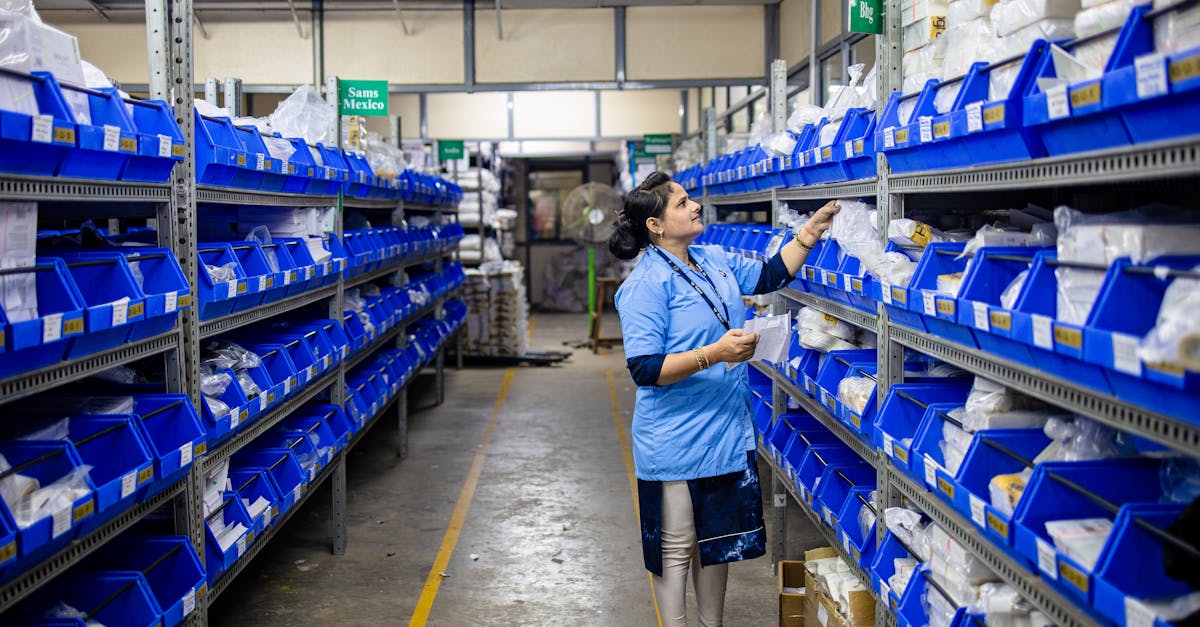
Case picking involves moving sealed cartons or totes as single units, typically using robotic arms, autonomous mobile robots (AMRs), or automated guided vehicles (AGVs). Piece picking, by contrast, extracts individual SKUs from bulk storage, requiring high-resolution vision, adaptive grippers, and real-time pose estimation. The software stack differs significantly: case picking relies on robust localization and path planning, while piece picking demands foundation models or reinforcement learning pipelines to handle occlusion, deformation, and SKU variability.
Market maturity varies by vendor and integration partner. Several companies have transitioned from pilot warehouses to multi-site deployments. Others remain in pre-production or limited beta phases. Procurement teams must verify hardware delivery records, not press statements.
Hardware That Has Actually Crossed the Finish Line
Shipping hardware in this category means units have passed factory acceptance testing, been installed at customer sites, and logged measurable operational hours. Symbotic has shipped integrated systems comprising vertical lift modules, AGV fleets, and centralized control software to multiple large-scale distribution centers. Covariant has delivered vision-guided robotic workcells to early enterprise customers, with continuous software updates deployed over the cloud. Traditional pick-and-place vendors, including those producing collaborative arms and high-speed delta robots, have shipped thousands of units globally, though piece-picking variants remain less common due to integration complexity.
Deployment Tiers: Factory Floors vs. Pilot Warehouses
Deployment tiers clarify the gap between laboratory demonstrations and commercial operation. Factory floors require deterministic cycle times, fault tolerance, and seamless WMS/ERP integration. Pilot warehouses test edge cases: mixed-SKU totes, damaged packaging, lighting variability, and network latency. Systems that survive both tiers demonstrate commercial readiness. Claims should be categorized accordingly:
- Shipped Hardware: Units deployed at customer sites with logged throughput and uptime metrics.
- Pilot Deployments: Controlled environments with vendor support, measuring error rates and integration timelines.
- Announced/Pre-Production: Roadmap items, concept renders, or partnership MOUs without hardware delivery records.
Covariant: Vision-Based Picking in Production
Covariant operates on a foundation model approach for robotic manipulation. The system combines high-fidelity vision, force-torque sensing, and a trained policy network to generalize across SKU geometries. Hardware consists of industrial arms equipped with parallel grippers or adaptive end-effectors, mounted on mobile bases or fixed pedestals depending on facility layout.
Shipping status: Covariant has transitioned to shipped hardware for select enterprise customers. The company reports continuous model updates deployed via secure pipelines, reducing retraining cycles for new product lines. On-stage demos often highlight rapid SKU adaptation, but commercial readiness depends on integration depth. Facilities must provide standardized tote configurations, consistent lighting, and reliable network infrastructure. Piece picking remains the most demanding use case; case picking benefits from higher repeatability and lower pose variance.
Integration requirements include WMS API alignment, safety fencing or collaborative workspace design, and periodic calibration of vision baselines. Cycle times vary by SKU density and gripper configuration, but published benchmarks indicate reliable case-handling throughput when environment controls are maintained.
Symbotic: AGV-Driven Case Handling at Scale
Symbotic's architecture centers on a fleet of AGVs operating within high-density storage racks. The system uses AI-driven inventory optimization, automated stacking, and centralized traffic management to move cases and totes. Hardware includes AGV platforms, vertical lift modules, and a control software layer that coordinates retrieval, sorting, and outbound staging.
Shipping status: Symbotic has shipped large-scale systems to major retail and logistics operators. Deployment records show multi-thousand-AGV fleets operating in continuous cycles. The company's approach emphasizes case handling over piece picking, leveraging standardized packaging and automated cranes for high-speed retrieval. Piece picking is addressed through downstream sortation or manual packing stations, depending on facility design.
Integration complexity is high. Facilities require structural modifications, power distribution upgrades, and network redundancy. Control software must interface with existing WMS and ERP systems. Uptime and throughput claims are validated through operational data, not concept renders. The system excels in high-volume, low-SKU-variability environments and requires rigorous change management when SKU profiles shift frequently.
Pick-and-Place Ecosystem: Hardware, Software, and Integration
The broader pick-and-place market includes collaborative arms, delta robots, SCARA systems, and vision-guided workcells. Hardware selection depends on payload, reach, cycle time, and SKU geometry. Software layers manage path planning, collision avoidance, pose estimation, and WMS communication. Integration remains the primary bottleneck.
Key technical constraints include:
- Vision Reliability: Occlusion, reflective packaging, and variable lighting require multi-sensor fusion and robust preprocessing.
- Gripper Adaptability: Fixed parallel grippers fail on irregular shapes; adaptive or vacuum grippers increase maintenance overhead.
- WMS Integration: Real-time inventory sync, exception handling, and fault recovery dictate system stability.
- Safety Compliance: Collaborative workspaces require force limiting and speed monitoring; fenced environments reduce integration complexity.
Piece picking continues to lag behind case picking in commercial adoption due to SKU variability and higher error rates. Systems that achieve reliable piece picking typically operate in controlled environments with standardized packaging and limited SKU counts. Generalization across thousands of SKUs remains an engineering challenge, not a software update.
India Availability and Landed Cost Estimates
India's warehouse and logistics automation market is growing, but direct imports of advanced pick-and-place systems remain limited. Most deployments occur through authorized system integrators, local partners, or multinational operators expanding regional distribution networks.
Availability: Covariant and Symbotic do not operate direct retail channels in India. Enterprise sales are conducted through regional partners and integrators. Traditional pick-and-place hardware is more accessible via Indian robotics distributors, though piece-picking variants require custom integration.
Pricing (Landed Cost Estimates): CAPEX for case and piece picking systems varies by scale, integration depth, and software licensing. Approximate landed cost ranges in INR include:
- Single Workcell (Case Picking): ₹45 lakh to ₹1.2 crore, depending on arm payload, vision system, and end-effector.
- Piece-Picking Workcell: ₹75 lakh to ₹2.5 crore, reflecting higher vision complexity, adaptive grippers, and software licensing.
- AGV-Driven Case Systems: ₹3 crore to ₹12 crore per deployment, scaling with AGV count, storage modules, and control software.
These are estimated landed costs, including import duties, GST, freight, and basic commissioning. Actual pricing depends on contract terms, volume discounts, and local integration requirements. OPEX includes maintenance, software subscriptions, spare parts, and facility modifications. Procurement teams should request detailed BoMs and integration timelines before committing to capital expenditure.
India-specific considerations include power stability, network latency, and local support SLAs. Facilities operating in tier-2 and tier-3 cities may require additional infrastructure upgrades. Local integrators can reduce deployment risk but may extend commissioning timelines. Verification of shipped hardware and pilot data remains essential before procurement.
References
- Covariant AI. Company Overview & Press Releases. https://www.covariant.ai/press
- Symbotic Inc. Newsroom & Investor Information. https://www.symbotic.com/newsroom
- Symbotic Inc. S-1 Registration Statement & Technical Architecture Overview. https://www.symbotic.com/ir
- Robotics Business Review. Warehouse Automation Market Analysis & Deployment Trends. https://www.roboticsbusinessreview.com/
- India Brand Equity Foundation (IBEF). Logistics Sector Overview & Automation Adoption. https://www.ibef.org/sector/logistics.aspx
✓ Key takeaways
- •Hands-on view of Case & Piece Picking: Shipping Hardware, Pilots, and Market Realities inside our Case & Piece Picking library.
- •Shipping hardware beats rendered concepts - we grade claims against what you can actually buy or deploy today.
- •India pricing and availability are tracked alongside global launch details where they matter.
Related articles
More in Case & Piece Picking →