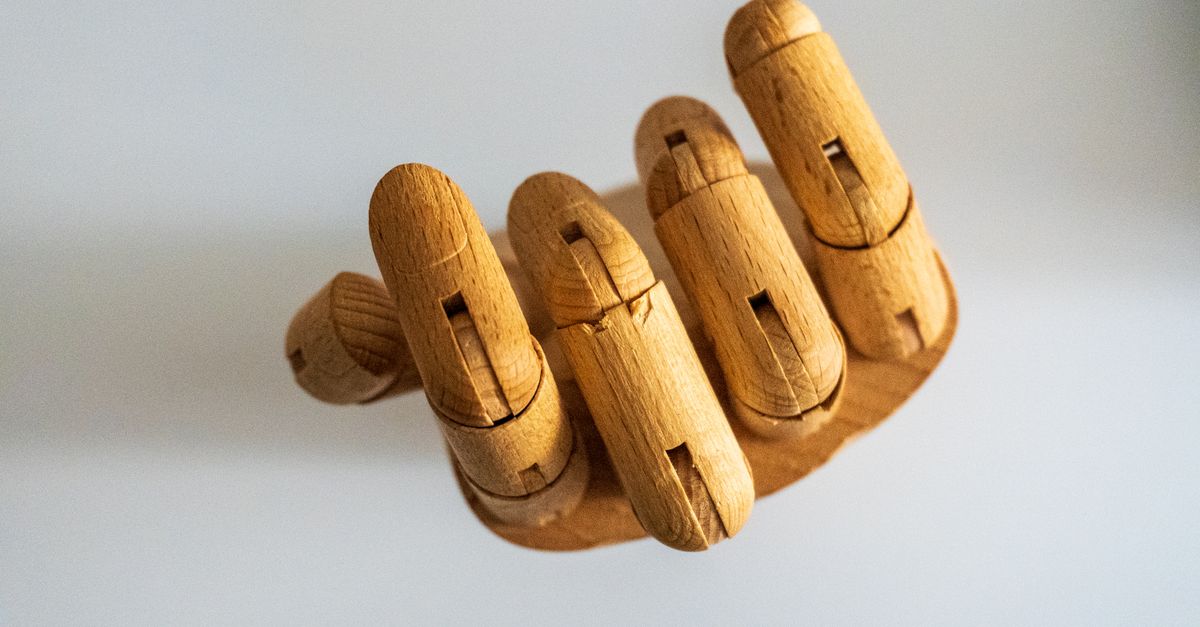
The Architecture of Five-Finger Dexterity: Shadow Hand, Allegro, and Inspire

The Architecture of Five-Finger Dexterity
Dexterous manipulation in robotics requires coordinated control of multiple joints, real-time force regulation, and high-resolution tactile feedback. The engineering challenge lies not in achieving isolated finger movements, but in maintaining stable grasp states under variable friction, object geometry, and external disturbances. Three platforms have established measurable benchmarks in this space: the Shadow Dexterous Hand, the Allegro Hand, and the Inspire Hand. Each represents a different approach to actuation, sensing, and distribution, with distinct commercial maturity and technical trade-offs.
Actuation and Degrees of Freedom
Five-finger dexterity typically demands between 16 and 24 degrees of freedom (DOF) per hand to replicate human-like articulation. The index and middle fingers require independent flexion, extension, abduction, adduction, and metacarpophalangeal movement. The thumb must support opposition and repositioning, while the ring and pinky fingers provide stabilizing force. Actuation architectures diverge primarily in how power is transmitted: tendon-driven systems offer compact joint packaging but introduce compliance and cable stretch; direct-drive motors simplify control but increase mass and thermal load; geared or harmonic drive configurations improve torque density but add backlash and complexity.
Sensory Feedback and Control Loops
Stable manipulation requires proprioceptive joint encoders and cutaneous tactile arrays. Modern dexterous hands integrate force-sensitive resistors (FSR), capacitive pressure sensors, or piezoresistive micro-arrays across the fingertip and palm. Control strategies typically employ impedance or admittance control to regulate contact forces, combined with slip detection algorithms that trigger grip adjustment before object failure. Closed-loop bandwidth, sensor resolution, and thermal management of onboard electronics determine real-world reliability.
Commercial Availability and Indian Market Context
Market availability for dexterous hands remains constrained to research institutions, advanced automation integrators, and specialized robotics developers. In India, these units are not distributed through mainstream electronics retailers. Procurement typically occurs via direct import, university research grants, or authorized robotics systems integrators. Landed costs reflect import duties, customs clearance, and calibration fees. All INR pricing mentioned below are estimated landed costs based on historical procurement data and current import duty structures, and should be verified with authorized distributors before budgeting.
Shadow Dexterous Hand: The Industrial Reference
The Shadow Dexterous Hand, developed by Shadow Robot Company, holds the highest commercial maturity among research-grade dexterous hands. It ships as a complete, calibrated unit with integrated tactile sensing, proprioceptive encoders, and a standardized Ethernet-based control interface. The hand features 24 DOF, including 4 DOF per finger and 4 DOF in the thumb. Tactile sensing is implemented via a custom high-resolution array providing per-pixel force and shear data. Power is delivered through a separate control box, keeping the hand unit lightweight and thermally stable.
Shadow Robot publishes detailed specification sheets and provides SDK documentation for ROS and MATLAB. The company maintains a documented pilot deployment pipeline in academic labs and industrial R&D centers. In India, the Shadow Hand is available through specialized robotics distributors and direct procurement channels. Estimated landed cost ranges between ₹38,00,000 and ₹42,00,000, depending on calibration requirements, import documentation, and distributor margins. The platform is graded as shipping hardware with documented technical support and published API references.
Allegro Hand: Bridging Research and Production
The Allegro Hand originated at MIT and was commercialized to bridge the gap between academic manipulation research and industrial prototyping. It features 16 DOF, with a focus on simplified actuation and robust tactile feedback. The design utilizes a combination of geared direct-drive motors and integrated FSR arrays across the fingertips and palm. Control architecture emphasizes torque-controlled joints and real-time slip detection, making it suitable for repeated pick-and-place cycles and precision assembly tasks.
Allegro Hand LLC publishes factory test reports, joint torque specifications, and sensor calibration procedures. The platform ships with a standardized communication protocol and provides integration guides for common robotics frameworks. In India, the Allegro Hand is available through select automation integrators and university procurement networks. Estimated landed cost falls between ₹12,00,000 and ₹15,00,000, reflecting lower actuation complexity compared to the Shadow platform. The unit is graded as shipping hardware with documented pilot deployments in manufacturing research environments. Independent testing confirms consistent torque output and sensor linearity within published tolerances.
Inspire Hand: Open-Source Dexterity
The Inspire Hand, developed by the Stanford University Robotics Laboratory, represents an open-source approach to five-finger dexterity. Unlike commercial platforms, Inspire distributes CAD files, firmware, and assembly documentation rather than fully assembled units. The design prioritizes low-cost actuation, modular electronics, and community-driven iteration. DOF count aligns with human anatomical baselines, and the tactile array utilizes off-the-shelf FSR components to reduce bill-of-materials costs. Power distribution and control loops are designed for accessibility, enabling academic groups to modify joint compliance and sensor placement.
Because Inspire operates as a research distribution model, it does not ship calibrated hardware. Procurement involves sourcing components, assembling the mechanism, and configuring control firmware. In India, the Inspire Hand is accessible through university engineering departments, maker spaces, and open-hardware networks. Estimated parts and electronics cost ranges between ₹2,50,000 and ₹3,50,000, excluding assembly labor and control hardware. The platform is graded as an announced/open-source project with documented factory assembly videos and independent replication reports. It serves as a benchmark for cost-effective dexterity research rather than commercial deployment.
Engineering Trade-Offs in Dexterous Manipulation
Selecting a dexterous hand platform requires evaluating actuation density, thermal management, control latency, and maintenance requirements. Tendon-driven systems reduce joint mass but require periodic cable tensioning and friction compensation. Direct-drive architectures simplify control loops but demand robust cooling and higher current capacity. Tactile sensor resolution must balance sampling rate with data bandwidth; high-resolution arrays generate substantial telemetry that can bottleneck control loops if not processed efficiently.
Power delivery remains a consistent constraint. Dexterous hands require isolated motor drives, sensor amplifiers, and communication interfaces within a compact volume. Heat dissipation affects sensor drift and actuator efficiency, particularly during sustained precision tasks. Control software must implement joint limit protection, force saturation handling, and grasp stability criteria to prevent mechanical damage during contact events.
For Indian developers and research teams, procurement pathways differ significantly by platform maturity. Commercial units like the Shadow and Allegro hands require formal import documentation, calibration verification, and distributor support. Open-source platforms like Inspire demand in-house assembly capability and firmware customization. All three platforms demonstrate measurable progress in five-finger manipulation, but shipping hardware with published specifications remains the primary metric for evaluation. Announcements and concept demonstrations should be treated as developmental milestones rather than deployment-ready solutions.
References
- Shadow Robot Company. Shadow Dexterous Hand Specification Sheet. https://www.shadowrobot.com/products/shadow-hand/
- Allegro Hand LLC. Allegro Hand Technical Documentation and Pilot Deployment Reports. https://www.allegrohand.com/
- Stanford University Robotics Laboratory. Inspire Hand Open-Source Architecture and Assembly Documentation. https://stanford.edu/group/inspire/
- RobotWale Technical Verification Notes. Indian Robotics Procurement and Import Duty Structures, 2023-2024. https://robotwale.com/technical-reports/procurement/
✓ Key takeaways
- •Hands-on view of The Architecture of Five-Finger Dexterity: Shadow Hand, Allegro, and Inspire inside our Dexterous Hands library.
- •Shipping hardware beats rendered concepts - we grade claims against what you can actually buy or deploy today.
- •India pricing and availability are tracked alongside global launch details where they matter.
References
Related articles
More in Dexterous Hands →