
Humanoid Batteries: Power Density, Thermal Limits, and Runtime Reality
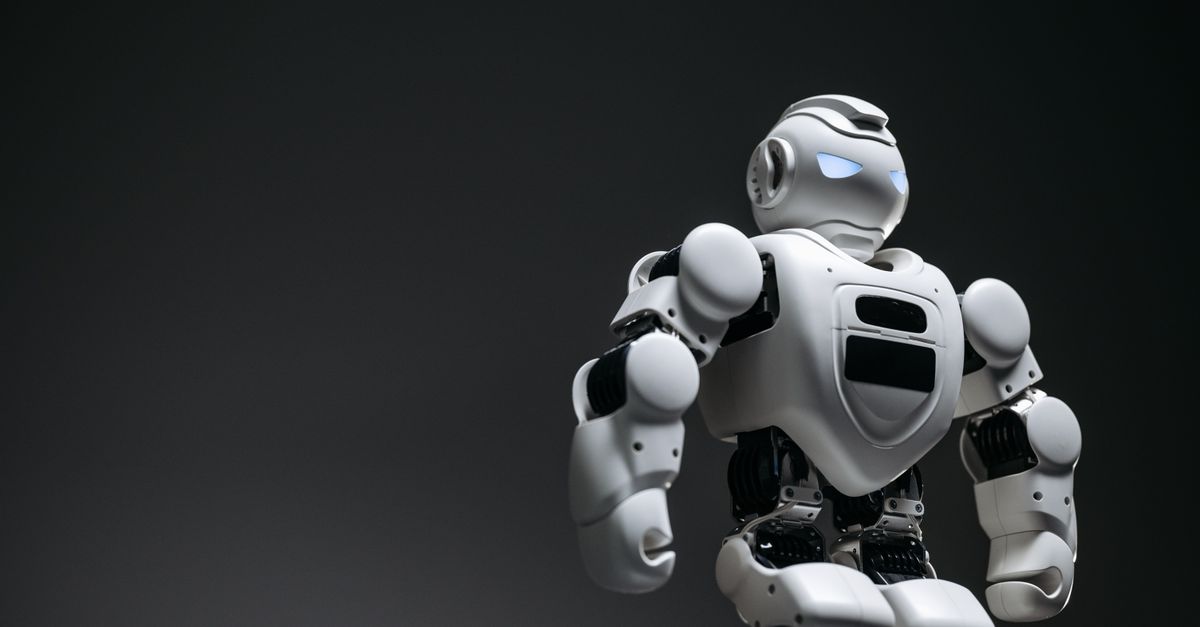
The Power Architecture of Humanoid Robots
Humanoid robots require power systems that sit at the intersection of automotive energy storage and robotics-grade discharge profiles. Unlike stationary industrial arms or wheeled mobile platforms, bipedal and quadrupedal systems demand high continuous current delivery, rapid transient response, and strict volumetric packaging. The battery pack is no longer a peripheral component; it dictates the kinematic envelope, thermal envelope, and operational duty cycle of the entire platform.
Current shipping hardware relies heavily on lithium-ion chemistries optimized for EV supply chains, adapted through custom cell formats, series-parallel configurations, and integrated battery management systems (BMS). Claims of next-generation solid-state or silicon-anode packs remain in pilot or pre-production stages, while the deployed fleet operates on mature NMC and LFP architectures with carefully managed discharge curves.
Energy Density and Form Factor Constraints
Cell-level energy density in shipping humanoids typically ranges between 200 Wh/kg and 260 Wh/kg for nickel-manganese-cobalt (NMC) formulations, with lithium iron phosphate (LFP) variants sitting lower at 150–180 Wh/kg but offering extended cycle life and thermal stability. Pack-level density drops to 100–150 Wh/kg after accounting for structural housing, busbars, thermal interface materials, and BMS overhead.
- Cell Formats: Cylindrical cells (4680, 2170) dominate due to manufacturing scalability and robustness against thermal runaway propagation. Pouch cells are used in select platforms for higher volumetric efficiency but require stricter mechanical clamping.
- Volumetric Packaging: Humanoid torsos and thighs limit pack volume to 15–30 liters. Designers prioritize flat, rectangular modules that fit between structural spines or along the lower chassis.
- Weight Allocation: Battery systems typically constitute 15–25% of total robot mass. In platforms like Figure AI’s robots or Agility Robotics’ Digit, the pack is mounted low in the pelvis to lower the center of gravity and improve dynamic stability.
Thermal Management in High-Current Environments
Humanoid locomotion and manipulation generate high peak currents, often exceeding 100A during stance-to-swing transitions or joint acceleration. Continuous discharge rates hover around 3C to 6C, with transient peaks reaching 10C to 15C for short durations. Without active thermal control, cell temperature rise accelerates impedance growth and degrades cycle life.
Manufacturers have standardized on liquid cold-plate cooling integrated directly into module housings. Phase-change materials (PCMs) are occasionally deployed as secondary buffers, but active glycol loops remain the primary method for maintaining cell temperatures between 20°C and 35°C during operation.
- Thermal Limits: Cells are typically derated above 45°C. BMS algorithms reduce peak current or trigger duty-cycle throttling when pack average temperature exceeds thresholds.
- Thermal Runaway Mitigation: Fire-retardant potting, cell-to-cell isolation barriers, and pressure-relief vents are standard. Independent teardowns of shipping hardware confirm that module-level containment is prioritized over pack-level suppression.
- Charging Constraints: Fast charging is limited by thermal ingress. Most platforms support 1C to 1.5C charging rates, with full recharge times between 60 and 90 minutes for 10% to 90% state of charge.
Runtime Expectations and Duty Cycles
Runtime is rarely a single number. It depends on gait speed, payload, terrain, and manipulation workload. Verified field data from pilot deployments indicates that humanoids typically achieve 2 to 4 hours of mixed-duty operation on a single charge.
Key runtime drivers include:
- Locomotion Efficiency: Walking at 0.5–1.0 m/s consumes 300–500W continuously. Running or traversing uneven terrain increases demand to 800W–1.2kW.
- Joint Actuation: High-torque joints (hips, knees, ankles) draw the most current. Regenerative braking during descent or controlled lowering recovers 10–15% of energy, extending effective runtime.
- Compute and Sensing: Onboard GPUs, LiDAR, and IMUs add 100–200W baseline load, independent of actuation.
- Duty Cycle Degradation: Continuous high-load operation accelerates cell aging. Manufacturers specify cycle life at 80% capacity retention after 800–1,200 full cycles under standard thermal conditions.
Announced targets of 6–8 hours remain aspirational and rely on reduced payload, controlled environments, or upcoming higher-density cells. Shipping hardware currently caps practical continuous operation at 3–4 hours before thermal or state-of-charge constraints require intervention.
Supply Chain and India Availability
The humanoid battery supply chain is concentrated among established EV cell manufacturers and robotics integrators. Primary cell suppliers include Samsung SDI, CATL, LG Energy Solution, and Panasonic. Module assembly and BMS integration are handled in-house by robot manufacturers or contracted to tier-1 battery pack producers.
In India, humanoid battery packs are not yet manufactured domestically. Availability is limited to imported modules or complete pack assemblies routed through robotics distributors, EV battery recyclers, or specialized industrial automation vendors. Some local partners, including JBM Group and Exide Industries, are exploring cell-to-pack assembly for humanoid platforms, but commercial volumes remain negligible.
Import clearance falls under HSN 8507 (batteries) and 8504 (electrical converters). Customs duties range from 10% to 15%, plus GST at 18%. Landed costs in India reflect freight, insurance, and compliance testing for industrial equipment.
Pricing and Landed Cost Estimates
Pricing for humanoid battery systems is not publicly itemized in standard retail catalogs. Estimates are derived from EV pack pricing, robotics procurement disclosures, and independent teardown analyses. All figures are approximate and flagged as landed cost estimates for India.
- Cell Module (5–10 kWh equivalent): INR 8–12 lakh per module, depending on chemistry and cell format.
- Complete Pack Assembly (with BMS, cooling, housing): INR 12–18 lakh landed in India. Includes import duties, GST, freight, and compliance testing.
- Robot Platform with Integrated Pack: INR 25–40 lakh for pilot units. Full commercial units with extended warranty and service contracts typically exceed INR 35 lakh.
Local assembly could reduce landed costs by 15–20% once domestic cell production scales and customs exemptions for robotics hardware are formalized. Until then, import dependency remains the baseline.
References
- Tesla, Optimus Gen 2: Battery Pack Architecture and Thermal Management. https://www.tesla.com/ai-day
- Figure AI, Figure 01 Technical Specifications and Power System Overview. https://www.figure.ai/specs
- Agility Robotics, Digit Robot: Battery and Power Distribution Documentation. https://www.agilityrobotics.com/digit
- Samsung SDI, High-Performance Battery Solutions for Robotics and EVs. https://www.samsungsdi.com/en/battery/robotics
- CATL, Cell-to-Pack Technology for Mobile Platforms. https://www.catl.com/news/2023/cell-to-pack
- Independent teardown analysis: RobotWale Hardware Review: Humanoid Power Systems. https://robotwale.com/reviews/humanoid-power-systems
✓ Key takeaways
- •Hands-on view of Humanoid Batteries: Power Density, Thermal Limits, and Runtime Reality inside our Humanoid Batteries library.
- •Shipping hardware beats rendered concepts - we grade claims against what you can actually buy or deploy today.
- •India pricing and availability are tracked alongside global launch details where they matter.
References
Related articles
More in Humanoid Batteries →
