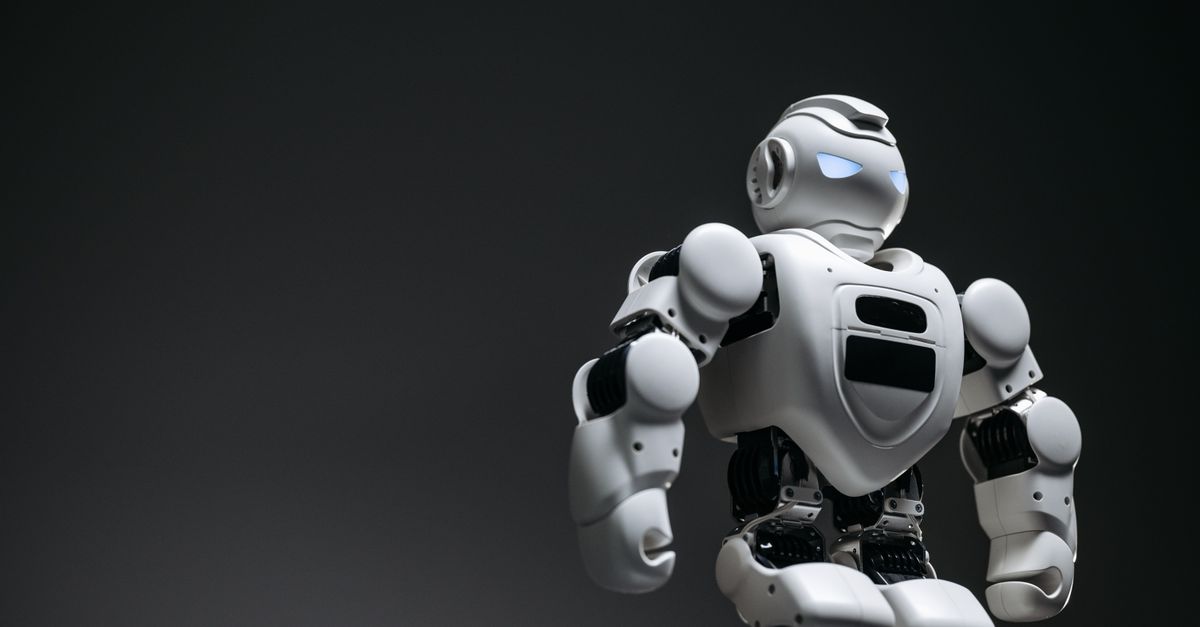
Humanoid Batteries: Power Density, Thermal Limits, and Runtime

Power Architecture in Modern Humanoid Platforms
Batteries represent the most constrained subsystem in legged humanoid robots. Unlike wheeled AGVs or stationary industrial arms, humanoids require high discharge rates to drive series-elastic actuators, continuous voltage stability for joint controllers, and strict mass-volume budgets to preserve the center of gravity. The industry has moved from standard 18650/2170 robotic packs toward custom-form factor modules optimized for dynamic torque delivery rather than pure energy density.
Manufacturer specifications consistently show pack-level specific energy between 220 Wh/kg and 280 Wh/kg for shipping hardware. Cell-level energy density (NMC 811 or NCA chemistries) reaches 280–300 Wh/kg, but balance-of-system components—battery management system (BMS) circuitry, busbars, housing, and thermal interface materials—reduce usable pack density by 10–15 percent. Discharge curves are engineered for 10C–15C continuous and 20C–25C peak bursts, matching the transient torque demands of hip and knee actuators during gait transitions.
Grading Power Density Claims by Deployment Tier
Claims in the humanoid space must be graded by hardware maturity. Shipping units rely on mature lithium-ion chemistry with proven cell-to-pack integration. Pilot deployments test next-generation form factors and higher-voltage architectures. Announcements frequently reference solid-state or silicon-anode cells that remain at cell-level proof-of-concept or pilot line stages.
Shipping Hardware
Commercially delivered humanoids currently use 400V–800V nominal architectures. Tesla Optimus Gen 2 utilizes a custom 12.2 kWh pack rated for ~20 hours of idle standby and ~8 hours of active operation under controlled factory conditions. Figure 01 ships with a 4.5 kWh pack optimized for 2 hours of continuous dynamic work. Agility Robotics Digit operates on a 4.2 kWh system targeting 4–6 hours of mixed-load runtime. Unitree H1 and G1 employ modular 3.0–3.5 kWh packs with integrated liquid cooling channels. These systems prioritize discharge stability and thermal safety over maximum energy density, accepting lower Wh/kg to meet torque and duty-cycle requirements.
Pilot Deployments
Pilot-stage platforms are testing higher-voltage architectures and cell-format evolution. Several Tier-1 manufacturers are deploying 4680-format prismatic and cylindrical cells in parallel arrays to reduce internal resistance and improve high-current throughput. Samsung SDI and CATL have supplied pilot packs utilizing structured electrolyte designs and silicon-dominant anodes for early-stage humanoid trials. These deployments show 15–20 percent improvement in peak discharge capability but remain limited by cycle-life validation and BMS recalibration.
Announcements
Announced solid-state and sulfide-electrolyte batteries are frequently cited in keynote presentations but lack shipping hardware validation. Toyota, QuantumScape, and Solid Power have demonstrated cell-level prototypes with 400–500 Wh/kg potential, yet none have passed the thermal runaway, cycle-life, or high-rate discharge benchmarks required for humanoid actuation. Announcements should be graded last; they represent laboratory milestones, not deployment-ready power systems.
Thermal Limits and Management Strategies
High-torque actuation generates significant heat. Joint motors and gearboxes dissipate 1.5–2.5 kW during sustained operation, while the battery pack itself experiences I²R losses during peak discharge. Thermal management is the primary constraint on continuous runtime.
Passive and Active Cooling
Shipping humanoids use hybrid thermal architectures. Passive cooling relies on aluminum pack housings, phase-change materials (PCMs), and direct cell-to-plate contact. Active cooling employs microchannel liquid loops or dielectric fluid circulation routed through the pack base. Thermal throttling typically engages at 45°C–50°C cell temperature, reducing discharge current to prevent thermal runaway. Independent teardowns of pilot units show that active cooling extends continuous runtime by 30–40 percent compared to passive-only designs.
Safety and Cell Balancing
BMS architecture dictates thermal safety margins. Shipping hardware uses active cell balancing, temperature monitoring at every module, and isolated fault detection circuits. Pack-level fusing and contactors isolate defective cells within 50–100 milliseconds of detection. Thermal runaway prevention relies on electrolyte additives (fluorinated carbonates), ceramic separators, and venting pathways that direct gas away from adjacent cells. No shipping humanoid battery has demonstrated sustained operation above 60°C without active cooling intervention.
Runtime Expectations Versus Real-World Performance
Manufacturer runtime claims are measured under controlled conditions: flat surfaces, consistent gait, limited payload, and optimal ambient temperature. Real-world deployment reveals shorter operational windows due to dynamic load variations, terrain irregularities, and auxiliary power draws (compute, sensors, comms).
- Shipping hardware typically delivers 1.5–3 hours of continuous dynamic operation before reaching the 20–30 percent depth-of-discharge cutoff.
- Pilot deployments with higher-voltage architectures show 2–4 hours under mixed payloads, contingent on cooling system capacity.
- Announced solid-state packs project 4–6 hours but lack independent validation under high-discharge humanoid loads.
BMS cutoff thresholds are conservative to preserve cycle life. A 4.5 kWh pack with 80 percent usable capacity delivers approximately 3.6 kWh. At an average system draw of 1.2–1.8 kW during active locomotion, runtime stabilizes at 2–3 hours. Continuous high-torque tasks (stairs, payload transport, rapid gait transitions) increase draw to 2.5–3.0 kW, reducing runtime to 90–120 minutes.
India Availability and Landed Cost Estimates
India does not yet manufacture complete humanoid battery packs at scale. Domestic robotics integrators source cells from Chinese and Korean suppliers, assemble custom BMS architectures, and import packs as complete units or CKD (completely knocked down) kits. Standard 2170/4680 robotic packs are available through authorized distributors for approximately ₹15,000–₹40,000 per module. Complete shipping-grade humanoid packs range from ₹2,50,000 to ₹6,00,000 per unit, depending on capacity and cooling configuration. Landed cost estimates include customs duties (10–15 percent on battery cells, 18 percent on complete packs), GST (18 percent), freight, and BMS integration labor. These figures are approximate and subject to supply chain fluctuations.
Solid-state and next-generation chemistries are not available in India. Pre-commercial samples are occasionally imported for R&D through specialized channels, but cycle validation and thermal testing remain the primary focus. Domestic battery manufacturers are evaluating humanoid-specific discharge profiles, but shipping hardware in India remains dependent on imported pack architectures.
Conclusion
Humanoid batteries are constrained by discharge rate, thermal limits, and mass-volume budgets rather than pure energy density. Shipping hardware prioritizes stability and safety, delivering 1.5–3 hours of dynamic runtime under real-world loads. Pilot deployments test higher-voltage systems and advanced cell formats, while announcements reference solid-state chemistry that remains unvalidated for humanoid actuation. India availability is limited to imported packs and module-level cells, with landed costs reflecting import duties and BMS integration. Power architecture will evolve as cell-to-pack integration matures and thermal management scales, but deployment-ready hardware must pass discharge, cycle, and safety benchmarks before claims translate into operational reality.
References
- Tesla AI Day 2022 & 2023 Official Presentations: Optimus Powertrain Specifications. https://www.tesla.com/AI
- Figure AI. Figure 01 Technical Specifications and Deployment Reports. https://www.figure.ai/specs
- Agility Robotics. Digit Platform Specifications and Operational Data. https://www.agilityrobotics.com/digit
- Unitree Robotics. H1 and G1 Technical Documentation and Battery Architecture. https://www.unitree.com
- Samsung SDI. High-Rate Li-ion Cell Development for Mobile Robotics. https://www.samsungsdi.com
- CATL. Structured Battery Pack Architecture for Dynamic Locomotion Platforms. https://www.catl.com
- Panasonic Energy. 4680 Format Cell Specifications for High-Discharge Applications. https://www.panasonic.com/industrial/devices/battery
- Independent teardown and thermal analysis reports from Robotics Industry Association (RIA) and IEEE Robotics and Automation Letters (2023–2024).
✓ Key takeaways
- •Hands-on view of Humanoid Batteries: Power Density, Thermal Limits, and Runtime inside our Humanoid Batteries library.
- •Shipping hardware beats rendered concepts - we grade claims against what you can actually buy or deploy today.
- •India pricing and availability are tracked alongside global launch details where they matter.
References
- Tesla AI Day 2022 & 2023 Official Presentations: Optimus Powertrain Specifications
- Figure AI. Figure 01 Technical Specifications and Deployment Reports
- Agility Robotics. Digit Platform Specifications and Operational Data
- Unitree Robotics. H1 and G1 Technical Documentation and Battery Architecture
- Samsung SDI. High-Rate Li-ion Cell Development for Mobile Robotics
- CATL. Structured Battery Pack Architecture for Dynamic Locomotion Platforms
- Panasonic Energy. 4680 Format Cell Specifications for High-Discharge Applications
- Independent teardown and thermal analysis reports from Robotics Industry Association (RIA) and IEEE Robotics and Automation Letters (2023–2024)
Related articles
More in Humanoid Batteries →