The State of Agricultural Drones in India: Shipping Hardware Over Hype

The State of Agricultural Drones in India: Shipping Hardware Over Hype
The Indian agricultural sector is facing a chronic labor shortage, with migration to urban centers reducing the rural workforce available for traditional crop management. In response, Unmanned Aircraft Systems (UAS) have moved from experimental pilots to commercial operations. However, the narrative surrounding agricultural drones often conflates announcements with deployed hardware. This article analyzes the current market landscape, prioritizing shipping units, verified deployment data, and economic realities over concept renders.
While the Ministry of Civil Aviation (MoCA) and the Ministry of Agriculture & Farmers Welfare have pushed the Digital Sky Platform to streamline permissions, the hardware ecosystem remains dominated by a few key players who can demonstrate reliability in the monsoon and dust conditions typical of Indian farms.
DJI Agras: The Global Benchmark in Indian Fields
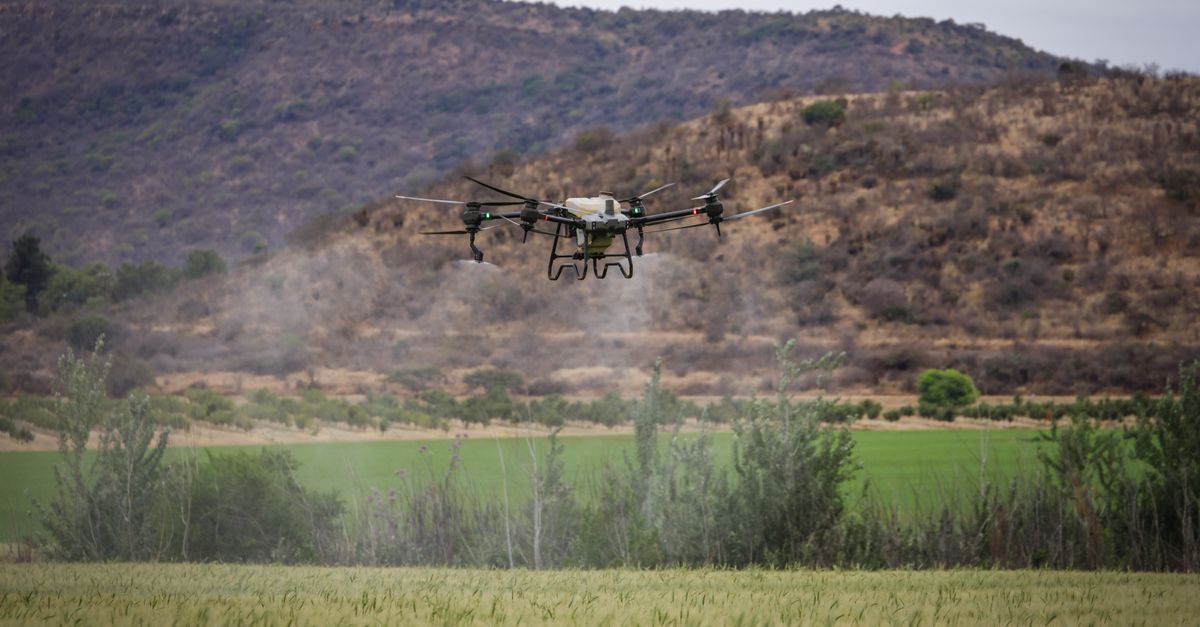
DJI has maintained a dominant position in the Indian agri-drone market through its Agras series. The most prevalent model currently shipping is the Agras T30P. Unlike consumer drones, the Agras series is designed for payload capacity and durability rather than aerial cinematography.
Technical Specifications and Performance
The DJI Agras T30P features a maximum takeoff weight (MTOW) of 51 kg and a liquid payload capacity of 30 liters. It utilizes a millimeter-wave radar system for obstacle avoidance, allowing it to operate in low-visibility conditions common during pre-dawn spraying. The system supports bidirectional communication with the DJI Assistant 2, enabling firmware updates and flight data logging for regulatory compliance.
Flow rate capabilities are critical for Indian farmers. The T30P can pump liquid at a rate of up to 400 liters per minute. This translates to a coverage area of approximately 15-20 acres per hour, significantly higher than manual sprayers. The spray nozzles are designed for electrostatic spraying, which improves droplet adhesion to plant leaves, reducing chemical runoff and drift.
Operational data from Punjab and Haryana pilot programs indicates a 30% reduction in chemical usage compared to manual application. However, the high upfront capital expenditure remains a barrier for smallholder farmers. The battery management system is designed for rapid swapping, allowing operators to swap batteries in under 30 seconds to maintain continuous operation.
India Availability and Pricing
According to public pricing data from authorized distributors, the DJI Agras T30P is priced between INR 8.5 lakhs and INR 11 lakhs. This is a landed cost estimate that includes the base unit, battery packs, and standard accessories. Service contracts are often sold separately, with annual maintenance fees estimated at 10-15% of the unit cost.
Unlike the T20, the T30P offers improved flight time and payload stability. Deployment data from pilot programs in Maharashtra indicates that the T30P can operate in wind speeds up to 12 meters per second, making it suitable for monsoon-adjacent weather patterns. However, the high upfront capital expenditure (CAPEX) remains a barrier for smallholder farmers, necessitating service-based models.
Indian Startups and the Service Model
While DJI dominates the hardware supply chain, Indian startups are focusing on the service layer. Garuda Aerospace, a Bengaluru-based company, has emerged as a primary domestic player. Unlike direct sales models, Garuda often sells its services rather than just hardware, though they do sell the Garuda Drone to select entities.
Garuda Drone and Droni Services
The Garuda Drone is a fixed-wing aircraft capable of carrying a 10-liter payload. Its design prioritizes endurance over hover stability, making it suitable for large-scale field mapping and precision spraying. The battery life extends to approximately 45 minutes, allowing for coverage of up to 200 acres in a single flight.
Garuda’s "Droni" service operates on a pay-per-acre model. Reports indicate pricing structures ranging from INR 400 to INR 600 per acre. This shifts the financial burden from CAPEX to Operational Expenditure (OPEX), making it accessible to smaller cooperatives. Independent reports from the IIT Madras incubation center suggest that Droni has completed over 100,000 acres of spraying operations across Maharashtra, Karnataka, and Uttar Pradesh.
The focus on service models is a pragmatic response to the fragmented nature of Indian agriculture. A single farmer cannot afford a ₹10 lakh drone, but a Farmer Producer Organization (FPO) can rent the service for a season. This aligns with the government's push for "Drone-as-a-Service" (DaaS).
Other Domestic Players
Other startups such as Skyroot Aerospace have focused heavily on launch vehicles, leaving a gap in agri-drone hardware. Companies like Dronetech and MRO Drone Services are entering the space with smaller VTOL (Vertical Take-Off and Landing) platforms. However, independent verification of their flight hours and payload reliability remains limited compared to DJI and Garuda.
The industry is also seeing the rise of specialized maintenance hubs. In states like Punjab, authorized service centers are being established to handle the repair of drone propellers and motor controllers. This infrastructure is critical for long-term viability, as a grounded drone during peak spraying season can result in significant crop loss.
Regulatory Landscape and Operational Constraints
The Directorate General of Civil Aviation (DGCA) has implemented the Digital Sky Platform (DSP) to manage UAS operations. Under the "No Permission No Takeoff" (NPNT) rule, operators must obtain prior approval for every flight.
Remote Pilot Licensing
Operating an agri-drone requires a Remote Pilot Certificate (RPC). The DGCA guidelines mandate that pilots must pass a written test and a practical assessment. This regulatory framework ensures that only trained personnel operate high-risk equipment. However, the training infrastructure is currently concentrated in urban centers, creating a disparity in rural access.
Recent amendments allow for "Type Certification" for specific drone models. DJI and Garuda have sought this certification to streamline approvals. Without this, every flight requires manual permission, which is impractical for time-sensitive crop spraying. The DGCA has begun streamlining this process for agricultural applications, allowing for blanket permits for specific zones during harvest seasons.
Safety and Liability
The risk of drift in agri-drones is a significant safety concern. If a drone deviates from the flight path, it can carry pesticides into residential areas. The DGCA mandates a geofencing system for all commercial drones. DJI’s Agras series includes built-in geofencing that prevents operation near restricted zones.
Liability insurance is another barrier. While some manufacturers offer third-party liability insurance, the cost can be prohibitive for small operators. The government subsidy scheme (Kisan Drone Scheme) aims to cover up to 50% of the cost for eligible farmers, but the application process remains complex. The subsidy is often tied to the purchase of certified drones, which limits the pool of eligible hardware.
Economic Viability and Future Outlook
The economic case for agricultural drones is strongest in high-value crops like cotton, sugarcane, and paddy. For these crops, the reduction in chemical usage and labor costs justifies the premium price of drone spraying.
Cost-Benefit Analysis
A typical manual spraying operation costs INR 1,500 to INR 2,000 per acre, including labor and chemical waste. Drone spraying at INR 500 per acre reduces the cost by 60-70%. However, the efficiency depends heavily on the terrain. Flat, open fields yield better results than hilly or uneven terrain.
As battery technology improves, the flight time and payload capacity will increase. Solid-state batteries are in development, but current Li-Po batteries remain the standard. The integration of AI for crop health monitoring is the next frontier. DJI’s Agras T40, for instance, includes a mapping camera that can identify crop stress levels.
Logistics for charging also play a role. In remote areas without reliable electricity, operators must use diesel generators or portable power stations. This adds to the operational cost and complexity. The industry is moving towards solar-integrated charging stations to mitigate this issue.
Conclusion
The agricultural drone sector in India is maturing from a pilot phase to a commercial reality. DJI provides the hardware reliability, while Indian startups like Garuda offer the service accessibility. The regulatory framework is evolving to support this growth, though challenges in training and infrastructure remain.
For the Indian farmer, the drone is not a futuristic concept but a practical tool for survival. The focus must remain on verified deployments and economic viability rather than speculative announcements. As the supply chain matures, the cost of hardware is expected to decrease, further accelerating adoption.
References
- DJI Official Site - Agras Series: www.dji.com/agri
- Garuda Aerospace - Droni Services: garudaaerospace.com
- DGCA Digital Sky Platform: digitalSky.dgca.gov.in
- Ministry of Civil Aviation - Drone Rules 2021: www.mca.gov.in
- PIB - Kisan Drone Scheme: pib.gov.in
- Indian Institute of Technology Madras - Agri-Tech Report: www.iitm.ac.in
✓ Key takeaways
- •Hands-on view of The State of Agricultural Drones in India: Shipping Hardware Over Hype inside our Agricultural Drones library.
- •Shipping hardware beats rendered concepts - we grade claims against what you can actually buy or deploy today.
- •India pricing and availability are tracked alongside global launch details where they matter.
References
Related articles
More in Agricultural Drones →