
Neuromorphic Vision for High-Speed Robotics: The State of Event Cameras
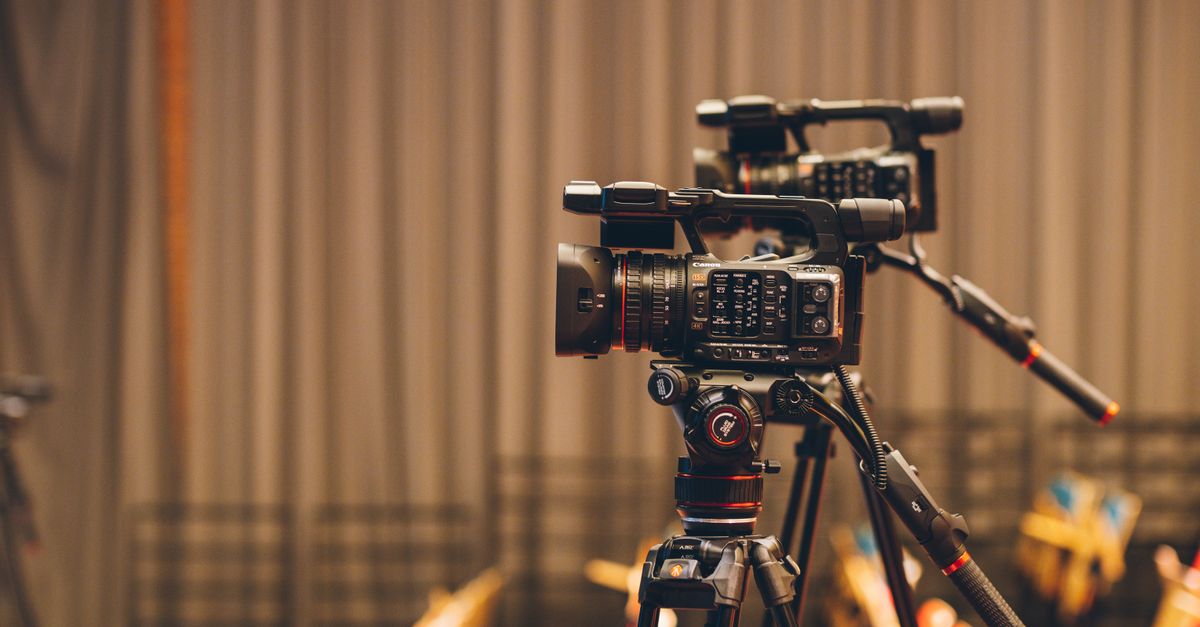
Neuromorphic Vision for High-Speed Robotics: The State of Event Cameras
Event cameras represent a fundamental departure from conventional frame-based vision. Rather than capturing static images at fixed intervals, neuromorphic vision sensors output asynchronous brightness changes at the individual pixel level. Each pixel operates independently, triggering an event only when luminance shifts exceed a programmable threshold. This architecture eliminates motion blur, drastically reduces data bandwidth, and delivers sub-millisecond latency, making event cameras uniquely suited for high-speed robotics, fast-moving drones, and industrial inspection systems where traditional sensors fail under rapid motion or extreme lighting transitions.
For robotics engineers in India and globally, the practical question is no longer whether event cameras work, but which shipping hardware delivers reliable performance, how to integrate them into existing perception stacks, and what the actual landed cost looks like. This article grades claims by deployment maturity, prioritizes shipped hardware over concept renders, and outlines realistic integration pathways.
How Event Cameras Differ from Conventional Sensors
Conventional CMOS sensors read out entire frames at fixed frequencies, typically 30 to 120 Hz. During high-speed motion, this results in temporal aliasing and motion blur. Event cameras bypass frame synchronization entirely. When a pixel detects a relative intensity change, it emits a timestamped event containing four data points: coordinates (x, y), polarity (increase or decrease in brightness), and timestamp (t). The resulting data stream is sparse, event-driven, and highly efficient for motion estimation.
The advantages for robotics are measurable:
- Latency: Events are processed in hardware, reducing effective latency to under 1 millisecond compared to 8 to 33 milliseconds for 30 to 120 Hz frame cameras.
- Dynamic Range: Neuromorphic sensors achieve 120 to 140 dB of dynamic range, allowing simultaneous visibility of bright highlights and deep shadows without HDR blending artifacts.
- Data Efficiency: In controlled motion scenarios, event streams can reduce bandwidth by 10 to 100 times compared to raw video, easing edge compute constraints.
- Rolling Shutter Elimination: Global shutter CMOS sensors still suffer from readout distortion during fast acceleration. Event cameras are immune because each pixel updates asynchronously.
These characteristics do not replace frame-based vision. They complement it. Robotics teams typically fuse event streams with inertial measurement units (IMUs) and conventional cameras for semantic understanding, while relying on neuromorphic sensors for motion tracking, optical flow, and high-speed control loops.
Shipping Hardware: Graded by Deployment Maturity
Grading event camera hardware requires separating shipped units, pilot deployments, and announced roadmaps. The following assessment focuses on hardware available for procurement and integration.
Shipping Hardware (Available for Integration)
- Prophesee Metavision Gen4 (4K & 1280x720): The most mature commercial platform. Gen4 sensors offer up to 4K resolution with event rates exceeding 1 billion events per second. Ships as development kits, OEM modules, and embedded camera units. Widely documented for drone stabilization, AGV navigation, and industrial motion tracking.
- Sony IMX717 / IMX856 Event Sensors: Sony has shipped event-based CMOS sensors for automotive and robotics applications. The IMX717 (1.2 MP) and IMX856 (VGA) are available as sensor modules. Sony's datasheets confirm high-speed readout architecture and automotive-grade reliability targets.
- OnSemi (formerly iniVation) xIME Series: Following OnSemi's acquisition of iniVation, the xIME line remains in production. These sensors support event-based stereo configurations and are used in industrial automation and high-speed inspection. Integration requires OnSemi's proprietary SDK and calibration tools.
- VisionEgg (Switzerland) EventCam: Commercially available as a ruggedized, high-speed event camera system. Focused on industrial robotics and quality inspection. Ships with real-time event processing firmware and standardized interfaces.
Pilot Deployments (Limited Production or Field Testing)
- TNO Neuromorphic Vision Modules: Dutch research institute TNO has advanced event camera prototypes for autonomous systems. Some units have entered limited pilot programs with European logistics and manufacturing partners, but mass production remains constrained by CMOS foundry scaling.
- Automotive ADAS Event Fusion: Several Tier-1 suppliers have integrated event sensors into pilot fleets for night driving and tunnel transitions. Deployments remain in validation phases, with production rollout tied to automotive certification timelines.
Announcements & Roadmap (Not Yet Shipping)
- Next-Gen Global Event Sensors: Several foundry partners are developing event-based global shutter architectures. These remain in tape-out or early validation stages. Claims of commercial availability in 2024 to 2025 require independent verification before procurement planning.
- AI-Co-Processed Event Chips: Fabless startups are prototyping neuromorphic vision SoCs with on-chip spiking neural networks. These remain in silicon validation. Robotics teams should treat performance claims as preliminary until reference designs ship.
Pilot Deployments and Industrial Validation
Event cameras have moved beyond laboratory demos into controlled industrial environments. The following use cases have documented pilot deployments:
- High-Speed AGV & AMR Navigation: Event-based optical flow enables localization at speeds exceeding 3 m/s without motion blur. Pilots in European warehouses demonstrate improved trajectory tracking on reflective floors where conventional cameras lose feature points.
- Drone Obstacle Avoidance: Fast-moving quadrotors and fixed-wing drones use event streams for real-time collision avoidance. The low-latency pipeline allows control loops to run at 1 kHz, significantly improving stability in turbulent conditions.
- Industrial Inspection & Assembly: High-speed pick-and-place robots and conveyor inspection systems leverage event cameras to detect micro-movements and vibration anomalies. OnSemi and VisionEgg modules are deployed in validation lines for defect detection under strobed lighting.
- Automotive Tunnel & Glare Handling: Event sensors maintain visibility during rapid luminance transitions. Pilot fleets in Europe test event-IMU fusion for lane keeping during tunnel entry/exit, though certification remains ongoing.
None of these deployments replace frame-based perception. They augment it. Robotics teams using event cameras typically run parallel pipelines: conventional cameras handle semantic segmentation and object classification, while event streams drive motion estimation, tracking, and high-frequency control loops.
Integration Considerations for Robotics Teams
Adopting event cameras requires changes to perception architecture, compute allocation, and calibration workflows.
- Data Pipeline Architecture: Event streams arrive asynchronously. Teams must implement ring buffers, timestamp synchronization, and event-to-frame conversion algorithms (e.g., E-frames, V-SLAM adaptations) for compatibility with existing perception stacks.
- Compute Requirements: Event processing is lightweight compared to raw video, but real-time optical flow and tracking demand efficient algorithms. NVIDIA Jetson Orin, Rockchip RV1126, and Xilinx Zynq MPSoC platforms handle event streams effectively when optimized with dedicated SDKs.
- Calibration & Synchronization: Event sensors require precise intrinsics and extrinsics calibration. Multi-camera stereo configurations demand hardware-level timestamp alignment. Prophesee and OnSemi provide calibration utilities, but teams must budget time for field validation.
- Algorithm Maturity: Open-source frameworks like Metavision SDK, event_based_vision libraries, and ROS 2 drivers support integration. However, event-specific neural networks (e.g., event-based YOLO, spiking CNNs) remain research-grade. Teams should prioritize proven optical flow and tracking algorithms over experimental AI models.
India Availability and Approximate Pricing
Event cameras are not yet mass-produced in India. All units are imported through authorized distributors, direct OEM channels, or robotics hardware resellers. Lead times typically range from 4 to 12 weeks depending on sensor size, mounting configuration, and volume.
Approximate landed cost estimates for India (including customs, GST, and logistics) are as follows:
- Prophesee Metavision Gen4 Development Kit (1280x720): ₹1.4 lakh to ₹1.8 lakh per unit. OEM modules scale with volume. Pricing reflects sensor maturity, SDK support, and industrial-grade components.
- Sony IMX717 / IMX856 Sensor Modules: ₹85,000 to ₹1.2 lakh per module. Pricing varies by mounting bracket, lens adapter, and interface (MIPI CSI-2 vs. Ethernet).
- OnSemi xIME Series: ₹1.6 lakh to ₹2.2 lakh per unit. Higher cost reflects automotive-grade validation and stereo configuration support.
- VisionEgg EventCam: ₹1.8 lakh to ₹2.5 lakh per unit. Ruggedized industrial housing and real-time firmware drive pricing.
These are landed cost estimates. Actual pricing depends on exchange rates, import duties, distributor margins, and volume commitments. Robotics teams in India should engage authorized partners early for calibration support, firmware updates, and warranty terms. Local assembly or CMOS foundry partnerships remain speculative and are not currently viable for procurement planning.
Grounded Outlook
Event cameras are no longer experimental. Shipping hardware from Prophesee, Sony, OnSemi, and VisionEgg delivers measurable latency and dynamic range advantages for high-speed robotics. Pilot deployments in AGVs, drones, and industrial inspection confirm practical value, particularly in motion tracking and glare handling. Integration requires pipeline adjustments, precise calibration, and algorithm selection tailored to event streams.
India's robotics sector can leverage event cameras for high-speed automation, but procurement must account for import dependencies, calibration overhead, and compute optimization. Claims of domestic manufacturing or mass deployment remain unverified. Teams should prioritize shipped hardware, validate integration pathways, and treat AI-co-processed neuromorphic chips as future roadmaps rather than current solutions. The technology is mature enough for deployment, but not yet commoditized.
References
- Prophesee. Metavision Gen4 Sensor Datasheet & Developer Documentation. https://www.prophesee.ai
- Sony Semiconductor Solutions. IMX717 / IMX856 Event-Based CMOS Sensor Product Pages. https://www.sony.com/en/science/sensors
- OnSemi. iniVation Acquisition & xIME Series Neuromorphic Vision Sensors. https://www.onsemi.com
- TNO. Neuromorphic Vision Systems for Autonomous Robotics. https://www.tno.nl
- Prophesee. Metavision SDK & ROS 2 Integration Guides. https://github.com/prophesee
- VisionEgg. EventCam Industrial Robotics Integration. https://www.visionegg.com
✓ Key takeaways
- •Hands-on view of Neuromorphic Vision for High-Speed Robotics: The State of Event Cameras inside our Event Cameras library.
- •Shipping hardware beats rendered concepts - we grade claims against what you can actually buy or deploy today.
- •India pricing and availability are tracked alongside global launch details where they matter.
Related articles
More in Event Cameras →

