Nvidia Isaac Ecosystem: Simulation, Training, and Control for Humanoid Robotics

Overview of the Nvidia Isaac Platform
The Nvidia Isaac platform represents a significant shift in how robotic systems are developed, moving beyond traditional hardware-centric prototyping to simulation-first engineering. For RobotWale's Indian readership, understanding the distinction between the software stack and the physical hardware is critical. Isaac is not a robot; it is the toolchain used to train, simulate, and deploy robotic intelligence. The ecosystem currently comprises three primary pillars: Isaac Sim for high-fidelity simulation, Isaac Lab for reinforcement learning environments, and Isaac Groot for humanoid control.
While the media often conflates Nvidia's software announcements with physical robot shipping, the editorial stance here is to grade claims by shipping hardware first, pilot deployments second, and announcements last. Nvidia provides the digital infrastructure, but the physical deployment relies on partners like Agility Robotics, Figure AI, and Boston Dynamics. This article evaluates the software capabilities, infrastructure requirements, and the specific implications for Indian robotics startups and enterprises.
Isaac Sim: High-Fidelity Simulation and Digital Twins
Isaac Sim is built upon the Omniverse platform and the Universal Scene Description (USD) file format. Its primary function is to create physics-accurate digital twins of robotic environments. Unlike legacy simulators that prioritize speed over accuracy, Isaac Sim leverages Nvidia's RTX ray tracing and PhysX engine to model light, material, and physics interactions with high precision.
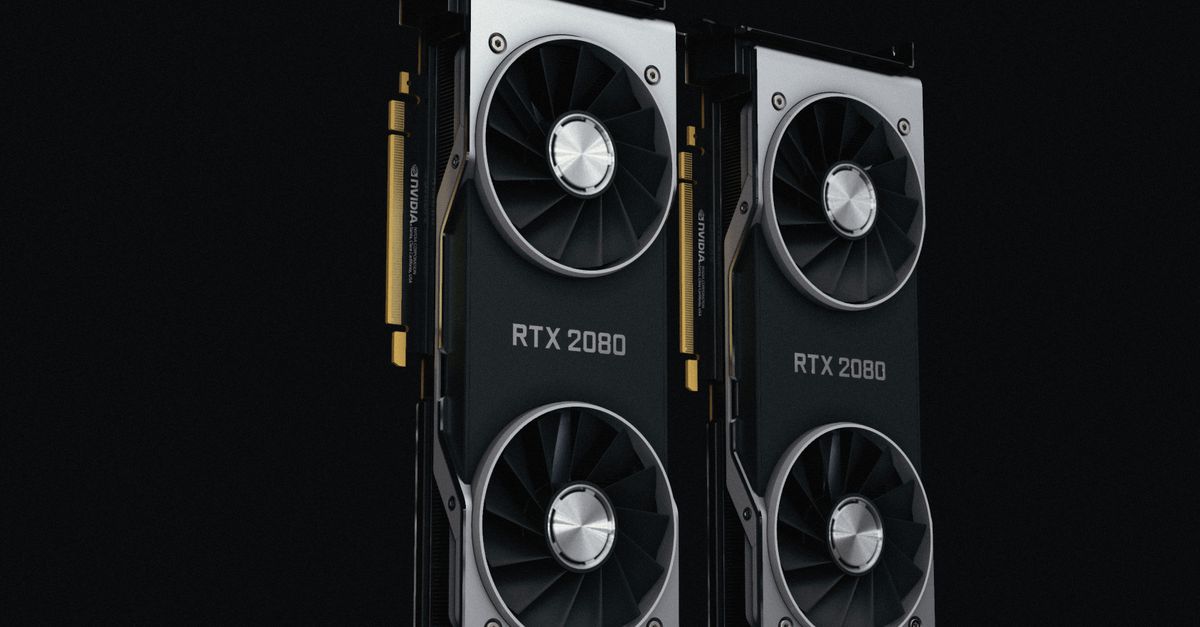
For the Indian market, the barrier to entry is not software licensing alone but the underlying compute required. Running Isaac Sim locally requires enterprise-grade GPUs. An RTX 6000 Ada Generation or an A100 Tensor Core GPU is recommended for complex scenes. In India, the landed cost for a single high-end GPU can range between INR 4 lakh and INR 10 lakh, depending on import duties and distributor markups. This excludes the cost of the host workstation, cooling, and power infrastructure.
Key Technical Capabilities
- USD Integration: Allows for interoperability between different 3D tools and robotics frameworks.
- Physics Engine: Supports rigid body dynamics, soft body physics, and fluid simulations.
- APIs: Offers Python APIs for integrating with PyTorch and ROS 2.
While Nvidia promotes Isaac Sim as a solution for rapid prototyping, the reality is that it demands significant computational resources. For Indian startups without access to on-premise data centers, this often pushes them toward cloud-based instances. Cloud pricing for GPU instances via providers like AWS or Azure in the Asia-Pacific region can cost between INR 300 to INR 1,200 per hour, depending on the instance type. This creates a recurring operational expenditure (OpEx) model rather than a capital expenditure (CapEx) model.
Isaac Lab: Reinforcement Learning Environments
Isaac Lab is designed specifically for reinforcement learning (RL) research and training. It provides a framework for setting up training environments where robotic agents can learn tasks through trial and error. The software includes pre-built environments for various robot morphologies, allowing developers to train policies before deploying them to physical hardware.
Isaac Lab is distinct from Isaac Sim in that it focuses on the training loop rather than the visual fidelity of the simulation. While Sim handles the rendering and physics, Lab handles the data pipeline for training models. This distinction is crucial for Indian robotics firms focusing on algorithm development rather than full-stack hardware manufacturing.
Deployment Readiness
Isaac Lab is open-source on GitHub, making it accessible without direct licensing fees for the base software. However, the compute resources required to train RL models at scale remain expensive. A training run that takes days on a single GPU cluster in the US can cost significantly more in India due to higher cloud latency and data transfer costs. Furthermore, the "Sim-to-Real" gap remains a challenge. While Isaac Lab can simulate thousands of episodes, transferring a policy trained in Isaac Lab to a physical robot in India requires rigorous calibration of sensor noise and actuator dynamics.
For enterprises, this means the software is a tool, not a product. It enables faster iteration cycles but does not guarantee successful deployment without hardware-specific tuning. Nvidia's documentation emphasizes that Isaac Lab is a research framework, meaning it is best suited for organizations with a dedicated robotics engineering team capable of managing the training pipeline.
Isaac Groot: Humanoid Control and Imitation Learning
Isaac Groot is the most recent addition to the ecosystem, focusing specifically on humanoid robots. The GR00T N1 model represents a new approach to humanoid control, utilizing imitation learning to transfer skills from human demonstrations to robotic actuators. This is not a replacement for traditional control theory but a complement to it.
Groot leverages large-scale datasets of human motion to train neural network policies. The claim here is that the software can learn complex manipulation tasks by watching human videos, reducing the need for manual programming of inverse kinematics. While promising, this technology is currently in the pilot deployment phase for most partners. It is not a plug-and-play solution for a standard humanoid robot in the Indian manufacturing sector.
Hardware and Availability
The Groot software stack requires high-performance compute for both training and inference. For the Indian market, inference on edge devices (such as the Nvidia Jetson Orin) is possible but requires quantization of the neural network models. This often results in a trade-off between model accuracy and inference speed.
Regarding availability, there is no standalone "Groot Robot" sold by Nvidia. The software is licensed to hardware manufacturers. If you are an Indian integrator looking to build a humanoid, you must partner with a manufacturer that has access to the Isaac Groot SDK. Currently, this limits the immediate applicability to large-scale industrial partners rather than individual developers or small labs.
India Availability and Infrastructure Costs
The adoption of the Isaac ecosystem in India is heavily dependent on infrastructure. Unlike software that runs on a laptop, Isaac Sim and Groot require GPU acceleration. The Indian electronics market currently faces a significant gap in high-end AI hardware availability. Import duties on AI-specific GPUs can rise to 20% or higher, affecting the Total Cost of Ownership (TCO).
Estimated Costs
- On-Premise Hardware: A workstation capable of running Isaac Sim locally (RTX 6000 Ada) costs approximately INR 6-8 Lakhs (excluding CPU, RAM, and Storage).
- Cloud Compute: Hourly rates for A100 instances on AWS Mumbai region range from INR 800 to INR 1,500 per hour.
- Licensing: Isaac Sim is free for research but requires an enterprise license for commercial deployment.
For Indian startups, the cloud model is more accessible initially. However, data privacy laws in India regarding industrial robotics data may restrict the use of public cloud environments. This pushes many enterprises toward hybrid models, using local servers for training and cloud for scaling.
Critical Analysis and Limitations
While the Nvidia Isaac suite offers a robust framework, it is not without limitations. The primary constraint is the dependency on the Nvidia ecosystem. Moving from Isaac Sim to a non-Nvidia hardware platform requires significant re-engineering. This vendor lock-in is a valid concern for Indian robotics companies seeking long-term autonomy.
Additionally, the "rendered-concept" worship often seen in tech media must be avoided. A simulation of a robot lifting a weight is not the same as the robot lifting a weight. The physics engine is accurate, but the real-world friction, wear, and sensor noise are never perfectly simulated. Therefore, deployment readiness remains the primary metric for success, not simulation time.
Nvidia's announcements regarding Groot N1 are compelling, but until a robot ships with Groot software in a commercial volume in India, the technology remains in the pilot phase. Manufacturers must be graded on their actual delivery of hardware, not their software roadmap.
Conclusion
The Nvidia Isaac ecosystem provides a powerful foundation for robotics development, particularly for simulation and training. However, it is a software stack, not a hardware solution. For the Indian robotics market, the value proposition lies in the reduction of physical prototyping costs, provided the compute infrastructure is available.
Enterprises should prioritize pilot deployments using cloud instances to validate the software before committing to expensive on-premise hardware. Humanoid control via Groot remains a cutting-edge feature, best suited for large-scale industrial partners rather than small-scale integrators. As the hardware ecosystem matures and GPU availability stabilizes in India, the Isaac platform is poised to become a standard for robotic development. Until then, caution and realistic deployment timelines are essential.
References
1. Nvidia Isaac Sim Documentation. https://docs.omniverse.nvidia.com/app_isaacsim/app_isaacsim/overview.html
2. Nvidia Isaac Lab GitHub Repository. https://github.com/isaac-sim/IsaacLab
3. Nvidia Isaac Groot Overview. https://www.nvidia.com/en-us/autonomous-mobility/isaac-groot/
4. Nvidia Omniverse Pricing. https://www.nvidia.com/en-us/omniverse/pricing/
✓ Key takeaways
- •Hands-on view of Nvidia Isaac Ecosystem: Simulation, Training, and Control for Humanoid Robotics inside our Nvidia Isaac library.
- •Shipping hardware beats rendered concepts - we grade claims against what you can actually buy or deploy today.
- •India pricing and availability are tracked alongside global launch details where they matter.
References
Related articles
More in Nvidia Isaac →