Nvidia Isaac Ecosystem: Sim, Lab, and Groot in 2024

Nvidia Isaac Ecosystem: Sim, Lab, and Groot in 2024
The term "Isaac" immediately evokes imagery of autonomous robots navigating complex environments. However, for RobotWale, it is crucial to distinguish between the marketing narrative and the actual software deliverables. Nvidia Isaac is not a single product but a suite of tools designed to accelerate robotics development. This article grades the three core pillars: Isaac Sim, Isaac Lab, and Groot, focusing on shipping hardware viability and deployment reality rather than conceptual demos.
While the robotics industry often conflates software stacks with physical hardware, the Isaac ecosystem exists primarily in the simulation and training layer. For Indian robotics firms and startups, the decision to adopt this stack depends heavily on infrastructure costs, specifically GPU compute availability and licensing terms. We are grading these tools based on their ability to support real-world deployment, not just high-fidelity rendering.
Isaac Sim: The Physics Engine Reality
Isaac Sim is the flagship simulation environment within the Isaac suite. Built on top of the Omniverse platform, it utilizes physically based rendering (PBR) and accurate physics engines to create digital twins of robots and environments. Unlike generic game engines, Isaac Sim is designed for robotics-specific constraints, including collision detection, material properties, and sensor noise modeling.
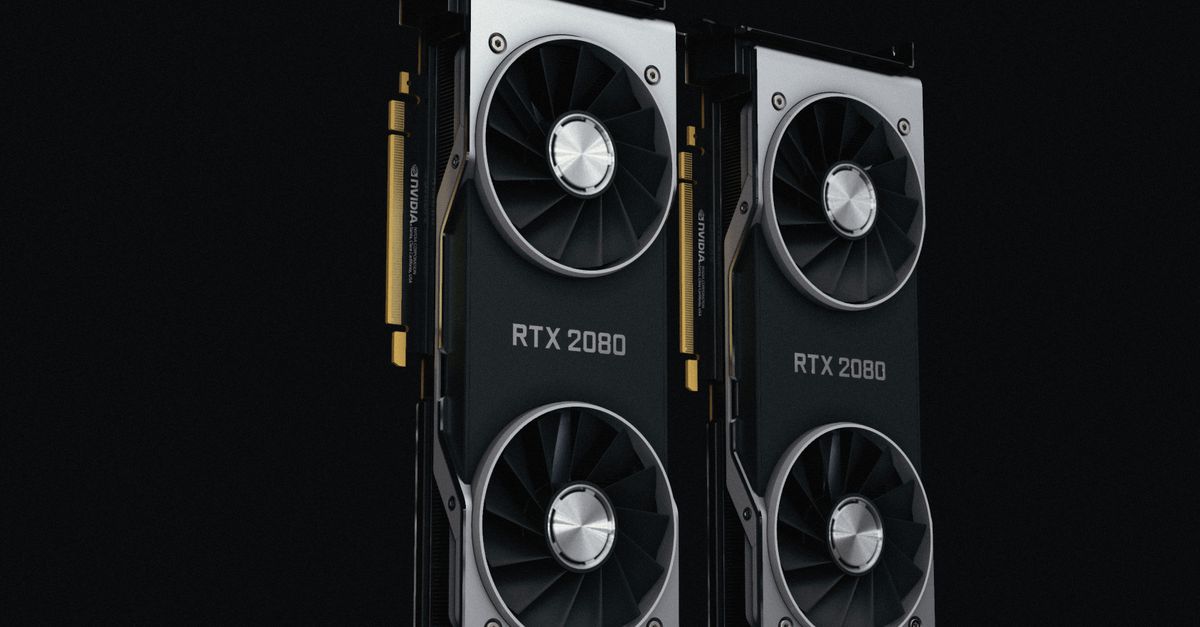
The value proposition is clear: training robots in simulation reduces wear and tear on physical hardware. However, the cost of entry is significant. Running Isaac Sim at an industrial level requires high-end NVIDIA GPUs, typically from the RTX 40-series for local workstations or data center-class GPUs for cloud rendering. For an Indian startup, the hardware cost alone can exceed INR 3-5 lakhs for a single high-performance workstation capable of running the simulation in real-time.
Simulation Fidelity vs. Reality
Isaac Sim achieves high fidelity through its integration with Omniverse USD (Universal Scene Description). This allows for the precise modeling of robot kinematics. Yet, the gap between simulation and reality remains a primary hurdle. Nvidia acknowledges this through the "Sim2Real" transfer workflow. While the software handles the physics, the robot’s sensors still require calibration in the physical world.
The software does not ship as a standalone executable for the average developer. It is integrated into the NVIDIA Isaac SDK, which requires specific hardware certification. This means that while the software is available, the hardware required to run it effectively is not universally accessible in India without cloud rentals or significant capital expenditure.
Isaac Lab: Scaling Reinforcement Learning
Isaac Lab is the training environment designed for robotics reinforcement learning (RL). It provides a standardized API for developing control policies. The key differentiator here is the ability to train thousands of robots simultaneously across diverse environments. This parallelization is essential for learning complex behaviors like walking, grasping, or manipulation.
Unlike Isaac Sim, which focuses on visual fidelity and physics accuracy, Isaac Lab prioritizes training throughput. It allows researchers to push large-scale RL experiments without manual intervention. For humanoid robot developers, this is critical. Walking involves millions of state transitions, and manual tuning is inefficient compared to automated RL training.
Deployment Constraints
The training phase in Isaac Lab is computationally intensive. While the software itself is open-source via GitHub, the inference and training require significant GPU resources. In India, this often translates to cloud computing costs. Renting H100 or A100 instances on cloud platforms can cost roughly INR 800 to INR 1,200 per hour per instance. For a model requiring 1,000 hours of training, the cloud bill alone could exceed INR 5 lakhs.
This cost structure places Isaac Lab firmly in the category of "Enterprise Pilots" rather than "Mass Market" tools. Small Indian robotics labs may find the recurring cloud costs prohibitive unless they own their on-premise GPU clusters. We grade this aspect as high-barrier entry for independent developers.
Groot: Motion Generation and Pose Estimation
Groot represents the newest evolution in the Isaac suite, focusing on motion generation and imitation learning. It enables robots to learn from human demonstrations using off-the-shelf cameras. The system estimates the pose of the human and generates control signals for the robot to mimic the movement.
This is a significant shift from traditional programming where every motion is scripted. Groot moves toward data-driven control. However, the accuracy of the pose estimation depends on the quality of the input sensors. The Groot model requires a robust camera setup and reliable depth data to function correctly.
Hardware Dependency
Groot is not a standalone piece of hardware. It relies on the underlying hardware capabilities of the robot it is deployed on. For humanoid robots, this means the robot must have the actuation to match the human’s movement. If the hardware cannot replicate the speed or torque, the Groot output becomes irrelevant.
In the context of Indian robotics, Groot is currently an announcement-grade feature. While the software stack exists, the integration into commercial hardware is in its early stages. We cannot yet grade it as a fully integrated shipping product for the mass market. It remains a powerful tool for pilot deployments where hardware control is already established.
The India Connection: Costs and Accessibility
The viability of the Nvidia Isaac ecosystem in India hinges on two factors: hardware availability and software licensing costs. Unlike open-source frameworks that run on standard CPUs, Isaac tools are optimized for NVIDIA GPU accelerators.
Hardware Sourcing
High-performance GPUs are subject to global supply chain fluctuations. Import duties on computing hardware in India have risen recently, affecting the landed cost of development rigs. A workstation capable of running Isaac Sim at full fidelity can cost between INR 5 lakhs and INR 15 lakhs depending on the GPU configuration. This excludes the cost of the simulation software itself, which is often licensed for enterprise use.
Cloud vs. On-Premise
For startups without capital for hardware, cloud-based Isaac instances are the alternative. However, this introduces latency and data sovereignty concerns. For robotics, low latency is critical. Training in the cloud and deploying on-premise is a viable workflow, but it requires a robust internet connection and secure data handling protocols.
Estimates and Pricing
Estimates for the Isaac ecosystem in India are difficult to pin down due to the enterprise nature of the pricing. However, based on public cloud rates:
- Isaac Sim (Local): INR 3-5 lakhs (Hardware only).
- Isaac Lab (Cloud Training): INR 50,000 to INR 2 lakhs (Per project training).
- Groot Integration: Custom Enterprise Licensing (Contact sales).
These figures are indicative and may vary based on volume discounts and specific hardware configurations.
Conclusion: Shipping Hardware vs. Software Stacks
The Nvidia Isaac ecosystem is undeniably powerful. It provides the infrastructure necessary to train advanced robots without physical risk. However, it must be graded strictly by its ability to support shipping hardware.
Isaac Sim and Isaac Lab are mature tools for simulation and training. They are not end-user applications but developer frameworks. Groot is a promising addition for motion generation but requires hardware capable of executing the generated motions.
For the Indian robotics sector, the recommendation is pragmatic. Use Isaac Sim for prototyping if GPU resources are available. Use Isaac Lab for RL-heavy projects if cloud budgets allow. Treat Groot as a capability to be integrated, not a standalone solution. Until the ecosystem ships alongside affordable, locally supported hardware, it remains a high-value tool for specialized developers rather than a mass-market product.
RobotWale continues to monitor the Isaac ecosystem’s integration with Indian robotics hardware. As the hardware matures, the software stack will likely become more accessible. Until then, the focus remains on shipping hardware first, followed by software pilots.
References
- Nvidia Isaac Sim Official Page: https://www.nvidia.com/en-us/robots-and-autonomous-machines/isaac-sim/
- Nvidia Isaac Lab on GitHub: https://github.com/isaac-oracle/isaac-lab
- Nvidia Groot Announcement: https://nvidianews.nvidia.com/news/nvidia-reveals-groot-robot-learning-technology
✓ Key takeaways
- •Hands-on view of Nvidia Isaac Ecosystem: Sim, Lab, and Groot in 2024 inside our Nvidia Isaac library.
- •Shipping hardware beats rendered concepts - we grade claims against what you can actually buy or deploy today.
- •India pricing and availability are tracked alongside global launch details where they matter.
Related articles
More in Nvidia Isaac →