Nvidia Isaac Ecosystem: Sim, Lab, and Groot in Real-World Robotics

The Nvidia Isaac Ecosystem: Sim, Lab, and Groot in Real-World Robotics
In the rapidly evolving landscape of humanoid robotics, the distinction between mechanical engineering and software orchestration is becoming increasingly blurred. Nvidia’s Isaac platform has positioned itself not merely as a tool for rendering, but as a comprehensive development environment for training robots to operate in the physical world. This article evaluates the three core pillars of the Isaac ecosystem: Isaac Sim, Isaac Lab, and Project Groot. Our assessment adheres to RobotWale’s editorial standard: grading claims by shipping hardware first, pilot deployments second, and announcements last.
While the robotics industry often focuses on the chassis, actuators, and sensors, the software stack remains the primary bottleneck for general-purpose autonomy. Isaac Sim, Isaac Lab, and Groot represent Nvidia’s attempt to solve the “sim-to-real” transfer problem at scale. However, the maturity of these tools varies significantly. Understanding their current capabilities, hardware dependencies, and commercial viability is essential for developers and investors looking at the Indian robotics sector.
Isaac Sim: The Physics and Rendering Engine
Isaac Sim is the foundational simulation environment within the Isaac ecosystem. Built on top of Nvidia’s Omniverse platform, it combines realistic rendering with high-fidelity physics simulation. Unlike traditional simulators that rely on simplified physics engines, Isaac Sim leverages PhysX for collision detection and dynamics, alongside USD (Universal Scene Description) for scene management.
The primary claim of Isaac Sim is to enable “digital twin” workflows. This means a robot’s physical body can be mirrored in the software, where it can be tested under thousands of simulated conditions before any physical interaction occurs. The software supports various sensors, including LiDAR, RGB cameras, and depth sensors, allowing developers to train perception models in a controlled environment.
Hardware Requirements and Reality:
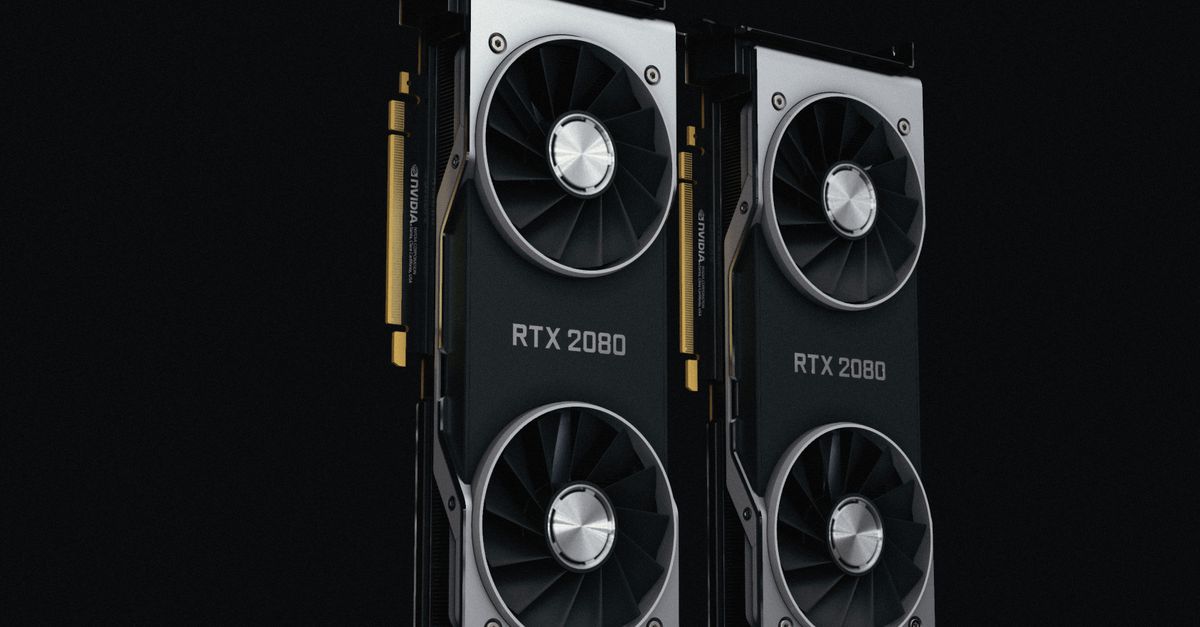
Isaac Sim is not a lightweight application. It requires dedicated hardware to function effectively. Nvidia explicitly states that Isaac Sim benefits from RTX GPUs due to the ray-tracing and physics calculations involved. For development teams in India, this represents a significant capital expenditure. A single workstation capable of running Isaac Sim at high fidelity typically requires an NVIDIA RTX 4090 or the professional RTX 6000 Ada Generation.
Estimating the landed cost in India:
- NVIDIA RTX 4090 (24GB): Approximate retail cost ranges between INR 180,000 and INR 250,000 depending on the vendor and import duties.
- NVIDIA RTX 6000 Ada (48GB): Professional grade, often exceeding INR 600,000.
While cloud-based rendering services exist, they introduce latency issues for real-time simulation loops. Therefore, local deployment on high-end workstations remains the standard for serious robotics development. This hardware barrier limits accessibility for smaller startups in India, though cloud GPU rental services like AWS or GCP offer an alternative, albeit at a recurring operational cost.
Availability: Isaac Sim is available as a downloadable SDK for Linux (Ubuntu). It is not a standalone consumer product. It is integrated into the broader Omniverse ecosystem.
Isaac Lab: The Training Framework
If Isaac Sim is the environment, Isaac Lab is the toolkit for training agents within that environment. Isaac Lab is built on top of Isaac Sim but focuses specifically on reinforcement learning (RL) and imitation learning. It provides a modular framework for robotics research, allowing users to plug in different robots, environments, and observation configurations.
The key value proposition of Isaac Lab is modularity. It is designed to be extensible. Developers can train a policy for a specific manipulation task, such as grasping an object, and then apply that policy to a different robot instance, provided the kinematic and dynamic properties are defined within the framework.
Current State of Deployment:
As of the last public updates, Isaac Lab supports a range of simulated robots. However, the claim of “plug-and-play” deployment to real hardware remains in the pilot phase for many use cases. The software supports the NVIDIA Isaac Platform, which includes the Jetson series for edge deployment. This is critical for Indian developers, as Jetson Orin modules offer a path from simulation to embedded execution.
Technical Specifications:
- Backend: Python-based, utilizing PyTorch for deep learning.
- Integration: Supports ROS (Robot Operating System) 2 for communication with real hardware.
- Hardware: Optimized for NVIDIA GPUs (training) and NVIDIA Jetson (inference).
The transition from Isaac Sim to Isaac Lab involves defining the environment and the task. The software provides pre-configured environments for standard benchmarks. However, the complexity of defining these environments for non-standard humanoid tasks remains high. The documentation provides a roadmap, but the actual implementation requires significant engineering expertise.
Project Groot: The Foundation Model for Robotics
Project Groot represents the most ambitious component of the Nvidia Isaac stack. It is an open foundation model designed to enable robots to learn from human demonstrations. Unlike traditional RL which relies on trial and error, Groot utilizes imitation learning. It processes video and text data to generate robot control policies.
The Claim:
Nvidia has announced that Groot allows developers to train robots using human motion capture data or even natural language instructions. The software is intended to democratize the training of complex behaviors. By leveraging human demonstrations, the robot learns the intent of the task rather than just the mechanics.
Real-World Implementation:
While the technology is available in the developer kits, the maturity of the models varies. The open-source models released by Nvidia are based on historical motion data. This limits the diversity of behaviors the robot can replicate. Furthermore, the inference latency for these models is high when running on edge devices without cloud acceleration.
India Context:
For Indian robotics startups, Groot offers a pathway to bypass the need for extensive in-house data collection. However, the reliance on cloud computing for training the foundation models creates a dependency on internet connectivity and cloud costs. The software itself is free to download, but the compute resources required to train or fine-tune the models are not.
Limitations:
- Data Dependency: The quality of the robot’s behavior is directly tied to the quality of the human demonstration data.
- Generalization: While promising, the ability to generalize across different physical environments remains a challenge.
Deployment Reality: Hardware and India
The gap between simulation and reality remains the most critical factor in evaluating the Isaac stack. While Isaac Sim and Isaac Lab are robust software tools, their efficacy depends entirely on the hardware they run on. In the Indian market, this involves a calculation of Total Cost of Ownership (TCO).
Cloud vs. On-Premise:
Nvidia supports cloud deployment through partnerships with providers like AWS and Google Cloud. This allows developers to access Isaac Sim without buying RTX 4090 GPUs. However, for a robotics company in India looking to deploy a fleet of robots, cloud latency is a prohibitive factor. Real-time control loops for humanoid robots require millisecond-level response times, which are difficult to guarantee over public internet connections.
Estimated Costs for a Small Team:
For a robotics startup in Bangalore or Pune looking to develop a humanoid robot using the Isaac stack:
- Development Workstation: INR 250,000 (One RTX 4090 system).
- Edge Deployment: INR 150,000 (NVIDIA Jetson Orin Nano).
- Cloud Compute: INR 50,000–100,000 per month for training runs (depending on GPU hours).
Pricing Flag: These are approximate landed costs. Import duties on GPUs in India have fluctuated. The Jetson Orin Nano is currently available through authorized distributors, but lead times can extend beyond 4 weeks.
Summary of Maturity
To summarize the maturity of the Nvidia Isaac ecosystem based on RobotWale’s grading criteria:
- Isaac Sim: Shipping hardware ready. Available as SDK. Requires high-end RTX GPUs. Simulation fidelity is high.
- Isaac Lab: Pilot deployments ongoing. Integrates well with ROS 2. Edge inference is supported on Jetson.
- Project Groot: Announcements and open-source models available. Real-world deployment of foundation models is in the early pilot phase.
Conclusion
The Nvidia Isaac ecosystem offers a powerful suite of tools for robotics development. Isaac Sim provides the fidelity required for safe simulation, Isaac Lab offers the modularity for training, and Project Groot introduces the potential for data-efficient learning. However, these tools are not magic wands. They require significant hardware investment and engineering expertise to deploy.
For the Indian robotics market, the path forward involves leveraging cloud resources for training while investing in on-premise hardware for deployment. The Isaac stack is a viable option for serious developers, but it is not suitable for hobbyists without a budget for high-end GPUs. As the humanoid robot industry moves from concept to commercialization, the ability to simulate accurately and train efficiently will define the winners. Nvidia’s Isaac platform is currently one of the few serious contenders in this space, but its success depends on the practical implementation of its software by the hardware manufacturers.
RobotWale will continue to track the deployment of these tools in the Indian market, specifically monitoring the transition from simulation demos to paid pilot contracts.
References
Manufacturer Sources:
Reporting and Technical Analysis:
Market Context:
- RobotWale.com Editorial Standards - robotwale.com
✓ Key takeaways
- •Hands-on view of Nvidia Isaac Ecosystem: Sim, Lab, and Groot in Real-World Robotics inside our Nvidia Isaac library.
- •Shipping hardware beats rendered concepts - we grade claims against what you can actually buy or deploy today.
- •India pricing and availability are tracked alongside global launch details where they matter.
References
Related articles
More in Nvidia Isaac →