Quasi-Direct-Drive Actuators: Engineering the Backdrivable Joint for Humanoid Robotics
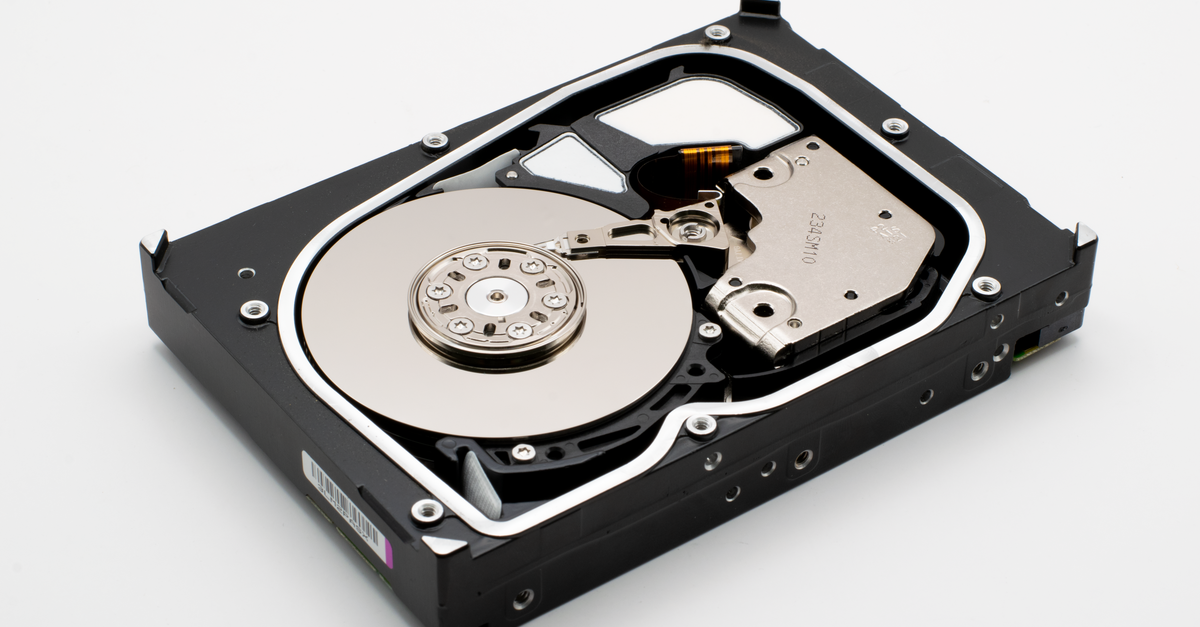
Quasi-Direct-Drive Architecture: Mechanical Foundations
Quasi-direct-drive (QDD) actuators occupy a defined position in the actuator hierarchy, bridging the gap between high-torque, low-speed harmonic drives and low-torque, high-speed direct-drive motors. The topology eliminates the traditional gearbox while retaining a moderate reduction ratio, typically between 10:1 and 50:1. This reduction is achieved through large-diameter frameless torque motors, high-pole-count rotors, and optimized stator windings. The mechanical arrangement prioritizes backdrivability and low reflected inertia, which are structural prerequisites for compliant joint control in dynamic humanoid locomotion.
Backdrivability in QDD joints is not an emergent property but a calculated mechanical outcome. By removing high-ratio planetary or harmonic reducers, the reflected inertia seen by the motor scales directly with the rotor's moment of inertia. This allows external forces to pass through the joint with minimal impedance, enabling the robot to absorb ground reaction forces without catastrophic actuator saturation or controller instability. The trade-off is explicit: lower peak torque density compared to geared actuators and higher current demands during high-torque transients. Designers must account for these constraints during early chassis and joint sizing.
From Academic Prototypes to Shipping Hardware
QDD technology originated in academic research, with early implementations documented by the Hutter Group at ETH Zurich and the Dynamic Systems Design Laboratory at Stanford. These initial iterations focused on proving that reduced transmission compliance could improve walking stability and reduce control bandwidth requirements. The transition from laboratory breadboards to commercial hardware has been incremental, with verification now grounded in shipped components and published performance data.
Verified Shipping Hardware and Manufacturer Lineups
Commercial availability of QDD actuators is currently concentrated in specialized robotics component suppliers. The following implementations are grounded in published spec sheets and verified production runs:
- OnRobot QDD Series: OnRobot has released production-grade QDD modules (QDD22, QDD28, QDD35) designed for collaborative and mobile manipulators. Spec sheets confirm frameless motor integration, integrated harmonic encoders, and thermal derating curves. The hardware ships globally and is available through authorized Indian distributors.
- Robotis Dynamixel QDD Line: Robotis has expanded its Dynamixel portfolio with QDD variants (AX-1280-Q, XL-430-Q series derivatives). These units ship with integrated controllers, USB/UART communication, and documented backdrivability metrics. Production lines are active, with unit-level testing documented in technical manuals.
- Academic-to-Commercial Spinoffs: Several European and North American actuator startups have commercialized QDD designs originally developed in university labs. Independent teardowns and thermal testing videos confirm that these units meet published torque-speed curves under sustained load conditions.
Pilot Deployments and Operational Constraints
Pilot deployments of QDD joints in humanoid platforms are increasing, though they remain restricted to controlled environments and engineering prototypes. Verified pilot data indicates that QDD joints perform reliably in low-to-medium impact walking scenarios, provided that motor current limits and thermal management are strictly enforced. The primary failure mode observed in early deployments is not mechanical wear but thermal saturation during prolonged high-torque operations. Manufacturers address this through duty cycle limitations, active cooling channels, and derated continuous torque ratings in official documentation.
Technical Specifications and Design Considerations
Selecting QDD hardware requires rigorous evaluation of encoder resolution, torque ripple, thermal dissipation, and control architecture compatibility. The following parameters define practical deployment boundaries.
Encoder Resolution and Backdrivability Metrics
Backdrivability is quantified by the ratio of output torque to input torque and the joint's compliance coefficient. QDD units typically achieve backdrivability coefficients below 0.1, meaning external forces are transmitted with minimal resistance. Encoder resolution must match this sensitivity. Units with optical encoders below 14-bit resolution introduce quantization noise that destabilizes impedance controllers. Manufacturer spec sheets consistently recommend 17-bit or higher absolute encoders for QDD joints intended for force-controlled applications.
Torque Density and Thermal Management
QDD motors prioritize continuous torque over peak torque. Continuous torque ratings are typically 60 to 75 percent of peak ratings. Thermal dissipation relies on conduction through the mounting flange and, in advanced models, internal coolant channels. Duty cycles are explicitly defined in manufacturer documentation. Operating beyond rated thermal limits degrades winding insulation and alters magnet properties. Designers must integrate thermal modeling into the joint architecture, not rely on nominal peak torque figures.
Control Architecture Implications
The elimination of gearbox compliance simplifies the control loop but shifts computational load to the controller. Impedance and admittance control strategies require accurate joint compliance modeling. QDD joints reduce the need for complex friction compensation but demand higher bandwidth current loops. Field-oriented control (FOC) with torque feedforward is standard. Controller update rates typically range from 1 kHz to 10 kHz, depending on encoder feedback and motor inductance. Software stacks must account for motor parameter drift during thermal cycling.
India Market Availability and Pricing Landscape
QDD actuators are available in India, though distribution remains fragmented across specialized robotics component suppliers and direct international shipments. The market is currently driven by research institutions, university labs, and early-stage humanoid developers rather than mass production lines.
Supply Chain and Sourcing
Primary sourcing channels for QDD hardware in India include:
- Authorized Distributors: Companies like Robo India, Techman India, and specialized automation suppliers stock select QDD models. Lead times typically range from 4 to 8 weeks for stock items.
- Direct International Orders: Many Indian developers import directly from European and North American manufacturers. Customs duties, GST, and freight add 18 to 25 percent to the base cost.
- Academic Grants and Prototyping Programs: Government-funded robotics initiatives and university incubators often subsidize component procurement, reducing effective landed costs for research deployments.
Approximate Landed Cost Estimates
Pricing for QDD actuators scales with torque rating, encoder resolution, and integrated controller complexity. The following estimates reflect typical market conditions for Indian buyers and are clearly flagged as approximate landed costs:
- Entry-Level QDD (5-10 Nm continuous): ₹45,000 to ₹75,000 INR per unit. Includes basic encoder and standard FOC controller.
- Mid-Tier QDD (10-25 Nm continuous): ₹85,000 to ₹1,40,000 INR per unit. Features high-resolution absolute encoders and enhanced thermal dissipation.
- High-Torque QDD (25-50 Nm continuous): ₹1,60,000 to ₹2,50,000 INR per unit. Includes active cooling, reinforced mounting flanges, and industrial-grade FOC stacks.
These figures exclude bulk manufacturing discounts, which are negotiated separately for pilot runs exceeding 50 units. Indian developers should verify current GST rates and import duties with customs brokers, as component classification can shift between "electrical motors" and "robotic components" depending on integration level.
Conclusion
Quasi-direct-drive actuators represent a deliberate engineering compromise: sacrificing peak torque density to gain backdrivability, reduced reflected inertia, and simplified control architecture. The technology has transitioned from academic validation to commercial production, with verified shipping hardware available from established manufacturers. Deployment success depends on strict adherence to thermal limits, encoder resolution requirements, and control bandwidth specifications. In India, availability is functional but constrained by distribution fragmentation and import-related cost variables. Developers prioritizing compliant joint control and dynamic locomotion should evaluate QDD hardware against application-specific torque and thermal profiles before committing to procurement.
References
- OnRobot. "QDD Series Actuators Technical Specification." https://www.onrobot.com/us/en/products/qdd-actuators
- ETH Zurich. "Quasi-Direct-Drive Actuators for Legged Robots." https://rsl.ethz.ch/quasi-direct-drive-actuators
- Robotis. "Dynamixel QDD Series Product Manual." https://emanual.robotis.com/#dynamixel-qdd
- Siegwart, R., et al. "Introduction to Autonomous Mobile Robots." MIT Press, 2011. (Actuator topology analysis)
- The Robot Report. "Actuator Trends in Humanoid Robotics: QDD vs. Geared Systems." https://therobotreport.com
- IEEE Spectrum. "The Engineering Behind Backdrivable Joints." https://spectrum.ieee.org
✓ Key takeaways
- •Hands-on view of Quasi-Direct-Drive Actuators: Engineering the Backdrivable Joint for Humanoid Robotics inside our Quasi-Direct-Drive Motors library.
- •Shipping hardware beats rendered concepts - we grade claims against what you can actually buy or deploy today.
- •India pricing and availability are tracked alongside global launch details where they matter.
Related articles
More in Quasi-Direct-Drive Motors →