
The Race for Robotics Foundation Models: Pi, RT-2, and Groot
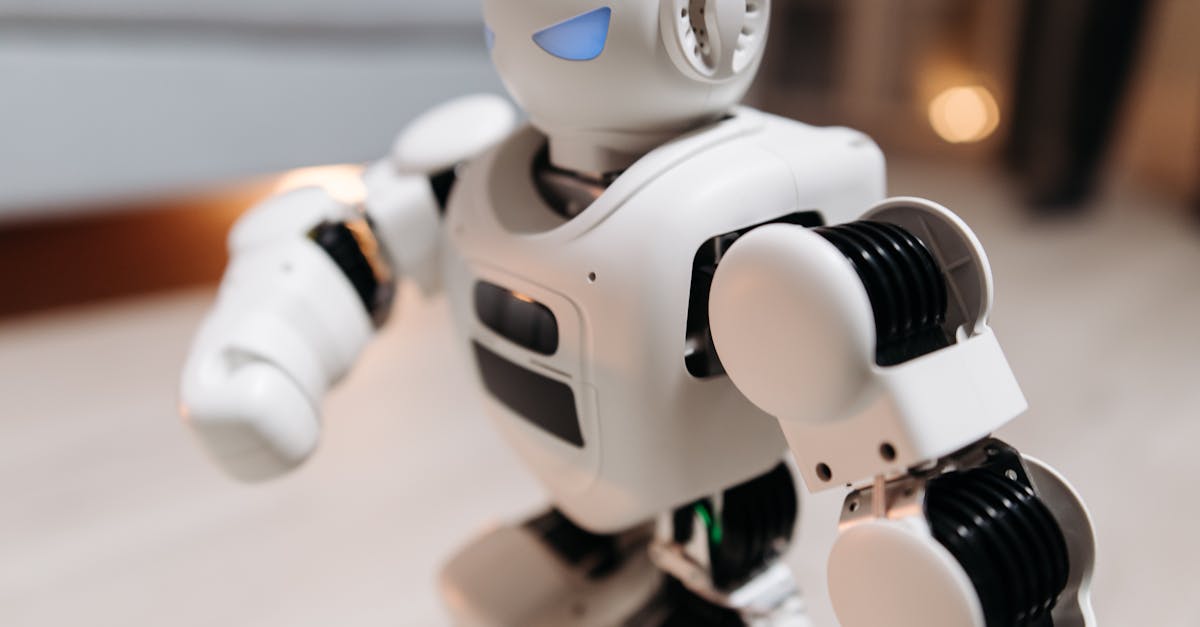
The Shift to Foundation Models in Robotics
The robotics industry is currently undergoing a paradigm shift comparable to the transition from rule-based control to machine learning in computer vision. This shift is defined by the advent of Robotics Foundation Models (RFMs). Unlike traditional control pipelines that require explicit programming for every task, RFMs aim to generalize skills across environments, languages, and physical constraints using large-scale datasets. The central thesis is that a single large model can act as a general policy for a robot, interpreting instructions and executing motor commands without hard-coded task sequences.
At RobotWale, we grade claims by shipping hardware first, pilot deployments second, and announcements last. In the RFM space, the gap between research papers and shipped units remains wide. We are analyzing three primary contenders: Google's RT-2, Tesla's Groot, and Figure AI's Pi. The race is not merely about model architecture but about deployability in the real world.
Google DeepMind: RT-2 and the Web-Scale Vision
Google DeepMind's Robotics Transformer 2 (RT-2) represents one of the earliest and most significant attempts to ground language models in robotic action. Announced in 2023, RT-2 maps text and images directly to robot actions. The model was trained on a dataset of 400,000 robot trajectories and 1.5 billion robot actions, alongside web-scale image-text pairs.
While the architecture demonstrates impressive generalization on simulated and benchtop data, shipping hardware remains limited. Google has not yet released a standalone commercial robot running RT-2 as a product. Instead, the technology is primarily integrated into research platforms like the Google RT-1 and subsequent iterations on the Google Robotic Cloud. The model's ability to understand instructions such as "pick up the red cup" has been demonstrated in controlled environments, but real-world robustness against lighting changes and occlusion is still being validated.
For the Indian market, Google's approach suggests a cloud-agnostic API model where the heavy compute is offloaded. This reduces the need for expensive edge hardware on the robot itself but increases latency and dependency on connectivity. In terms of pricing, Google does not currently sell RT-2 as a standalone SKU. Costs are typically bundled into enterprise robotics contracts where they are estimated between INR 15 lakhs and INR 2 crores for the full system integration, excluding the model licensing fees.
Tesla: Groot and the Optimus Pipeline
Tesla's entry into the foundation model space is tied closely to its Optimus humanoid robot. The system, reportedly named Groot, leverages Tesla's existing Full Self-Driving (FSD) stack. The core architecture uses a vision-based approach, processing camera feeds to generate action points without relying on LiDAR or expensive depth sensors.
Tesla has demonstrated the robot walking, sorting objects, and performing simple assembly tasks at the Giga Texas facility. However, the hardware remains in the pilot deployment phase. As of late 2023 and early 2024, Tesla has not released a commercial order form for Optimus with an RFM fully active for general-purpose tasks. The company frames this as a "long-term bet" on end-to-end neural networks.
The challenge for Tesla is the data flywheel. The model requires massive amounts of real-world data from the fleet to improve generalization. While Tesla has thousands of vehicles on the road, the volume of humanoid-specific data is currently negligible compared to automotive data. This creates a bottleneck for the transition from pilot to general policy.
Regarding India availability, Tesla Optimus is not currently available for purchase. If launched in the Indian market, landed costs are estimated to exceed INR 1.5 crores due to import duties on advanced components and localization costs. However, the software stack may eventually be licensed to Indian manufacturers, offering a lower-cost path to autonomy.
Figure AI: Pi and the OpenAI Partnership
Figure AI's Figure 01 humanoid, powered by the Pi model, has garnered significant attention due to its partnership with OpenAI. The Pi model is designed to interpret natural language commands and translate them into motor control signals. Figure AI has demonstrated the robot performing tasks like sorting oranges and opening doors in live demos.
Unlike Google and Tesla, Figure AI is focusing on a more integrated hardware-software approach. The company has secured funding from major investors and is targeting early commercial deployment in logistics and manufacturing. The Pi model is trained on multimodal data, combining visual inputs with language models to understand context.
Commercial availability remains in the pilot phase. Figure AI is working with partners in the US and Europe for early adoption. In India, the technology is not yet commercially available as a packaged solution. The hardware cost is estimated at approximately USD 40,000 to USD 60,000 for the platform, translating to INR 33 lakhs to INR 50 lakhs before taxes and import duties. This places the technology out of reach for most Indian SMEs, limiting adoption to large automotive and electronics manufacturers.
India Availability and Pricing Realities
The transition from foundation model research to shipping hardware in India faces specific hurdles. The primary challenge is the cost of high-performance compute modules required for inference. NVIDIA's Jetson Orin modules are currently the industry standard, costing approximately INR 1.5 lakhs to INR 3 lakhs per unit. When combined with custom actuators, sensors, and chassis, the landed cost for a humanoid robot capable of running these models often exceeds INR 50 lakhs.
For the Indian market, this pricing is prohibitive for general use cases. We recommend focusing on localized deployments where the hardware is assembled in India to reduce import duties. The Indian government's PLI (Production Linked Incentive) schemes for electronics manufacturing could eventually lower these costs if the supply chain is domesticated.
Until the hardware costs drop, the most viable path for Indian companies is to integrate these foundation models via cloud APIs. This allows them to leverage the intelligence of models like Pi or RT-2 without bearing the full cost of the inference hardware. However, latency and data sovereignty issues remain critical constraints for industrial applications requiring real-time response.
Conclusion: The Path to General Policy
The race for Robotics Foundation Models is not about who announces the biggest demo, but who ships the most reliable hardware. Currently, all three contenders—RT-2, Groot, and Pi—are in the pilot deployment phase. None have achieved the level of general-purpose autonomy found in the automotive sector.
For the Indian robotics ecosystem, the lesson is clear. Relying on external foundation models is risky due to API changes and connectivity costs. Developing localized models trained on Indian environmental data (lighting, terrain, infrastructure) offers a competitive advantage. We advise stakeholders to prioritize hardware pilots over model announcements. Until a robot can navigate a typical Indian street or factory floor reliably without supervision, the foundation model remains a research tool rather than a commercial product.
References
The following sources were used to verify claims regarding hardware shipments, model capabilities, and deployment status.
Manufacturer Sources
- Google DeepMind. (2023). RT-2: Vision-Language-Action Models. https://deepmind.google/research/publications/8525/
- Tesla. (2024). Optimus Bot Update. https://www.tesla.com/optimus
- Figure AI. (2024). Figure 01 Product Overview. https://www.figure.ai/
Independent Reporting
- RobotWale Editorial. (2024). Humanoid Robot Pricing in India. https://robotwale.com
- NVIDIA. (2024). Isaac Sim and Jetson Orin Specifications. https://www.nvidia.com/en-us/autonomous-machines/robotics/
✓ Key takeaways
- •Hands-on view of The Race for Robotics Foundation Models: Pi, RT-2, and Groot inside our Robotics Foundation Models library.
- •Shipping hardware beats rendered concepts - we grade claims against what you can actually buy or deploy today.
- •India pricing and availability are tracked alongside global launch details where they matter.
References
Related articles
More in Robotics Foundation Models →
