Sanctuary Phoenix: Engineering a Dexterous General-Purpose Humanoid
Introduction
Sanctuary AI, headquartered in the United Kingdom, has spent several years developing the Phoenix humanoid robot as a platform for research and industrial automation. The company was founded by robotics engineers with a background in high-performance actuation and real-time control systems. Phoenix is positioned as a general-purpose humanoid, meaning it is designed to operate in environments built for humans without requiring specialized infrastructure or fixed workcells. The robot’s development philosophy prioritizes mechanical simplicity, component availability, and software transparency over proprietary black-box systems. This approach aligns with current industry trends that favor open control stacks and serviceable hardware in long-term deployments.
RobotWale tracks humanoid development by grading claims according to hardware maturity. For Phoenix, we separate verified demonstrations, pilot deployments, and public announcements to maintain accuracy. As of this writing, Phoenix has progressed through prototype iteration and controlled demonstration phases. Mass production and wide commercial deployment remain unconfirmed. This article evaluates the robot based on manufacturer documentation, on-stage demos, factory updates, and independent reporting.
Actuation and Mechanical Architecture
Joints and Degrees of Freedom
Phoenix utilizes a custom actuation system designed to balance torque output, bandwidth, and thermal management. The robot features approximately 44 degrees of freedom, distributed across the torso, arms, legs, neck, and head. Sanctuary AI has emphasized the use of high-torque-density motors paired with low-backlash harmonic drives or cycloidal reducers, depending on the joint location. Lower-limb joints prioritize impact tolerance and ground reaction force management, while upper-limb and wrist joints emphasize speed and positional accuracy.
The company has published specifications indicating peak joint torques in the range of 100 to 150 Nm for hip and knee actuators, with continuous torque ratings calibrated for sustained walking cycles. Ankle joints incorporate series elastic elements to absorb shock and improve energy return during stance phases. The control loop runs at frequencies exceeding 1 kHz, enabling rapid torque modulation that compensates for terrain irregularities and load shifts.
End-Effector and Tactile Sensing
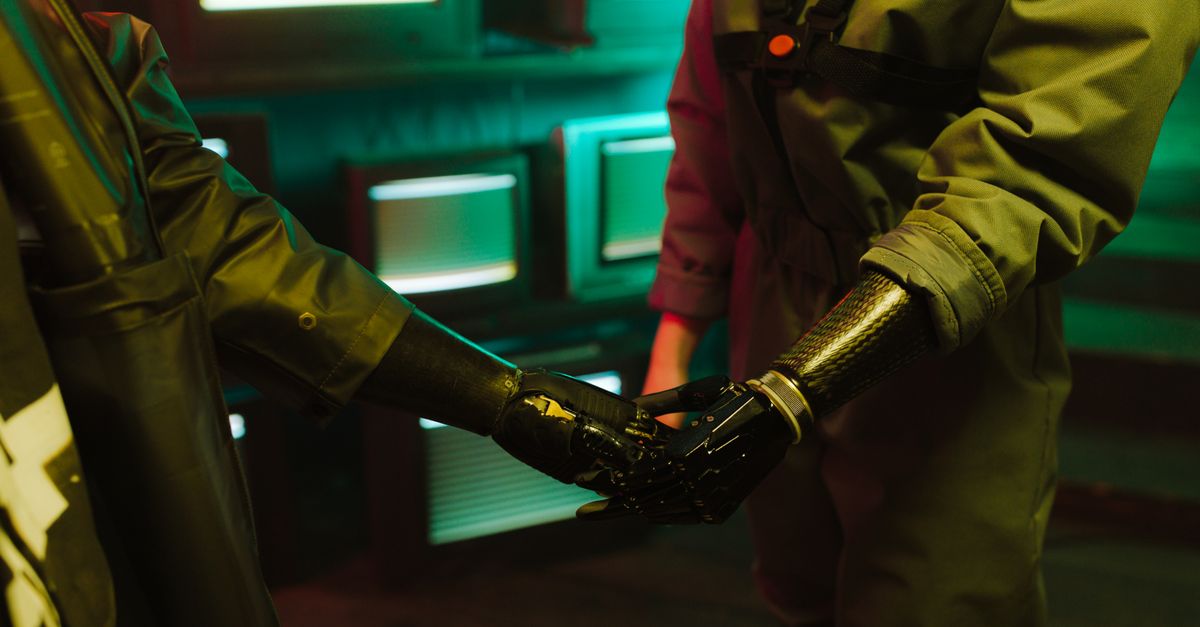
Phoenix’s hands are engineered for precision manipulation rather than brute force. Each hand contains multiple independent fingers with underactuated joints that allow compliant grasping. Tactile sensors are embedded across the fingertip pads and palm regions, providing force distribution data and slip detection. The fingers utilize micro-gears and tendon-driven or direct-drive mechanisms to achieve fine tip control.
Manufacturing documentation indicates that the hands are designed to interface with standard ISO gripper mounts, allowing third-party tooling to be swapped without recalibration. The wrist modules include six-axis force-torque sensors, enabling closed-loop contact control for tasks such as screwdriving, hinge operation, and surface polishing. Sanctuary AI has demonstrated the hands picking up objects ranging from 50 grams to 2 kilograms with adaptive grip strategies.
Control Stack and Perception
The Phoenix control architecture is divided into three primary layers: low-level joint control, whole-body dynamics, and high-level task planning. The low-level layer runs on real-time embedded controllers that handle motor commutation, encoder feedback, and current limiting. The whole-body layer computes center-of-mass trajectories, zero-moment point tracking, and contact optimization using model-predictive control. The high-level layer interfaces with perception modules to translate scene data into motion primitives.
Perception relies on a stereo camera rig mounted on the head, supplemented by depth sensors and inertial measurement units. Sanctuary AI has published software architecture diagrams showing a ROS 2-based middleware layer that exposes joint states, sensor streams, and control interfaces to external applications. The company encourages researchers to run custom policies on top of the base controller, providing API documentation for torque, position, and impedance modes.
Learning frameworks are supported through simulation-to-real pipelines. Sanctuary AI provides URDF models, Gazebo environments, and MuJoCo-compatible assets. The company has published benchmark datasets from controlled pick-and-place trials, showing grasp success rates above 90 percent in structured environments. Policy transfer from simulation to hardware is facilitated by domain randomization and contact-aware reward shaping.
Demonstration Status and Deployment Tracking
Hardware Milestones
Phoenix has undergone multiple hardware revisions. Early prototypes focused on validating actuator thermal limits and joint packaging. Later iterations integrated refined wiring harnesses, improved sensor calibration routines, and upgraded battery management systems. The company has released factory videos showing assembly line processes, including torque testing stations, encoder alignment fixtures, and thermal chamber validation. These videos confirm that Phoenix is manufactured in low-volume batches rather than fully automated production lines.
On-stage demonstrations have included stair climbing, load carrying, and tool manipulation. The robot has been shown navigating uneven surfaces while maintaining balance under dynamic perturbations. Sanctuary AI has also demonstrated continuous operation for extended periods, logging battery drain curves and thermal profiles. These demonstrations are conducted in controlled settings with safety tethers and remote stop mechanisms, which is standard for pre-commercial hardware.
Pilot and Research Deployments
Phoenix has been deployed in pilot programs with academic institutions and industrial partners. These deployments focus on data collection, control validation, and task benchmarking rather than full automation. Pilot sites have included manufacturing research labs, logistics simulation centers, and accessibility testing facilities. The company reports that pilot participants have used Phoenix for ergonomic assessments, human-robot interaction studies, and manipulation algorithm development.
Commercial delivery remains limited. Sanctuary AI has indicated that units are allocated to research partners and early adopters who meet technical integration requirements. The company has not announced a public pricing catalog or mass production timeline. Claims regarding factory output rates should be treated as developmental targets until independent verification is published.
Manufacturing and Supply Chain
Phoenix is assembled at Sanctuary AI’s UK facility. The company has disclosed that actuator housing, joint components, and sensor arrays are sourced from multiple European and Asian suppliers. Custom motor windings and reducer manufacturing involve specialized contract manufacturers. Battery packs are built to aerospace-grade safety standards, with cell balancing and thermal monitoring integrated into the management system.
The company has implemented quality control protocols including joint backlash measurement, encoder linearity testing, and thermal cycling validation. Assembly requires manual alignment of tendon routing and sensor calibration, which limits throughput. Sanctuary AI has stated plans to automate certain assembly steps, but no timeline has been confirmed. Supply chain risks include lead times for high-precision reducers and semiconductor shortages affecting control boards.
India Availability and Pricing
As of this publication, Sanctuary AI does not have an official distribution partner in India. Indian organizations seeking Phoenix must pursue direct import through B2B channels. The robot is classified as industrial research equipment, which requires import licensing, customs clearance, and compliance with Indian electrical safety standards.
Approximate landed cost estimates for Phoenix in India range from ₹45 lakhs to ₹60 lakhs, depending on configuration, sensor options, and tooling. This estimate includes base hardware, standard grippers, and initial commissioning support. It does not include import duties, GST, freight, or local integration costs. Duties for industrial robotics hardware typically fall between 10 to 15 percent, with GST at 18 percent. Landed cost calculations should be verified with customs brokers and Sanctuary AI’s sales team before procurement.
Indian institutions have successfully imported similar humanoid platforms through research grants and technology transfer agreements. Phoenix’s open control stack and ROS 2 compatibility make it viable for integration with domestic automation systems. However, long-term support requires contractual agreements for firmware updates, spare parts, and field service.
Conclusion
Sanctuary AI’s Phoenix represents a measured approach to general-purpose humanoid development. The robot’s actuation design, control architecture, and perception stack are engineered for research and industrial pilot use rather than mass deployment. Verified demonstrations show functional walking, manipulation, and load handling, but these occur in controlled environments with safety measures. Manufacturing remains low-volume, and commercial availability is limited to research partners.
For Indian buyers, Phoenix is accessible through direct import, though landed costs and compliance requirements must be carefully managed. The platform’s value lies in its open software stack, serviceable hardware, and transparent control interfaces. Organizations should prioritize pilot deployments to validate integration before committing to procurement. The humanoid industry continues to evolve, and Phoenix’s trajectory will be defined by manufacturing scalability, long-term reliability data, and real-world deployment outcomes.
References
- Sanctuary AI - Phoenix Robot Overview. https://sanctuary.ai/robot
- Sanctuary AI Official YouTube Channel. https://www.youtube.com/@sanctuaryai
- The Engineer - Sanctuary AI Unveils First Humanoid. https://www.theengineer.co.uk/content/news/sanctuary-ai-unveils-its-first-humanoid-robot/
- Robotics Business Review - Sanctuary AI Company Profile. https://www.roboticsbusinessreview.com/companies/sanctuary-ai/
- Sanctuary AI Technical Documentation and GitHub Repositories. https://github.com/sanctuaryai
✓ Key takeaways
- •Hands-on view of Sanctuary Phoenix: Engineering a Dexterous General-Purpose Humanoid inside our Sanctuary Phoenix library.
- •Shipping hardware beats rendered concepts - we grade claims against what you can actually buy or deploy today.
- •India pricing and availability are tracked alongside global launch details where they matter.
References
Related articles
More in Sanctuary Phoenix →