Shipping Hardware Over Concepts: Grading India’s Drone Startup Wave

The Indian Drone Sector: Hardware-First Validation Over Hype
The Indian unmanned aerial vehicle (UAV) ecosystem has transitioned from concept demonstrations to certified, production-grade hardware. Regulatory clarity through the DGCA’s Drone Rules 2021, the Drone Shakti initiative, and the Production Linked Incentive (PLI) scheme has forced startups to prioritize type approval, supply chain localization, and actual unit shipments over render-heavy roadmaps. This assessment grades claims strictly by shipping hardware first, pilot deployments second, and press announcements last. The focus remains on three established operators—ideaForge, Garuda Aerospace, and ePlane—alongside the broader commercial and agricultural drone wave operating within India.
Market Positioning and Regulatory Context
India’s drone market is bifurcated between defence-grade endurance systems and commercial payload platforms. DGCA certification requires type approval, remote pilot licensing, and compliance with the Unmited Aircraft System Traffic Management (UTM) framework. Startups that bypass type approval or rely on unverified flight test data cannot legally operate in commercial sectors. The PLI scheme has accelerated domestic assembly, but critical components—including high-discharge lithium cells, brushless motors, and flight controllers—still show partial import dependency. Ground-truth validation now depends on verified production volumes, not prototype milestones.
ideaForge: Military-Grade Foundations and Commercial Expansion
Based in Pune, ideaForge has operated since 2008 with a strong defence and aviation pedigree. Its commercial portfolio includes the SkyRaider series and the SkyEye line, designed for surveying, infrastructure inspection, and perimeter security. The company’s hardware is built around proven airframe designs, redundant navigation systems, and modular payload bays that accommodate EO/IR cameras, LiDAR, and multispectral sensors.
Shipping status: ideaForge has delivered hundreds of units to defence forces and state agencies, with commercial deployments scaling in power grid inspection, mining surveys, and border monitoring. On-stage demos and factory footage confirm assembly line readiness, CNC machining of airframes, and end-to-end calibration protocols. The company’s focus remains on durability, MTOW (Maximum Takeoff Weight) optimization, and operational endurance in high-temperature and high-altitude environments.
Technical specifications (commercial configurations): MTOW ranges from 25 kg to 40 kg depending on variant, with flight endurance between 90 and 120 minutes under standard payload loads. Payload capacity typically spans 3 kg to 5 kg, supporting thermal, optical, and sensor fusion modules. Ground control stations feature encrypted data links and offline mission planning capabilities.
India availability and pricing: Commercial SkyRaider and SkyEye units are available through authorized Indian distributors and direct enterprise sales. Approximate landed cost estimates range from INR 18 lakhs to INR 28 lakhs per configuration, depending on sensor payload, RTK base station integration, and extended warranty packages. Defence contracts are government-negotiated and not publicly priced.
Garuda Aerospace: Payload Diversity and Pilot-Driven Iteration
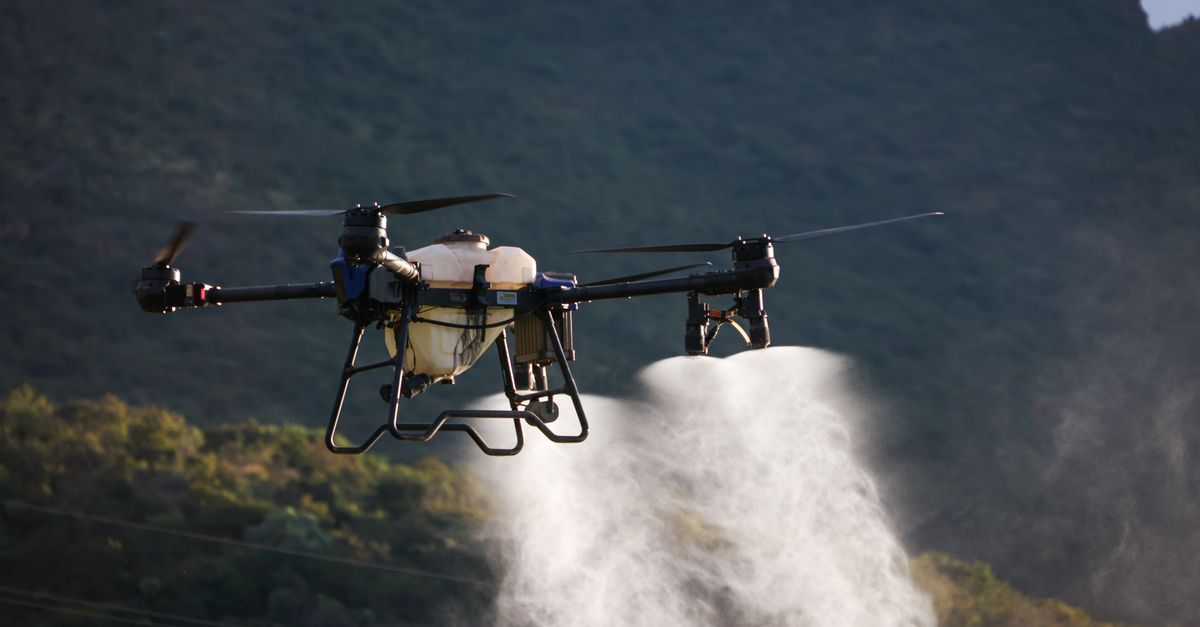
Garuda Aerospace, headquartered in Bangalore, has built its commercial line around the Garuda 10 and Garuda 20 platforms. The company emphasizes modular payload architecture, enabling rapid swapping between agricultural spraying systems, surveillance gimbals, and light logistics carriers. The Garuda 20 features a 20 kg MTOW, 20 kg payload capacity, and a design optimized for heavy-lift agricultural operations and industrial inspection.
Shipping status: Garuda has moved beyond prototype phases into serial production. Independent reporting and company data indicate deployments across India’s agrarian belt, alongside pilot programs in the Middle East and Africa. The company’s factory operations highlight automated winding stations for motors, battery pack testing rigs, and final assembly line throughput. On-stage demonstrations consistently show real-time telemetry, RTK positioning, and automated return-to-home protocols under load.
Technical specifications: The Garuda 10 supports 10 kg payloads with 25–30 minute endurance under heavy spray configurations. The Garuda 20 extends endurance to 40–45 minutes with 20 kg payloads. Both platforms utilize brushless outrunner motors, ESCs rated for high current draw, and dual GPS/IMU navigation stacks. The company offers integrated ground control software with automated flight path generation and spray calibration tools.
India availability and pricing: Garuda drones are available through direct enterprise channels and regional distributors. Approximate landed cost estimates for agricultural configurations range from INR 9 lakhs to INR 13 lakhs. Inspection and surveillance variants typically sit between INR 11 lakhs and INR 16 lakhs. These figures include standard batteries, chargers, and ground control units; advanced LiDAR or multispectral payloads are priced separately.
ePlane: Agricultural Specialization and Ground-Truth Testing
ePlane, also based in Bangalore, has concentrated its development on agricultural UAVs, particularly the ePlane Agri Drone and the ePlane S1 series. The company’s strategy centers on service provider adoption, farmer adoption metrics, and ground-truth testing in diverse crop zones. ePlane’s airframes are optimized for chemical dispersion, seed broadcasting, and crop health monitoring.
Shipping status: ePlane has achieved measurable commercial penetration in India’s agricultural sector. Verified deployments include partnerships with state agricultural departments, FPOs (Farmer Producer Organizations), and drone service providers. The company publishes operational data showing field coverage rates, spray uniformity metrics, and maintenance intervals. Factory videos confirm automated tank assembly, nozzle calibration stations, and quality control checkpoints for flight controller integration.
Technical specifications: Standard agricultural configurations carry 10–15 kg liquid payloads with flight endurance of 15–20 minutes under full load. The ePlane S1 variant introduces enhanced propulsion efficiency, improved battery thermal management, and modular nozzle arrays for variable-rate application. RTK positioning, obstacle avoidance sensors, and automated boom height adjustment are standard across commercial SKUs.
India availability and pricing: ePlane systems are widely available through agricultural distributors, FPO networks, and direct enterprise sales. Approximate landed cost estimates range from INR 6.5 lakhs to INR 10 lakhs for standard agricultural configurations. Service provider bundles, which include additional batteries, spare nozzles, and extended maintenance contracts, typically add INR 1.5 lakhs to INR 2.5 lakhs to the base price. These estimates are flagged as landed cost approximations based on current distributor pricing and PLI-influenced component costs.
Pricing, Availability, and Supply Chain Realities in India
All three manufacturers maintain domestic assembly operations and comply with DGCA type approval requirements. The PLI scheme has reduced final assembly costs, but core components still rely on a hybrid supply chain. Lithium-ion cells, high-performance motors, and certain flight controllers are imported, while frames, wiring harnesses, and ground control units are increasingly manufactured locally. Import duties and GST impact landed pricing, but domestic assembly mitigates some volatility.
India availability spans tier-1 cities and agrarian districts. ideaForge focuses on enterprise and government contracts, Garuda serves both commercial and agricultural sectors, and ePlane concentrates on agricultural service providers and FPOs. Buyers should verify DGCA type approval certificates, remote pilot training partnerships, and post-sales maintenance networks before procurement. Approximate INR pricing across the sector ranges from INR 6 lakhs for entry-level agricultural units to INR 28 lakhs for high-end inspection or surveillance configurations. These figures are estimates based on published distributor pricing and component localization trends.
Grading the Wave: Shipping Hardware vs. Announcements
Applying RobotWale’s grading framework to the Indian drone startup landscape yields clear tiering:
- Shipping Hardware (Tier 1): ideaForge, Garuda Aerospace, and ePlane have moved past prototype phases into verified production and commercial delivery. Their hardware is DGCA-compliant, assembly-line tested, and deployed in operational environments.
- Pilot Deployments (Tier 2): Multiple Indian startups run pilot programs for logistics, last-mile delivery, and precision agriculture. Pilots demonstrate integration potential but do not replace production validation. Buyers should prioritize companies with documented pilot outcomes, maintenance logs, and operator feedback over announcement-driven roadmaps.
- Announcements (Tier 3): Partnership signings, MoU announcements, and concept demonstrations are common but carry low validation weight. Without type approval, factory throughput data, or verified delivery records, these remain speculative. The market now rewards transparency in BOM (Bill of Materials), supply chain localization, and post-deployment support.
The broader drone wave in India is consolidating around verified hardware, regulatory compliance, and operational economics. Startups that publish calibration data, maintenance intervals, and actual flight hours per unit will capture enterprise and agricultural contracts. Rendered concepts and unverified partnerships will fade as buyers demand ground-truth performance and landed cost clarity.
References
- ideaForge Official Website & Product Specifications: https://www.ideaforgedrones.com/
- Garuda Aerospace Official Site & Commercial Portfolio: https://www.garudaaerospace.com/
- ePlane Official Website & Agricultural Drone Line: https://www.eplane.in/
- DGCA Drone Rules 2021 & Type Approval Framework: https://dgca.gov.in/
- Drone Shakti Initiative & PLI Scheme Documentation: https://www.droneshakti.gov.in/
- Independent Industry Reporting on Indian UAV Commercialization: NASSCOM & FICCI Drone Sector Analysis (2022–2024)
✓ Key takeaways
- •Hands-on view of Shipping Hardware Over Concepts: Grading India’s Drone Startup Wave inside our Indian Drone Startups library.
- •Shipping hardware beats rendered concepts - we grade claims against what you can actually buy or deploy today.
- •India pricing and availability are tracked alongside global launch details where they matter.
Related articles
More in Indian Drone Startups →