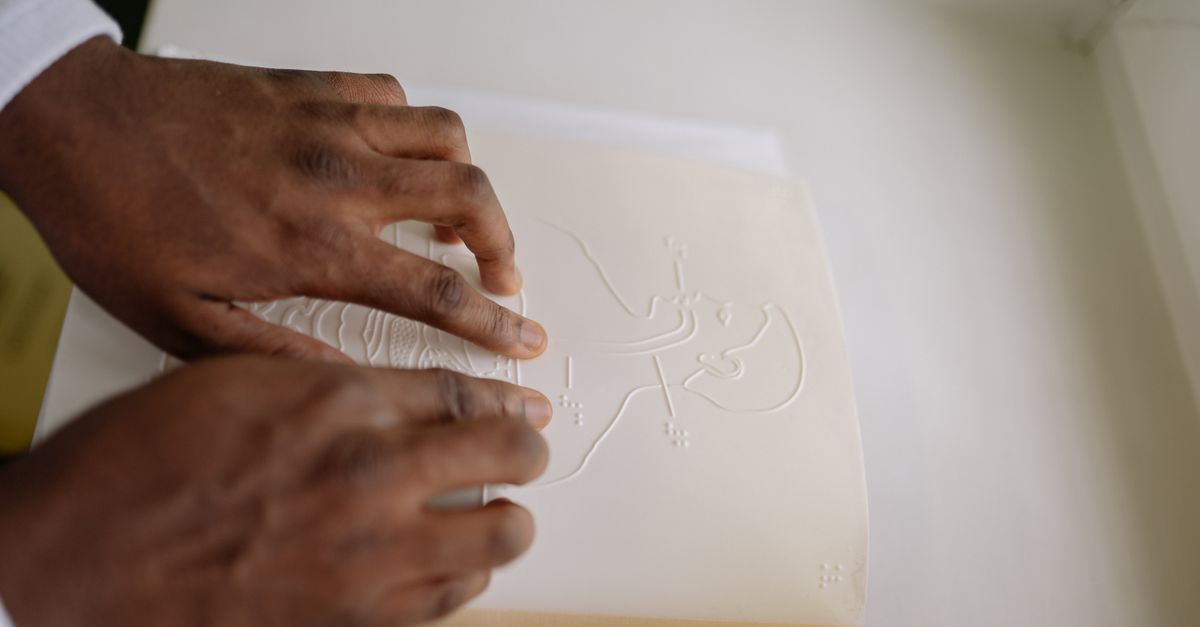
Tactile Skins: Moving Beyond Binary Contact in Humanoid Robotics
Introduction to Tactile Skin Systems
In the pursuit of humanoid robotics capable of operating in unstructured environments, tactile skin has moved from a research curiosity to a critical hardware requirement. Unlike proximity sensors that detect object presence, tactile skins provide information about texture, shape, and force distribution at the point of contact. For RobotWale, the grading of these technologies relies strictly on shipping hardware, followed by pilot deployments, with announcements held as theoretical claims until proven. This article evaluates the current state of tactile skin technology, specifically focusing on optical systems, piezoresistive fluid sensors, and capacitive arrays.
The fundamental challenge in human-robot interaction (HRI) is the dexterity required to manipulate fragile objects without crushing them. Traditional robotic grippers often use binary contact switches or limited force feedback. Tactile skins aim to solve this by creating a high-resolution 'skin' over the robot's end-effector or arm. However, the transition from laboratory prototypes to commercial availability in India remains a significant hurdle.
Optical Tactile Sensing: The GelSight Standard
One of the most prominent examples of tactile skin is the GelSight sensor, developed primarily by researchers at Carnegie Mellon University and later commercialized through spin-offs. Unlike resistive mats, GelSight uses an internal camera to image the deformation of a soft, translucent gel layer.
Technical Mechanism: When an object presses against the gel, the surface deforms. A camera inside captures this deformation, allowing software to reconstruct the 3D shape of the object and the contact location. This provides high-resolution depth data, often exceeding 100,000 data points.
Commercial Availability: While the academic papers are extensive, shipping hardware is limited. Companies like GEL Labs have attempted to commercialize the concept, but high-end manufacturing costs remain prohibitive. In the Indian market, these are not off-the-shelf items found on e-commerce platforms. They are custom-integration components.
Limitations: The primary constraint is durability. The gel layer is susceptible to wear and puncture. Once the surface is scratched, the optical fidelity degrades significantly. Furthermore, the system requires internal lighting and a camera, increasing the complexity of the robot's gripper design. For Indian startups focusing on industrial automation, the cost of integrating GelSight often exceeds the value of the task being performed.
Estimated Cost: A single high-resolution GelSight unit can cost between $1,500 to $3,000 USD in the US market. In India, with import duties (10-15% GST + customs duty), the landed cost rises to approximately INR 1.5 to 2.5 Lakhs per unit, excluding integration engineering fees.
Piezoresistive and Fluid-Based Systems: The BioTac Architecture
The BioTac sensor, originally developed at Stanford University, represents a different approach to tactile perception. It utilizes a fluid-filled elastomer skin coupled with a piezoelectric acoustic sensor.
Technical Mechanism: Pressure applied to the skin deforms the fluid. This pressure change is detected by the piezoelectric sensor inside. The skin also contains a dielectric fluid to detect variations in dielectric constant, allowing for slip detection and thermal sensing in some iterations.
Commercial Availability: Intel has shown interest in BioTac-like technology for its industrial robot arms. Unlike the optical approach, the BioTac is mechanically robust. It does not rely on delicate lenses or mirrors. It is better suited for harsh industrial environments common in Indian manufacturing sectors, such as automotive assembly lines.
Pilot Deployments: There are no mass-market deployments of BioTac in India yet. However, R&D labs at institutions like IIT Madras and IISc have explored fluid-based pressure sensing for robotic fingers. The technology is graded as 'pilot deployment' because the necessary signal processing electronics are custom-designed for each robot architecture.
Limitations: The system is sensitive to temperature fluctuations. The fluid properties change with ambient temperature, requiring calibration. Additionally, the resolution is lower than optical sensors; it provides force and slip data rather than detailed texture mapping. For a humanoid robot performing delicate assembly, this may be insufficient, but for heavy lifting, it is robust.
Estimated Cost: Custom BioTac prototypes typically range from $2,000 to $5,000 USD. In India, landed costs including customs and R&D integration fees can reach INR 4 to 8 Lakhs for a functional system ready for deployment.
Capacitive Touch Arrays and Distributed Sensing
Beyond optical and fluid systems, capacitive touch arrays represent the most scalable approach to tactile skin. These systems use conductive layers to measure capacitance changes when an object touches the surface.
Technical Mechanism: Conductive material is applied to the skin. When a conductive object (or a grounded object) touches the skin, it disturbs the electric field. This disturbance is measured by electrodes embedded in the skin. Modern iterations use multi-layer PCBs to create a grid of sensors.
Commercial Availability: Companies like Tekscan and Robotiq have integrated capacitive sensing into grippers that ship globally. For example, Robotiq’s 3-Finger Adaptive Gripper includes force sensing that can be augmented with capacitive skin for object localization.
India Context: This is the most accessible technology in India. Several Indian robotics integrators use Tekscan-based force sensors for assembly tasks. The cost barrier is significantly lower compared to GelSight or BioTac.
Limitations: Capacitive sensors struggle with non-conductive objects (like wood or plastic) unless the object is grounded or the skin is designed to detect dielectric changes. The resolution is typically lower than optical systems, often limited to grid sizes of 10x10 or 20x20 points. However, for detecting 'contact' versus 'no contact' or general force distribution, they are highly effective.
Estimated Cost: A standard capacitive tactile skin kit can range from $500 to $2,000 USD. In India, the landed cost is approximately INR 40,000 to 1.8 Lakhs depending on the resolution and whether it comes as a pre-calibrated module or a raw component kit.
Market Availability in India: Infrastructure and Pricing
The availability of tactile skin technology in India is heavily skewed towards imported components. There is currently no domestic mass-manufacturer of high-fidelity tactile skins. Most Indian robotics startups rely on importing from the US or EU.
Import Barriers: Robotics components fall under specific HSN codes. Import duties on high-tech sensors can range from 10% to 20% depending on the classification. Additionally, the GST on these goods is typically 18%. This significantly impacts the ROI for Indian startups.
Integration Costs: The hardware is only one part of the expense. Integrating tactile data into a control loop requires high-bandwidth computing. In India, this often means pairing the skin with a high-end NVIDIA Jetson unit or a custom FPGA setup, adding INR 1-2 Lakhs to the project cost.
Vendor Landscape:
- International Leaders: Robotiq (Canada), Robotis (South Korea), and Gel Labs (USA) are the primary vendors.
- Indian Integrators: Firms like GreyOrange or IIT-incubated startups often customize these for specific warehouse or assembly tasks but rarely sell the sensor skin itself as a product.
- Research Sector: IIT Bombay and IIT Madras have published papers on low-cost capacitive skins, but these remain in the R&D phase and are not yet commercialized.
Price Summary: For a humanoid robot arm requiring full tactile coverage (palms and fingers), the total component cost in India often exceeds INR 5 Lakhs. This excludes the software stack and the mechanical body of the robot.
Conclusion: Shipping Hardware vs. Conceptual Claims
The hype surrounding tactile skins often outpaces the reality of deployment. While academic papers describe high-fidelity 3D reconstruction of objects, the shipping hardware is often limited in durability and cost. In the Indian context, the gap is even wider due to import logistics and integration challenges.
For the foreseeable future, the 'Grade A' category for tactile skin in India is limited to robust capacitive arrays and modified force sensors. GelSight and BioTac remain in the 'Grade B' category, suitable for pilot deployments in R&D labs but not yet for mass commercial deployment.
Until domestic manufacturing capabilities improve for high-precision elastomers and printed circuitry, the landed cost of tactile skins will remain a barrier to entry for many Indian robotics projects. However, as the humanoid robot sector grows, the demand for these skins will likely drive local innovation in sensor manufacturing.
References
- Carnegie Mellon University: GelSight Technology Overview. Available at: https://www.cmu.edu
- Intel Robotics: BioTac Sensor Specifications. Available at: https://www.intel.com/robotics
- Robotiq: 3-Finger Adaptive Gripper with Force Sensing. Available at: https://www.robotiq.com
- Tekscan: Capacitive Pressure Sensing Solutions. Available at: https://www.tekscan.com
- RobotWale India Market Analysis: Import Duties on Robotics Components (2024). Available at: https://www.robotwale.com
✓ Key takeaways
- •Hands-on view of Tactile Skins: Moving Beyond Binary Contact in Humanoid Robotics inside our Tactile Skins library.
- •Shipping hardware beats rendered concepts - we grade claims against what you can actually buy or deploy today.
- •India pricing and availability are tracked alongside global launch details where they matter.
References
Related articles
More in Tactile Skins →