Inside Tesla's Humanoid Bet: Optimus Gen 2 and the Path to Shipping Hardware
The Hardware Reality Check
Tesla’s entry into the humanoid robotics market represents one of the most ambitious bets in modern industrial automation. While the company has captivated the public with concept renders and short demo clips, RobotWale’s editorial stance remains grounded in shipping hardware first, pilot deployments second, and announcements last. As of early 2024, the Optimus program has transitioned from conceptual sketches to functional engineering prototypes, yet critical questions regarding scalability and safety persist.
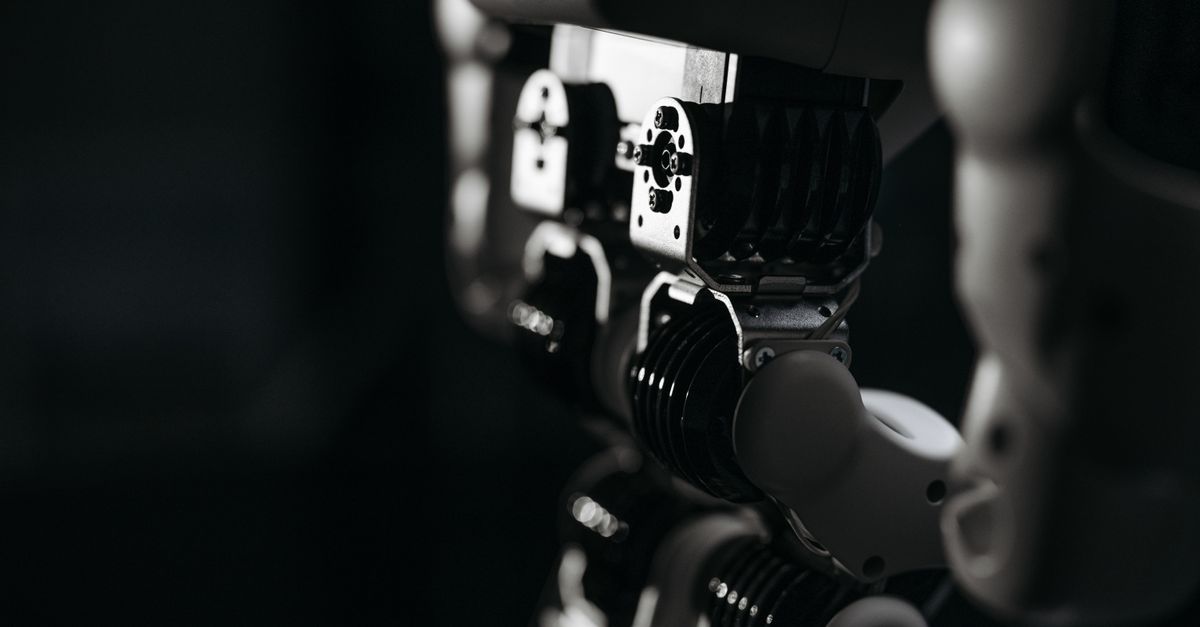
The core of Optimus is its all-electric actuation system. Unlike traditional hydraulic or pneumatic systems found in industrial arms like those from ABB or Fanuc, Optimus relies on custom-designed electric actuators. Tesla claims these units offer a torque density significantly higher than off-the-shelf alternatives, allowing for a humanoid form factor that is both lightweight and capable of lifting loads in the 20-30kg range. The Gen 2 prototype, unveiled at AI Day 2022 and refined in subsequent updates, features a hydraulic-free design intended to reduce cost and maintenance complexity.
Actuation and Locomotion
The locomotion system is perhaps the most scrutinized aspect of the hardware. Optimus utilizes a bipedal stance with 28 degrees of freedom. The legs are designed for energy-efficient walking, utilizing a spring-loaded mechanism to store kinetic energy during the stance phase. Reports from the Tesla factory floor in Fremont indicate that the walking velocity targets 5-6 km/h, which aligns with a standard human walking pace. However, stability on uneven terrain remains a challenge for any bipedal platform.
Battery integration is proprietary. Optimus does not rely on standard Li-Ion cells but utilizes a custom pack designed to power the high-current actuators without thermal runaway risks. The battery life claims suggest a full day of operation (approx. 8 hours) on a single charge, a crucial requirement for any logistics application. Without this endurance, the robot becomes a toy rather than a tool. Current prototypes utilize a battery capacity estimated at around 500Wh, though official spec sheets remain scarce.
The AI Stack: End-to-End Learning
Tesla’s competitive advantage lies not in the mechanics, but in the neural network architecture derived from its Autopilot division. Optimus leverages the same vision-based approach used for self-driving cars. Instead of programming specific behaviors for every object, the system learns from video data. This "sim-to-real" transfer allows the robot to adapt to new environments without hard-coding rules.
The "Dojo" supercomputer plays a pivotal role in training these models. By processing footage from human demonstrations and simulation data, the network refines motor control policies. This approach mimics how humans learn by observation. However, the reliance on data requires a massive fleet. Tesla claims to have thousands of units in testing, but independent verification of this fleet size is limited to internal press releases. The risk of "catastrophic forgetting" in neural networks remains a technical hurdle that must be resolved before mass deployment.
Manufacturing at Scale
The true test of Optimus is not whether it can walk, but whether it can be built at a cost that makes economic sense. Elon Musk has stated a target price of $20,000 (approx. INR 16.6 Lakhs) for the initial units, with a long-term goal of $10,000. This price point is aggressive compared to competitors like Boston Dynamics’ Atlas, which costs significantly more, or the Unitree H1, priced around $90,000.
Tesla intends to manufacture Optimus within its own factories, leveraging existing stamping and casting lines. This vertical integration is a strategy borrowed from the Model 3 production line. The goal is to treat the robot as a high-volume consumer product rather than a bespoke industrial solution. However, the supply chain for high-torque actuators is complex. Sourcing rare earth magnets for the motors without supply chain bottlenecks is critical.
Current pilot deployments are restricted to the Tesla production line. In these limited environments, the robot is used to transport parts between assembly stations. These deployments are not open to the public and serve as internal validation. The transition from internal pilot to external customer requires regulatory approval, specifically regarding safety standards in shared human spaces. ISO standards for collaborative robots (ISO 10218) will dictate the speed limits and force limits of the arm when operating near humans.
Commercialization and Pricing
As of 2024, there is no public ordering system for Optimus. Tesla has not released a definitive bill of materials (BOM) that would allow third-party manufacturers to calculate the landed cost accurately. The $20,000 target assumes significant economies of scale that have not yet been realized. For context, a single Tesla battery pack can cost a significant portion of that budget, meaning the actuator cost must be drastically lower than current market rates.
The target use cases are repetitive, high-volume tasks. This includes moving parts in a factory, assembling components, or performing security checks in a warehouse. Optimus is not designed for general-purpose tasks like cooking or caregiving in the near term. The dexterity is improving with the addition of two-finger grippers, but the force feedback loop remains in development. Tesla claims the system can handle fragile objects, but the specific force thresholds are not publicly disclosed.
Global Competitive Landscape
Tesla faces stiff competition from Chinese manufacturers like Unitree and Fourier Intelligence. These companies have already shipped hardware to customers. Unitree’s B2 model, for instance, is available for purchase at a lower price point, though it lacks the AI stack of Tesla. The race is not just about price but about the reliability of the AI. A robot that works 90% of the time is useless in a factory setting where downtime costs money.
Tesla’s reliance on its own AI infrastructure means it is less dependent on external partners like NVIDIA’s Jetson modules, though it still utilizes edge computing hardware. The vertical integration of the software stack is Tesla’s strongest moat, provided the hardware does not fail due to manufacturing defects.
The India Context
For the Indian market, Optimus is currently not available. There is no official distributor, no local assembly unit, and no regulatory framework for humanoid robots operating in public spaces. The import duty on robotics hardware in India is high, often exceeding 7.5% for components and higher for finished goods. A landed cost estimate for a $20,000 unit would likely exceed INR 20 Lakhs once taxes, shipping, and customs duties are applied.
However, the manufacturing ecosystem in India is evolving. Companies like Bharat Robotics and iRobotics (India) are focusing on industrial automation. While Optimus is not yet an option, the technology transfer from Tesla could eventually influence local manufacturing. If Tesla were to set up a service center in India, the cost of maintenance would be a major barrier due to the proprietary nature of the parts.
Pricing availability: Optimus is not currently available for purchase in India. Estimated landed cost for a Gen 2 prototype unit is projected at INR 20-25 Lakhs, assuming import via a third-party dealer. This estimate is speculative and subject to change based on FX rates and customs classification.
Safety and Liability
India lacks specific regulations for humanoid robots in workplaces. The existing Factories Act of 1948 does not account for autonomous machines. Until the government issues guidelines, deployment in Indian factories will remain a pilot project rather than a commercial rollout. Liability for accidents involving a humanoid robot is a grey area. If Optimus drops a load, who is responsible? The operator? The manufacturer? The software developer?
Conclusion
Tesla Optimus is a high-risk, high-reward project. The hardware is impressive on paper and in short demos, but the path to mass production is fraught with engineering challenges. The claim of $20,000 pricing remains a target rather than a guarantee. For now, the program sits in the "announcements" phase transitioning to "hardware demos." Real value will only be delivered when units are shipping to customers outside of Tesla’s own factories.
Until then, the hype must be separated from the reality. Optimus has the potential to disrupt the logistics sector if it meets its targets. However, in the Indian context, it remains a distant prospect. Buyers should wait for official dealer networks and verified safety certifications before considering investment in this technology.
RobotWale will continue to track the hardware shipments and pilot deployments. The next major milestone will be the release of the Gen 2 unit to external partners. Until then, the Optimus programme remains one of the most fascinating, yet unverified, initiatives in the global robotics industry.
✓ Key takeaways
- •Hands-on view of Inside Tesla's Humanoid Bet: Optimus Gen 2 and the Path to Shipping Hardware inside our Tesla Optimus Programme library.
- •Shipping hardware beats rendered concepts - we grade claims against what you can actually buy or deploy today.
- •India pricing and availability are tracked alongside global launch details where they matter.
References
Related articles
More in Tesla Optimus Programme →