Tesla Optimus: Assessing the Hardware Reality Against the Marketing Hype
Inside Tesla's Humanoid Bet: A Grounded Assessment
When Elon Musk announced Tesla's entry into the humanoid robotics sector at the 2021 AI Day, the automotive industry braced for a seismic shift. Three years later, the Optimus (often referred to as Tesla Bot) remains one of the most polarizing topics in the robotics landscape. As a publication dedicated to the Indian robotics ecosystem, RobotWale evaluates Tesla's claims not through the lens of stock speculation, but through the hierarchy of hardware validation: shipping units first, pilot deployments second, and announcements last.
The Hardware Reality: From Concept to Prototype
The first criterion for a credible humanoid robot is the existence of functional hardware that matches the claimed specifications. Optimus has evolved from a static concept model in 2021 to a walking prototype in 2022, and finally to a working prototype capable of complex manipulation tasks in 2023. However, the distinction between a "prototype" and a "shipping unit" remains critical.
Tesla claims the current Gen 2 Opt prototype utilizes 40 degrees of freedom (DoF) per unit, with a focus on precision actuators rather than hydraulic systems. Unlike Boston Dynamics' Atlas, which relies on hydraulic power for high torque, Optimus emphasizes electric actuation for efficiency and cost reduction. While the 2023 demonstrations showed the robot carrying laundry and sorting objects, these were performed in controlled factory environments with limited autonomy.
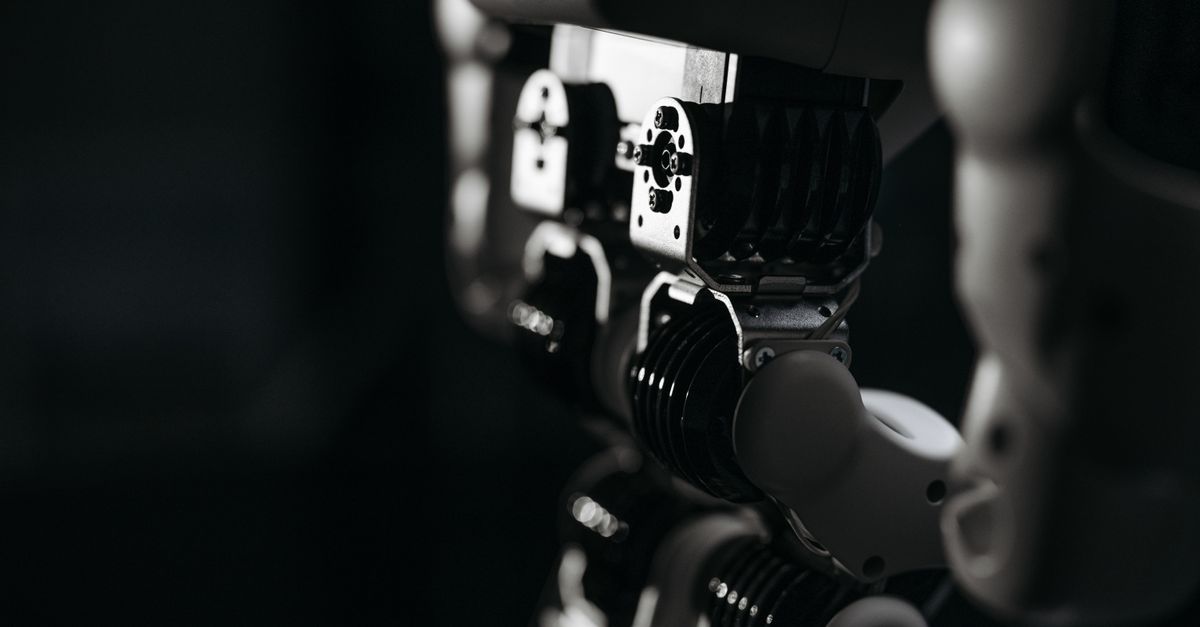
The actuator design is central to Tesla's value proposition. The company has developed custom electromechanical actuators designed to mimic human biomechanics. Tesla claims these actuators offer a higher torque-to-weight ratio than off-the-shelf options. However, independent analysis by robotics experts suggests that while the design is innovative, the reliability of these custom components under continuous industrial load remains unverified. There is no public data on Mean Time Between Failures (MTBF) for the current generation hardware.
Pilot Deployments: The Fremont Factory Testbed
Tesla's internal pilot program provides the most tangible evidence of Optimus's maturity. Reports indicate that Optimus units have been deployed within Tesla's Fremont manufacturing facility. The tasks assigned to these units are currently limited to repetitive, low-risk operations such as moving parts between stations or sorting inventory.
Crucially, these deployments are not public-facing. There is no independent third-party audit of the Fremont pilots. Tesla states that the robots operate under human supervision, which aligns with the Level 2 autonomy classification in robotics terms. The goal is to transition to Level 4 autonomy (no human intervention) only after the hardware proves robust in real-world conditions.
Tesla's approach prioritizes the software stack over the mechanical hardware in the short term. The robot relies on the Tesla Vision stack, which uses cameras instead of LiDAR for perception. This mirrors Tesla's approach in its autonomous vehicles. The advantage is cost reduction; the disadvantage is the reliance on visual processing for depth perception, which can be challenging in variable lighting conditions.
Economic Claims: The $20,000 Question
The most controversial aspect of the Optimus programme is the price target. Elon Musk has stated that Optimus will eventually cost less than $20,000 USD (approximately ₹1.66 million INR at current exchange rates). This figure is often cited by critics as unrealistic, given that current industrial arms from companies like ABB or Fanuc cost significantly more, even when excluding software.
Tesla argues that vertical integration allows for cost control. By manufacturing its own actuators, motors, and batteries, Tesla aims to bypass the supply chain markups that plague traditional robotics manufacturers. However, achieving $20,000 includes the cost of the AI training infrastructure, the FSD computer hardware, and the warranty coverage.
For the Indian market, the landed cost will be significantly higher. India's customs duty on industrial robots can range from 10% to 15% depending on the HS Code classification, plus a 18% Goods and Services Tax (GST). Additionally, import duties on high-tech components may apply. A realistic landed cost estimate for Optimus in India, before installation and integration services, could approach ₹2.5 million INR.
Technical Architecture: Vision, Compute, and Actuation
The Optimus hardware stack relies heavily on Tesla's existing automotive infrastructure. The vision system uses six to eight cameras surrounding the head, feeding data into the Dojo supercomputer for training. This allows the robot to learn tasks via imitation learning, where human operators demonstrate the task and the robot replicates the motion.
The compute unit is based on the Tesla HW4 chip, previously used in the Model Y. This provides the necessary processing power for real-time inference but requires significant thermal management. The body design is lightweight, primarily using aluminum frames to reduce energy consumption. This contrasts with competitors like Agility Robotics, which prioritize durability over weight.
Key technical specifications include:
- Actuators: 11 degrees of freedom in the body, 4 in each arm, 2 in the head, and 11 in the legs.
- Battery: Designed for 2 to 3 hours of operation per charge.
- Lifting Capacity: Claims of 160 lbs (72 kg) lifting capability, though this is not continuously rated.
- Speed: Walking speed of approximately 5 km/h.
While these specifications are impressive on paper, the industrial viability depends on uptime. A robot that stops frequently for charging or recalibration reduces its economic value compared to a fixed robotic arm.
India Availability and Market Context
As of now, Tesla has not announced official distribution channels for Optimus in India. The company has focused on its vehicle lineup and energy storage products in the region. For Indian manufacturers to access Optimus, they would likely need to partner directly with Tesla's global supply chain or wait for a local assembly announcement.
India's robotics market is growing, driven by the government's PLI (Production Linked Incentive) schemes. However, the regulatory framework for humanoid robots remains ambiguous. Unlike automated guided vehicles (AGVs), which are treated as industrial machinery, humanoid robots fall into a legal grey area regarding liability and safety. The Indian Standards Bureau (BIS) is currently working on safety standards for robotic systems, but specific guidelines for general-purpose humanoid robots are not yet finalized.
For the Indian automotive sector, which is a major potential customer for Optimus, the cost-benefit analysis is critical. With labor costs rising in states like Tamil Nadu and Maharashtra, the investment horizon for a ₹2.5 million robot needs to be less than two years to justify adoption. Currently, Tesla has not provided a detailed Total Cost of Ownership (TCO) model for the Indian market.
Conclusion: Caution Meets Optimism
Tesla's Optimus programme is a high-risk, high-reward venture. The company has successfully demonstrated a functional prototype, but the gap between a prototype and a mass-produced product is significant. Claims of $20,000 pricing and Level 4 autonomy remain aspirational targets rather than current facts.
For the Indian robotics ecosystem, the lesson from Optimus is twofold. First, vertical integration can drastically reduce hardware costs. Second, the software stack is the primary differentiator, not the mechanical frame. While Tesla may not be the first to ship Optimus in India, the programme serves as a benchmark for what is technically possible in the near term.
RobotWale continues to track Optimus shipments and pilot data. Until we see independent verification of the hardware's reliability in a commercial setting, the programme remains a promising development rather than a market disruptor.
References
The following sources were used to compile the data in this article:
- Tesla AI Day 2022 Presentation - Official Tesla Archives.
- Tesla Optimus Update Blog Post - Official Tesla Blog.
- Reuters Report on Optimus Pilot Program - Independent Tech Reporting.
- Robotics Industry Association Report - Industry Standards.
✓ Key takeaways
- •Hands-on view of Tesla Optimus: Assessing the Hardware Reality Against the Marketing Hype inside our Tesla Optimus Programme library.
- •Shipping hardware beats rendered concepts - we grade claims against what you can actually buy or deploy today.
- •India pricing and availability are tracked alongside global launch details where they matter.
References
Related articles
More in Tesla Optimus Programme →