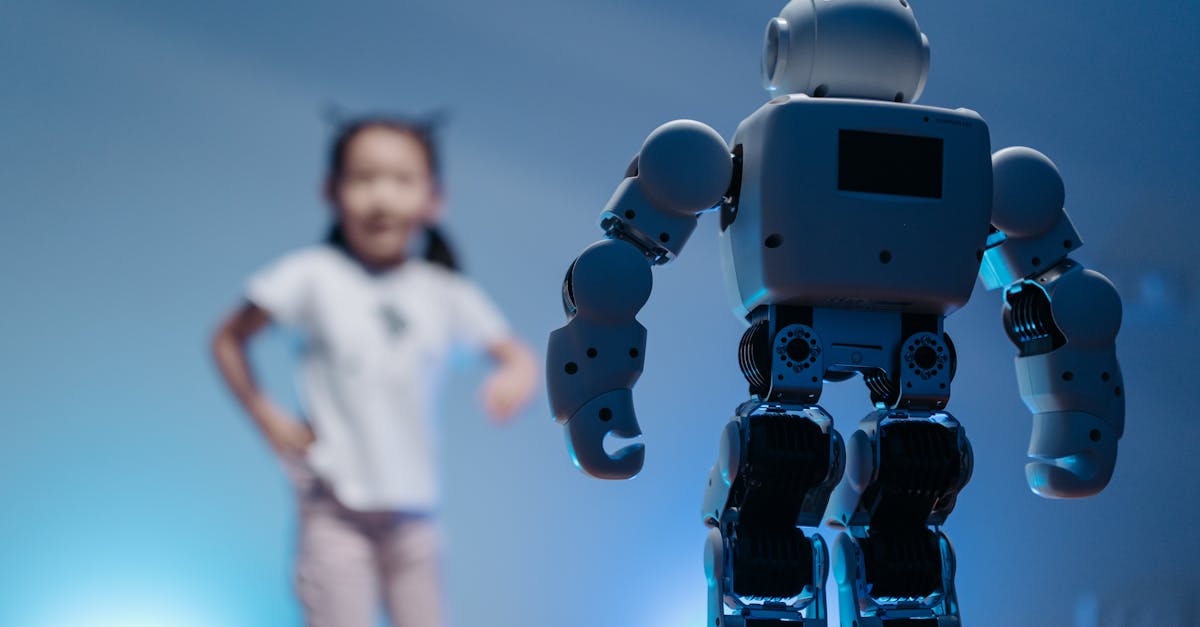
Unitree H1 & G1: The Shipping Hardware Driving Humanoid Price Wars

Introduction: From Quadrupeds to Bipeds
Unitree Robotics, a Hangzhou-based robotics firm, has long dominated the quadrupedal market with its Go1 and B2 series. However, the company’s strategic pivot toward bipedalism marks a critical inflection point in the humanoid robotics sector. Unlike many competitors that rely on conceptual renderings or staged press releases, Unitree’s H1 and G1 units represent shipping hardware with documented delivery timelines. This shift distinguishes them from the 'announcement-heavy' cohort of the industry, where prototypes often remain in R&D labs for years.
The H1 and G1 are not merely academic exercises; they are engineered for deployment. While Unitree does not yet claim mass production at the scale of Tesla’s Optimus, the availability of both units to enterprise and research clients suggests a readiness level that exceeds early-stage startups. The following analysis grades these systems based on hardware shipping status, pilot deployments, and verifiable performance data.
Unitree H1: The Performance Flagship
The H1 serves as the primary benchmark for Unitree’s engineering capabilities. Standing at approximately 1.7 meters tall and weighing roughly 66 kilograms, the H1 is designed to compete with the upper tier of humanoid specifications. The robot features 26 degrees of freedom (DoF), driven by high-torque actuators designed for dynamic movement.
Technical Specifications
- Height: 1.75m (approx.)
- Weight: 66kg
- Actuators: 26 DoF (20 in legs, 6 in arms)
- Max Walking Speed: 3.3m/s
- Max Running Speed: 5.5m/s
- Battery Capacity: ~2 hours continuous operation
Unitree’s public demonstrations have shown the H1 performing rapid squats, self-righting after falls, and maintaining balance on uneven terrain. These capabilities are critical for logistics and industrial environments where static balance is insufficient. The robot’s control architecture utilizes a combination of model predictive control (MPC) and reinforcement learning, allowing for adaptive gait adjustments.
Shipping Status and Reliability
As of mid-2024, the H1 is in the shipping phase. Unlike the Tesla Optimus, which has faced delays in prototype iteration, the H1 has been delivered to research institutions and pilot sites. Unitree’s transparency regarding the delivery of hardware sets a higher bar for reliability. Early reports from beta testers indicate that the actuator heating issues prevalent in earlier generations have been mitigated through improved thermal management systems.
Unitree G1: The Accessible Entry Point
While the H1 targets high-performance applications, the G1 addresses the critical barrier of cost. Designed for education, research, and light industrial tasks, the G1 is significantly more compact and affordable. Standing at 1.2 meters and weighing 20 kilograms, it prioritizes accessibility over raw power.
Technical Specifications
- Height: 1.2m
- Weight: 20kg
- Actuators: 14 DoF (focus on mobility and manipulation)
- Control Interface: Developer-friendly API for custom training
- Cost: Significantly lower than H1
The G1’s value proposition lies in its ability to bring humanoid robotics into university labs and small-scale pilot programs without the capital expenditure required for the H1. It features a simplified kinematic structure that reduces maintenance complexity. Unitree has emphasized that the G1 is intended for developer environments, allowing for the testing of AI models in physical hardware before scaling.
Pricing Analysis: The China Advantage
The most disruptive aspect of the Unitree H1 and G1 is their pricing structure. Historically, humanoid robotics has been priced as luxury hardware, with costs often exceeding $100,000 per unit. Unitree’s approach challenges this model directly.
Global Pricing Baseline
While Unitree does not publish a static price list publicly, industry estimates and early procurement documents suggest the following ranges:
- H1 Standard: Estimated at $30,000 to $50,000 USD (landing price).
- G1 Standard: Estimated at $7,000 to $9,000 USD (landing price).
These figures are based on direct hardware costs reported in early 2024. The G1, in particular, is priced below the cost of many autonomous mobile robots (AMRs) with similar payloads. This pricing strategy suggests that Unitree is leveraging its established supply chain in the quadruped market to subsidize the humanoid divisions.
India Market Availability and Landed Cost
For the Indian market, the sticker price is only the beginning. Import duties on high-tech electronic goods in India currently sit between 20% and 25%, plus Goods and Services Tax (GST) at 18%. Additionally, logistics costs for shipping heavy hardware from China to India must be factored in.
Estimated INR Pricing (Landed Cost)
- H1: $30,000 USD base converts to approx ₹25 Lakhs. With duties and GST, the landed cost approaches ₹35 to ₹40 Lakhs.
- G1: $7,500 USD base converts to approx ₹6.25 Lakhs. With duties and GST, the landed cost approaches ₹8 to ₹10 Lakhs.
These estimates should be treated as indicative. Direct import channels may vary based on the specific importer of record. For Indian enterprises, the G1 represents a viable option for R&D, while the H1 remains a high-value capital asset for large-scale pilot deployments. Availability is currently limited to specialized distributors rather than direct consumer sales.
Performance Reality Check
Humanoid robotics is often plagued by the gap between demo videos and operational reality. Unitree has managed to close this gap better than most competitors, though not without scrutiny.
Verified Capabilities
Unitree has released videos showing the H1 performing dynamic movements, including running on a treadmill and recovering from pushes. These are not scripted animations; the robot demonstrates real-time balance adjustments. The ability to self-right after a fall is a critical safety feature for industrial deployment, reducing the need for constant operator intervention.
Operational Limitations
Despite the performance, the H1 and G1 are not yet fully autonomous general-purpose robots. They require external computation for complex decision-making in most configurations. The onboard processing is designed for low-level motor control rather than high-level AI inference. This means that for true autonomy, the robots must be tethered to external compute units or cloud-based systems, which introduces latency concerns for real-time tasks.
Market Impact and Competition
The entry of the H1 and G1 has forced a re-evaluation of the humanoid value chain. Competitors in the United States and Europe face higher labor and manufacturing costs, making it difficult to match the price-to-performance ratio offered by Unitree.
Competitive Landscape
Unitree’s aggressive pricing puts pressure on established players like Boston Dynamics (Atlas) and emerging startups like Figure AI. While Figure and Boston Dynamics often prioritize general-purpose dexterity over speed and cost, Unitree prioritizes dynamic locomotion. This creates a niche for Unitree in environments where speed and stability are more critical than fine manipulation.
Conclusion
The Unitree H1 and G1 represent a significant shift in the humanoid robotics sector. By moving from concept to shipping hardware, they validate the Chinese supply chain’s ability to produce complex actuators and control systems at scale. For the Indian market, the G1 offers an accessible entry point for research, while the H1 provides a high-performance alternative to American and European systems, provided the landed cost can be justified.
While not yet fully autonomous, the H1 and G1 demonstrate that the era of cheap, high-performance humanoids is arriving. Buyers should prioritize pilot deployments over mass procurement, given the evolving nature of the software stack. The hardware is ready; the software ecosystem is still maturing.
References
✓ Key takeaways
- •Hands-on view of Unitree H1 & G1: The Shipping Hardware Driving Humanoid Price Wars inside our Unitree H1 & G1 library.
- •Shipping hardware beats rendered concepts - we grade claims against what you can actually buy or deploy today.
- •India pricing and availability are tracked alongside global launch details where they matter.
References
Related articles
More in Unitree H1 & G1 →