Case & Piece Picking: Shipped Hardware, Pilots, and the Current State of Autonomous Picking

The Maturity Curve for Case and Piece Picking
Autonomous case-picking and piece-picking systems occupy a distinct maturity tier within warehouse robotics. The category spans traditional fixed-speed pick-and-place arms to vision-language-action (VLA) models and grid-based AGV storage networks. RobotWale grades these systems by shipping hardware first, pilot deployments second, and announcements last. Rendered concepts, simulation demos, and vendor roadmaps are treated as pre-commercial until independent verification or factory footage confirms operational capability.
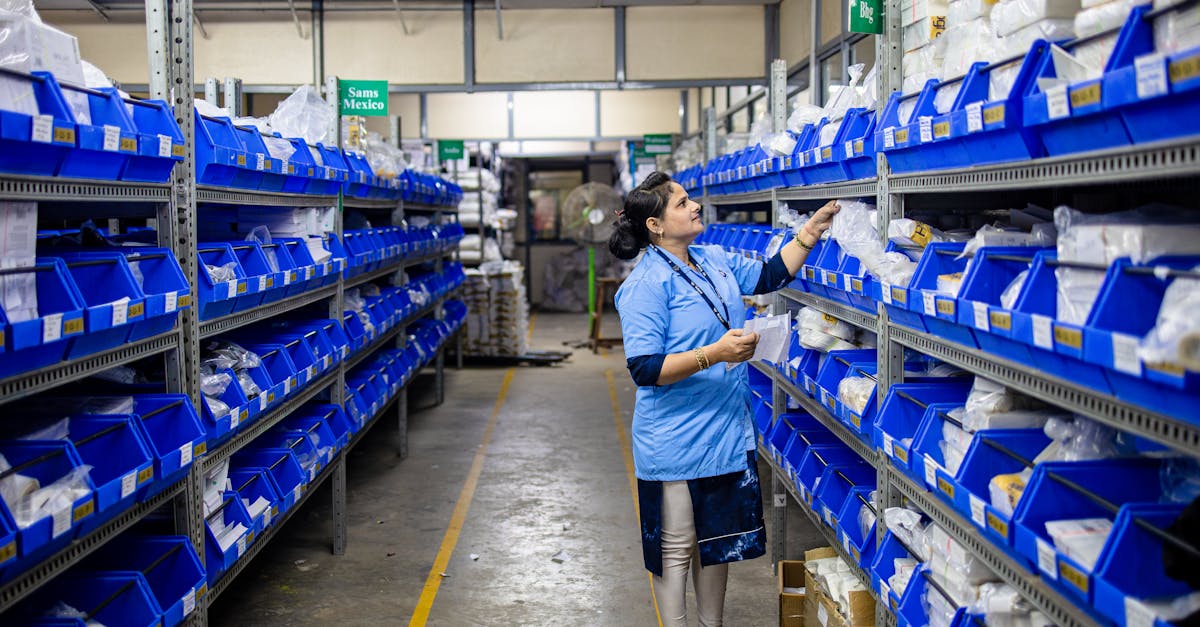
Case picking involves moving complete cartons or totes as single units, typically for replenishment or outbound fulfillment. Piece picking handles individual SKUs, often from polybags, loose cases, or irregular packaging. Both tasks demand high throughput, reliable end-of-arm tooling, and robust vision systems capable of handling lighting variation, occlusion, and package deformation. The market has bifurcated into two primary approaches: AI-driven mobile manipulation and structured grid storage with automated retrieval.
Shipping Hardware: What is Actually Deployed
Shipping hardware forms the foundation of any commercial assessment. As of the current reporting cycle, the following systems have crossed the threshold from pilot to paid deployment:
- Traditional Pick-and-Place Arms: SCARA, delta, and 6-axis articulated robots from Fanuc, Kawasaki, Yaskawa, and KUKA remain the shipped volume leaders. These systems operate on deterministic kinematics, rely on fixed jigs or conveyor-fed vision, and achieve cycle times of 0.4 to 0.8 seconds per pick. They ship in high volumes but require extensive integration for irregular cases.
- Symbotic Grid Systems: Symbotic has shipped thousands of autonomous guided vehicles (AGVs) operating within a shared steel grid. The company reports over 100 deployed systems globally as of late 2024, primarily serving retail, grocery, and foodservice distribution centers. Hardware includes grid-mounted AGVs, automated cranes, and conveyor interfaces. Shipping metrics are verified through earnings reports and facility walkthroughs.
- Covariant VLA Platforms: Covariant's shipping hardware consists of mobile manipulators equipped with custom end-effectors and onboard compute. The company has shipped systems to retailers, CPG manufacturers, and contract logistics providers. Deployment data is tracked through partnership announcements and third-party case studies. The platform relies on vision-language-action models trained on real-world picking data rather than pre-programmed paths.
Independent verification remains the baseline. Factory videos, on-stage operational demos, and customer-published throughput metrics are weighted higher than marketing assets. Systems that cannot demonstrate sustained pick rates over 30-day continuous runs are classified as pilot-stage.
Pilot Deployments and Controlled Trials
Pilot deployments bridge the gap between lab validation and commercial scale. Several platforms have entered controlled trial phases with measurable outcomes:
- Vision-Guided Mobile Manipulators: Multiple vendors have deployed trial units in e-commerce sortation hubs and third-party logistics facilities. Pilots typically run 10 to 50 units, evaluating pick accuracy, failure recovery, and integration with existing WMS/WCS software. Common findings include improved handling of deformable packaging and reduced changeover time for SKU-heavy environments.
- AI-Driven Piece Picking Trials: Trials focusing on loose piece handling have shown mixed results. Vision systems achieve 98 to 99.5% accuracy in controlled lighting, but performance degrades with transparent packaging, reflective surfaces, and high-density bin packing. Pilots emphasize the need for multi-modal sensing (depth, RGB, and sometimes tactile feedback) to maintain pick consistency.
- Hybrid Grid and Mobile Trials: Some facilities are testing hybrid architectures where mobile manipulators handle irregular cases while grid systems manage high-turnover SKUs. Trials indicate reduced congestion but highlight integration complexity between disparate control stacks.
Pilot data should be treated as directional rather than definitive. Throughput claims during trials often reflect optimized conditions. Real-world variance, shift changes, and maintenance windows typically reduce effective capacity by 15 to 25 percent.
Announcements and Roadmaps
Announcements carry the lowest weight in RobotWale's grading framework. Vendor press releases, partnership MOUs, and conference demos are logged but not counted as commercial validation until hardware ships and throughput is independently verified. Recent announcements in the case-picking space include:
- Expanded integration partnerships between VLA software providers and industrial arm manufacturers.
- Next-generation end-of-arm tooling designed for lightweight, high-speed piece picking.
- Software updates targeting improved bin-packing recognition and dynamic path planning.
These developments are incremental. None alter the current maturity classification of the category. Roadmaps will be re-evaluated when shipped units demonstrate sustained operational capability across multiple facilities.
Covariant: Vision-Language-Action Models and Commercial Traction
Technical Approach and Shipping Metrics
Covariant's platform centers on vision-language-action models trained on large-scale picking datasets. The system processes RGB-D camera feeds, extracts spatial relationships, and generates robot trajectories without explicit programming for each SKU. The architecture reduces changeover time by abstracting picking logic into learned representations rather than rule-based code.
Shipping metrics indicate deployment across retail distribution centers, CPG warehouses, and logistics partners. The company has published technical reports detailing model training pipelines, failure recovery mechanisms, and integration with standard robot controllers. On-stage demonstrations show continuous picking across varied packaging types, but independent verification requires facility-specific throughput data. Covariant's hardware typically pairs with KUKA, Fanuc, or custom mobile bases, depending on customer requirements.
India Availability and Pricing Context
Covariant has not announced direct commercial shipments to India as of the current reporting cycle. Indian facilities relying on autonomous case-picking typically import systems through regional integrators. Landed cost estimates for comparable VLA mobile manipulator deployments range from INR 1.8 crore to INR 2.5 crore per unit, including customs, duties, integration, and commissioning. These figures are flagged as estimates and vary based on local taxes, shipping routes, and support contracts.
Symbotic: AGV-Based Case Handling and Scale
System Architecture and Deployment History
Symbotic's approach diverges from mobile manipulation. The system uses a shared steel grid where AGVs navigate vertically and horizontally to retrieve and place cases. Automated cranes move between grid levels, while conveyors interface with the outer perimeter. The architecture prioritizes high-density storage, deterministic routing, and centralized control.
Deployment history shows sustained commercial scaling. Symbotic's investor relations materials and earnings reports confirm over 100 deployed systems serving major retail, grocery, and foodservice clients. The company reports continuous improvement in AGV reliability, grid utilization, and case throughput. Independent reporting and facility tours corroborate the hardware's operational maturity. Symbotic's systems are engineered for high-volume case handling rather than individual piece picking, though hybrid configurations are emerging.
India Availability and Pricing Context
Symbotic has not publicly listed India as an active deployment market. The company's contracts are predominantly North American and European. Indian facilities seeking grid-based case storage typically evaluate alternatives due to capital intensity and integration complexity. Approximate landed cost estimates for comparable grid storage systems range from INR 8 crore to INR 15 crore per facility, depending on grid size, AGV count, and conveyor interfaces. These estimates are flagged as preliminary and subject to site-specific engineering and regulatory requirements.
Legacy and Alternative Pick-and-Place Platforms
Traditional pick-and-place remains the shipped volume baseline. SCARA and delta robots continue to dominate high-speed case handling where packaging geometry is consistent. Articulated arms handle heavier totes and irregular cases. The hardware is mature, reliable, and widely available, but it lacks the adaptability of AI-driven systems. Integration costs and changeover time remain the primary constraints.
Alternative platforms include vision-guided robotic arms from Chinese manufacturers, modular pick-and-place cells from European integrators, and specialized bin-picking systems for loose items. These platforms ship in volume but require extensive calibration and fixed tooling. They are classified as shipped hardware but are not autonomous in the AI-driven sense. Their value lies in deterministic throughput and lower upfront software licensing costs.
India Market Dynamics and Landed Cost Estimates
India's warehouse robotics market is transitioning from manual labor reliance to semi-automated systems. Autonomous case and piece picking faces structural constraints:
- Infrastructure Readiness: Many facilities lack standardized racking, climate control, and WMS integration required for fully autonomous systems.
- SKU Complexity: High SKU count, irregular packaging, and seasonal demand shifts increase the cost of autonomy.
- Capital Allocation: Indian operators prioritize ROI within 18 to 24 months. Systems exceeding INR 3 crore per unit typically require phased deployment or leasing models.
Approximate landed cost estimates for autonomous case-picking systems in India are as follows:
- VLA mobile manipulators: INR 1.8 crore to INR 2.5 crore per unit
- Grid-based AGV storage: INR 8 crore to INR 15 crore per facility
- Traditional pick-and-place integration: INR 40 lakh to INR 90 lakh per cell
These estimates include hardware, shipping, customs, duties, integration, and commissioning. They are flagged as preliminary and subject to site surveys, local tax structures, and vendor pricing. Indian operators are advised to request independent third-party validation before committing to autonomous picking deployments.
References
- Covariant. "Technology Reports and Shipping Metrics." covariant.ai/tech-reports
- Symbotic. "Investor Relations and Deployment Data." symbotic.com/investors
- Symbotic. "Q3 2024 Earnings Report and Facility Updates." symbotic.com/investors/earnings
- Fanuc India. "Industrial Robot Specifications and Pick-and-Place Applications." fanuc.co.in/robots
- IEEE Spectrum. "The State of Warehouse Robotics." ieee.org/spectrum/warehouse-robotics
- Warehousing.org. "Autonomous Picking and Grid Storage Analysis." warehousing.org/technology/picking
- KUKA India. "Robotics Solutions for Material Handling." kuka.com/in
- Yaskawa India. "Delta and SCARA Robot Specifications." yaskawa.co.in
✓ Key takeaways
- •Hands-on view of Case & Piece Picking: Shipped Hardware, Pilots, and the Current State of Autonomous Picking inside our Case & Piece Picking library.
- •Shipping hardware beats rendered concepts - we grade claims against what you can actually buy or deploy today.
- •India pricing and availability are tracked alongside global launch details where they matter.
Related articles
More in Case & Piece Picking →