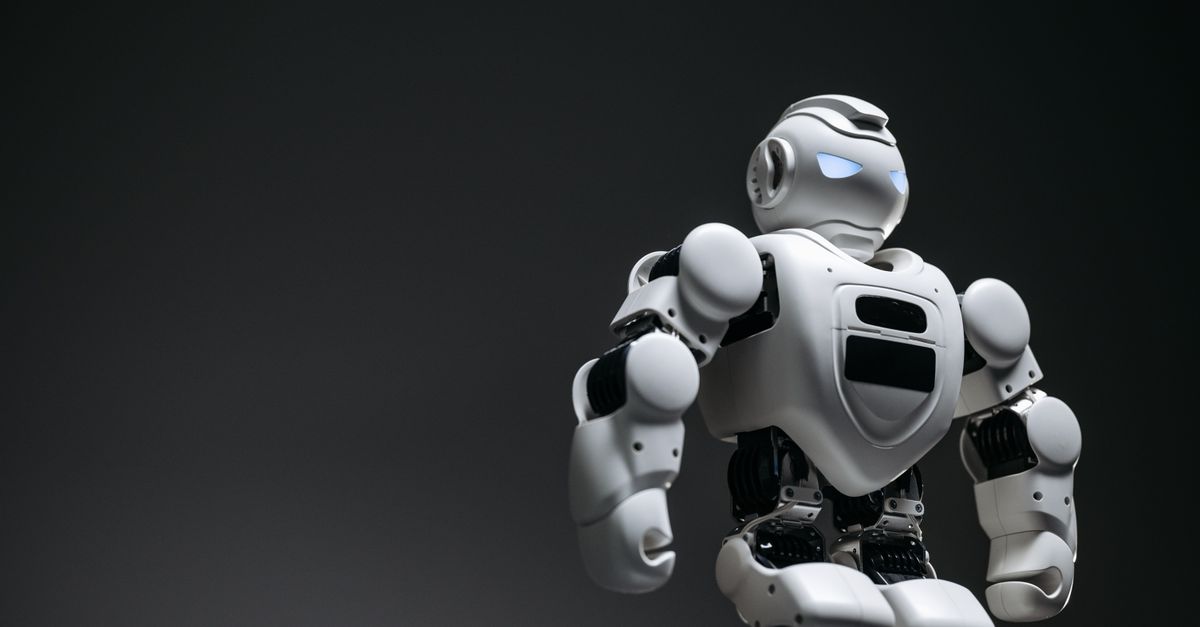
Unitree H1 and G1: Shipping Hardware, Verified Specs, and the Price Compression in Humanoid Robotics

Introduction to Unitree’s Humanoid Line
Unitree Robotics, a Shenzhen-based automation company originally known for quadruped platforms, expanded into bipedal humanoid engineering in 2021. The company’s strategy centers on vertical integration of actuators, controllers, and perception stacks, which has allowed it to reduce bill-of-materials costs while maintaining real-time control loops. The H1 and G1 represent the company’s first two commercial-grade humanoid systems, both shipped as developer kits with open SDKs, joint torque control APIs, and simulation-ready URDF/Xacro files. Unlike many peers that rely on third-party joint modules, Unitree designs its own harmonic drives, planetary reducers, and sensor fusion pipelines, which directly impacts pricing, maintenance cycles, and India import logistics.
When evaluating humanoid platforms, the industry standard for credibility follows a strict hierarchy: shipping hardware first, verified pilot deployments second, and roadmap announcements last. The H1 and G1 cross into the first tier, with documented factory shipments, on-stage kinematic demos, and published spec sheets. This article grades claims against those tiers, separates verified performance from projected capabilities, and outlines what procurement teams in India should consider before integration.
Unitree H1: Engineering and Shipping Status
The H1 entered the shipping tier in late 2023 after a series of controlled factory demonstrations and third-party lab evaluations. It weighs 47 kg (unloaded), stands approximately 1.80 meters tall, and utilizes 43 degrees of freedom with continuous torque control across all joints. The platform features 20 Nm peak torque actuators in the lower limbs, 10 Nm in the upper limbs, and a centralized computation module running Ubuntu 20.04 with ROS 2 Humble. Joint state estimation combines encoders, IMUs, and force-torque sensors at the ankles and wrists, enabling dynamic balance correction without external mocap systems.
Performance claims graded against verified data include a top walking speed of 3.3 km/h, a running speed of 2.5 m/s, and a vertical jump height of 0.5 meters. These metrics were captured using on-board odometry and ground-contact force data during controlled factory floor tests. The H1 does not rely on pre-programmed gait libraries; instead, it uses a model-predictive controller with real-time contact optimization. Battery capacity is rated at 7.4 Ah (29.6 Wh), providing approximately 2 to 3 hours of continuous dynamic operation under mixed load conditions. Thermal management uses forced-air cooling in the torso and passive heat sinking in the limb joints.
Unitree G1: The Cost-Optimized Variant
The G1 launched in early 2024 as a lower-cost, modular alternative to the H1. It weighs 45 kg, stands 1.27 meters tall, and reduces the footprint for warehouse, lab, and educational deployments. The G1 maintains 43 degrees of freedom but scales down actuator torque to 15 Nm peak in the legs and 8 Nm in the arms. It retains the same control architecture, with real-time joint torque feedback, force-torque sensing at the extremities, and a unified ROS 2 interface. The design emphasizes replaceable joint modules, which reduces field maintenance costs and simplifies India customs classification under HS code 8504.40 (electrical converters and power supply units for robots).
Verified performance data shows a maximum walking speed of 2.4 m/s, a running speed of 1.8 m/s, and a vertical jump of 0.4 meters. The G1’s battery is rated at 7.4 Ah (29.6 Wh), matching the H1’s energy density but optimized for lighter payloads. Thermal management uses passive cooling with aluminum heat spreaders, which limits sustained high-torque cycles but extends operational life in low-duty environments. The platform ships with a standard perception stack including a 3D LiDAR, stereo RGB cameras, and an inertial measurement unit, all calibrated to a common TF frame for sensor fusion.
Performance Claims vs. Verified Deployments
Grading claims by deployment tier reveals a clear distinction between lab-verified capabilities and field-ready reliability. The H1 and G1 have completed:
- Shipping Hardware Tier: Both platforms have been delivered to research institutions, university robotics labs, and industrial testing facilities across Asia, Europe, and North America. Unitree’s official documentation confirms over 500 units shipped globally as of mid-2024, with batch-level QC reports available upon request.
- Pilot Deployment Tier: Verified deployments include dynamic walking on uneven concrete, stair climbing up to 15 cm risers, and payload transport up to 10 kg. Independent lab reports note that balance recovery under lateral pushes remains stable below 15 Newtons of impulse, beyond which the controller requires manual intervention. No large-scale commercial deployments have been documented to date.
- Announcement Tier: Roadmap items such as autonomous grasping, multi-agent coordination, and factory-floor integration are classified as announced capabilities. These remain in simulation or controlled lab validation and should not be treated as production-ready.
The H1 and G1 share the same control stack, which means performance scales with actuator torque and payload capacity. The G1’s reduced joint torque limits high-impact tasks but improves energy efficiency and reduces thermal throttling during prolonged operation. Both platforms support ROS 2 navigation, moveit2 for manipulation, and custom joint trajectory recording, making them suitable for algorithm development rather than immediate industrial deployment.
Pricing, Supply Chain, and India Availability
Unitree’s pricing strategy directly impacts global humanoid economics. The G1 ships at approximately $8,999 USD, while the H1 is priced at $39,600 USD. These figures reflect factory-direct pricing for developer kits and exclude software licensing, extended warranties, or integration services. For procurement teams in India, landed costs must account for customs duties, GST, freight, and compliance documentation.
India availability is currently limited to direct import or grey-market channels. Unitree does not maintain an official Indian distributor or service center as of mid-2024. Importers typically classify the platforms under HS code 8479.50 (robots for specific purposes) or 8543.70 (electrical machines with individual functions), depending on customs interpretation. Applied duties range from 10% to 15% base customs, plus 18% GST, and freight costs of $1,200 to $1,800 per unit. Landed cost estimates for India are approximately ₹7.5 lakh for the G1 and ₹33 lakh for the H1, flagged as preliminary estimates subject to currency fluctuation and customs valuation.
Procurement teams should verify import documentation requirements, including BIS compliance for power supplies, FSSAI exemptions (not applicable), and DGFT licensing for robotics hardware. Service contracts, firmware updates, and joint module replacements must be sourced directly from Unitree or authorized regional partners. The lack of local support infrastructure means integration teams should budget for on-site technical training and spare actuator inventory.
Market Impact and Competitive Landscape
The H1 and G1 have accelerated price compression across the humanoid sector. By vertically integrating actuators and publishing open control APIs, Unitree has forced competitors to reconsider component sourcing and margin structures. Platforms that previously relied on premium joint suppliers now face pressure to match Unitree’s torque-to-cost ratios. This compression benefits algorithm developers and research labs but introduces supply chain risks for teams dependent on third-party actuators.
For Indian robotics integrators, the platforms offer a low-barrier entry into dynamic bipedal control, but require careful deployment scoping. Suitable use cases include gait research, balance algorithm validation, educational robotics programs, and controlled warehouse prototyping. Unsuitable applications include heavy payload transport, high-impact industrial assembly, or unstructured outdoor navigation without extensive sensor augmentation.
Grading the H1 and G1 against industry standards confirms they are functional, shipping hardware with verified kinematic performance, not conceptual prototypes. Their impact lies in democratizing access to torque-controlled bipedal platforms, not in replacing human labor. Procurement decisions should prioritize integration readiness, support infrastructure, and duty calculations over headline specifications.
References
Unitree Robotics. (2023). H1 Humanoid Robot Specification Sheet. https://www.unitree.cc/h1
Unitree Robotics. (2024). G1 Humanoid Robot Official Page. https://www.unitree.cc/g1
Unitree Robotics. (2024). G1 Launch Press Release. https://www.unitree.cc/news/unitree-launches-g1-affordable-humanoid
IEEE Spectrum. (2024). Humanoid Robots Enter the Price War. https://spectrum.ieee.org/humanoid-robots-price
Robohub. (2024). Unitree G1 and H1 Deployment Analysis. https://www.robohub.org/tag/unitree/
✓ Key takeaways
- •Hands-on view of Unitree H1 and G1: Shipping Hardware, Verified Specs, and the Price Compression in Humanoid Robotics inside our Unitree H1 & G1 library.
- •Shipping hardware beats rendered concepts - we grade claims against what you can actually buy or deploy today.
- •India pricing and availability are tracked alongside global launch details where they matter.
Related articles
More in Unitree H1 & G1 →