IIT Madras Unveils Arya-3 Humanoid Research Platform - RobotWale News

IIT Madras Unveils Arya-3 Humanoid Research Platform
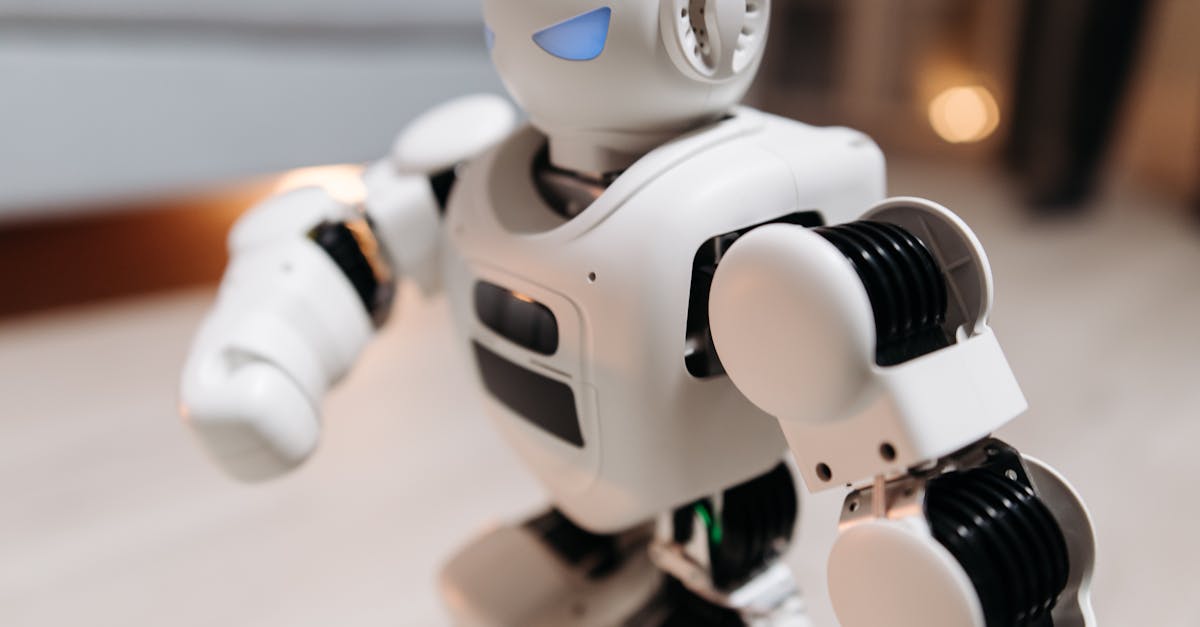
Researchers at the Indian Institute of Technology (IIT) Madras have officially unveiled Arya-3, a new bipedal humanoid robot tailored for academic research and prototyping in India. Announced last week, the platform marks a significant step toward indigenous capability in humanoid robotics, addressing the critical need for affordable hardware in the country's growing robotics ecosystem. The launch positions India closer to self-reliance in developing advanced humanoid systems for diverse applications.
Arya-3 features 42 degrees of freedom and stands 1.6 meters tall. The robot utilizes high-torque density actuators with embedded torque sensors, enabling precise force control essential for dynamic walking and manipulation tasks. The mechanical design emphasizes modularity, allowing researchers to swap end-effectors and sensor payloads easily. Powered by an NVIDIA Jetson Orin compute module, Arya-3 can walk at speeds up to 1.2 meters per second and sustain operations for four hours on a single charge. Development was led by the Department of Mechanical Engineering in collaboration with the Centre for AI and Robotics.
Pricing Strategy Targets Indian Academia
A key differentiator for Arya-3 is its pricing structure, designed to make humanoid research accessible to Indian institutions. While comparable research-grade humanoid robots from global manufacturers often exceed $100,000, Arya-3 is priced at ₹18 lakhs. This cost reduction is achieved through localized manufacturing of structural components and in-house development of power electronics. The custom parallel-jaw gripper delivers 40 Newtons of grasping force, sufficient for handling standard laboratory components and tools, with a total robot weight of 45 kilograms optimized for mobility.
IIT Madras has secured support from the Ministry of Electronics and Information Technology (MeitY) under the 'Bharat Robotics Initiative'. The institute plans to distribute 50 units to premier technical institutions, including IITs and NITs, over the next fiscal year. This move aims to lower the barrier to entry for humanoid research, fostering a new generation of Indian robotics engineers and reducing dependency on imported hardware.
Open-Source Software and Ecosystem
The Arya-3 ecosystem includes a comprehensive software stack built on ROS 2 (Robot Operating System). The team has released the kinematic and dynamic models under an open-source license, alongside custom control algorithms for balance and locomotion. Developers can access the hardware abstraction layer via standard APIs, facilitating rapid prototyping of AI-driven navigation and manipulation models. Furthermore, the software suite includes a simulation environment compatible with Isaac Sim and Gazebo, allowing researchers to train reinforcement learning policies in virtual environments before deployment on the physical hardware.
The research team is also launching a public dataset based on data collected from Arya-3's trials, which will be available for the global community. Documentation covers joint calibration, zero-point setting, and safety protocols for human-robot interaction. This open approach is intended to accelerate algorithm development and benchmarking for humanoid robots within the Indian context.
Industry Collaboration and Roadmap
Looking ahead, IIT Madras is partnering with domestic manufacturing firms to scale production. The roadmap includes Arya-4, which will introduce advanced haptic feedback and improved battery autonomy for longer operational cycles. The collaboration extends to the startup ecosystem, with IIT Madras offering a 'Research-in-a-Box' program for early-stage ventures. This initiative provides discounted access to Arya-3 units for startups developing AI models for logistics, healthcare, and domestic assistance, further stimulating the local innovation landscape. Industry stakeholders have expressed strong interest in deploying Arya-3 variants for smart manufacturing and elder care applications.
More in Reviews & Opinion