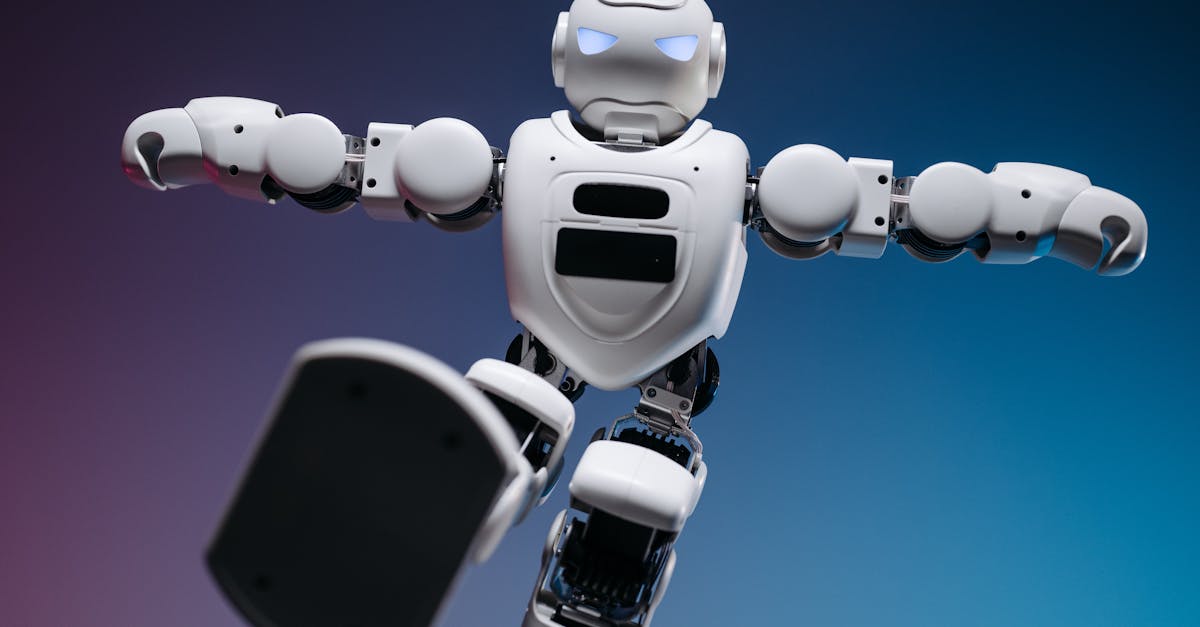
Figure AI: Hardware Validation, Pilot Metrics, and the Commercial Timeline
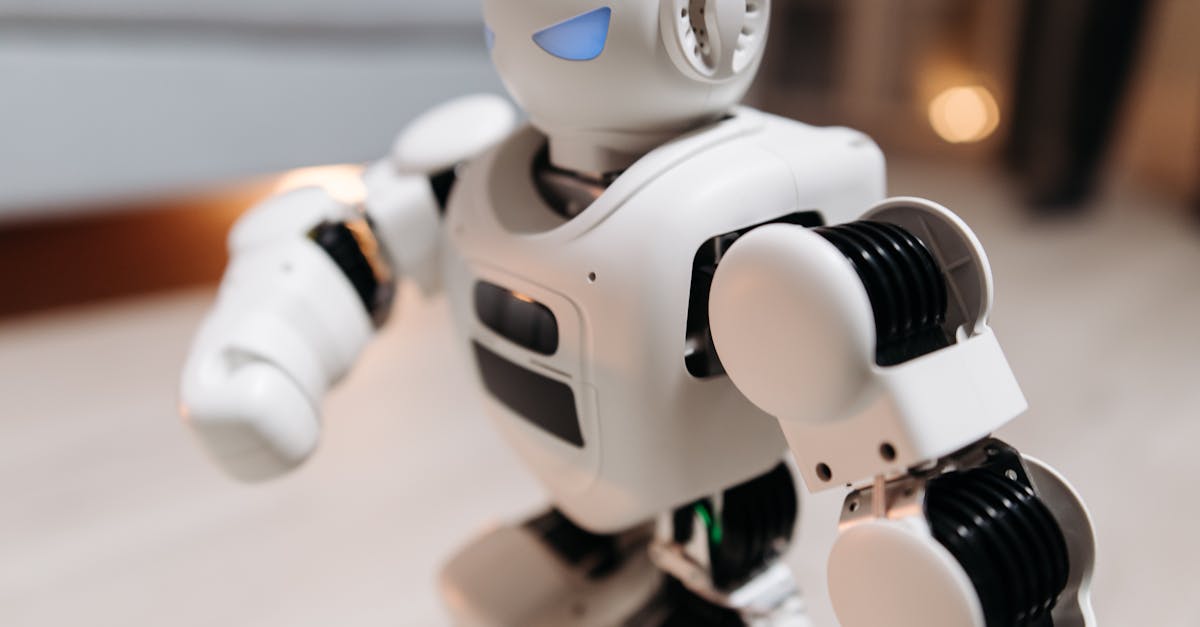
Hardware Validation, Pilot Metrics, and the Commercial Timeline
Origins and Capital Structure
Figure AI was founded in 2022 by Brett Adcock, a serial entrepreneur with prior exits in the fintech sector. The company has consistently positioned itself at the intersection of advanced actuation hardware and large-scale AI models. Early funding rounds attracted capital from OpenAI, Microsoft, Nvidia, Amazon, and several institutional investors, culminating in a Series B valuation that placed the company in the upper tier of humanoid robotics startups. However, capital deployment does not equate to production readiness. The editorial standard at RobotWale requires shipping hardware and pilot data before validating commercial claims, and Figure AI's progress must be evaluated against that benchmark.
Figure 02 Specifications and Manufacturing Pipeline
The Figure 02 platform represents the company's second-generation humanoid robot. According to manufacturer specifications, the unit stands approximately 5 feet 10 inches tall, weighs 155 pounds (70 kg) empty, and supports a 45-pound (20 kg) payload. The kinematic structure utilizes 28 degrees of freedom, with custom-designed actuators that integrate torque sensors and high-bandwidth control loops. Tactile sensing is distributed across the hands and fingers, enabling fine manipulation tasks that earlier prototypes struggled to stabilize.
Manufacturing has shifted from in-house prototyping to a partnership with Foxconn Technology. The agreement, announced in 2023, designates Foxconn facilities for actuator production and final assembly. This move addresses a common bottleneck in the humanoid sector: the transition from benchtop prototypes to repeatable, calibrated hardware. Foxconn's involvement suggests a focus on precision machining, motor winding consistency, and thermal management in the joint modules. Independent teardowns and factory footage released by both parties confirm the use of harmonic drives, custom PCB motor controllers, and standardized wiring harnesses to reduce assembly variance.
Shipping status remains the critical metric. As of the latest public disclosures, Figure AI has delivered Figure 02 units to pilot partners for operational testing. The company has not announced mass production volumes or factory throughput rates. Until independent logistics reports or customs data confirm sustained hardware shipments, claims of commercial readiness should be treated as pre-production.
Software Stack and AI Integration
Figure AI's software architecture is built around a perception-to-action pipeline that fuses vision, force feedback, and proprioceptive data. The company has publicly disclosed collaboration with OpenAI to integrate large language models and diffusion-based action planners into the robot's control stack. This integration allows the Figure 02 to interpret natural language commands and decompose them into sequential motor primitives. However, the editorial standard separates model capability from robotic execution. A language model can generate a valid action sequence; the hardware must execute it without latency, slippage, or thermal shutdown.
The robot operates on a distributed computing architecture, with edge inference running on onboard GPUs and cloud-assisted task planning. Figure AI has open-sourced portions of its perception and motion planning code, which aligns with industry trends toward reproducible benchmarks. Independent developers have replicated basic navigation and grasp tasks using the released SDK, though full manipulation fidelity remains dependent on the specific actuator calibration and sensor fusion parameters.
Pilot Deployments and Performance Verification
Pilot deployments serve as the second tier of evidence in RobotWale's grading framework. Figure AI has conducted field trials with industrial partners, most notably BMW Group's Dingolfing plant in Germany. The deployment focused on logistics and warehouse tasks: pallet handling, bin sorting, and component transport. BMW's official reporting indicated that the Figure 02 units operated alongside human workers for defined shifts, with success measured by task completion rates, safety incidents, and uptime.
Metric transparency is limited in early humanoid pilots. Manufacturer press releases typically report qualitative outcomes, while independent reporting highlights recurring challenges: battery life constraints, terrain adaptation in uneven factory floors, and the computational overhead of real-time perception. Figure AI's public data shows improved stability in the Figure 02 compared to the Figure 01, particularly in dynamic balance and hand dexterity. However, consistent multi-hour operation without manual intervention remains a threshold that the broader industry has not yet crossed.
Additional pilot partners include Michelin and various logistics operators. These deployments test the robot in controlled warehouse environments, where task repetition is high and environmental variables are minimized. Success in these settings is necessary but not sufficient for general factory or retail deployment. The editorial position remains that pilot data must be published with clear KPIs, failure modes, and operator feedback before scaling claims are validated.
Supply Chain and Actuator Production
The humanoid robotics supply chain is heavily constrained by precision motor manufacturing, torque density requirements, and sensor availability. Figure AI's partnership with Foxconn addresses actuator production at scale, but component lead times for custom gears, magnetic encoders, and high-current drivers remain a bottleneck. The company has disclosed efforts to vertically integrate certain actuator components, reducing reliance on third-party suppliers. This strategy aligns with industry best practices but requires extended validation periods to ensure torque consistency and thermal performance across production batches.
Power systems also dictate operational limits. The Figure 02 utilizes high-density lithium-polymer battery packs, with swap-and-charge protocols designed for shift-based operations. Manufacturer data indicates a typical operational window of 4 to 6 hours per charge under mixed workload conditions. This duration is acceptable for pilot phases but falls short of the 8-hour continuous shift requirement for many industrial applications. Battery management software and thermal regulation are actively being optimized, but hardware limitations will dictate deployment scope until next-generation cells become commercially viable.
Commercialization, Pricing, and India Market Context
Figure AI has not published official pricing for the Figure 02 platform. Industry estimates, derived from actuator costs, compute hardware, sensor arrays, and assembly overhead, place the landed cost for early units in the $100,000 to $150,000 range. When converted to Indian Rupees and adjusted for import duties, logistics, and compliance, the estimated landed cost for a single unit ranges between INR 85 Lakhs and INR 1.1 Crore. This figure does not include software licensing, maintenance contracts, or facility modifications required for human-robot integration.
India availability remains restricted. Figure AI has not announced official distribution channels, local assembly partnerships, or BIS certification pathways for the Figure 02. Importing the platform would require standard machinery import licensing, customs clearance under HS code 8479 (robots for industrial purposes), and adherence to electrical safety standards. Indian manufacturers exploring humanoid integration currently rely on domestic collaborative robots and autonomous mobile robots, which offer lower upfront costs, established service networks, and faster deployment timelines.
Local assembly prospects depend on several factors: tariff structures for complete vs. semi-knocked-down kits, component localization requirements, and the availability of skilled robotics engineers for calibration and maintenance. Until Figure AI establishes an India presence or partners with domestic integrators, the platform will remain a pilot-stage import rather than a commercial off-the-shelf solution. Indian enterprises should monitor BIS certification progress, pilot data publications, and any announcements regarding local service centers before considering procurement.
References
- Figure AI Official Website: https://www.figure.ai
- Foxconn Technology and Figure AI Partnership Announcement: https://www.foxintech.com/foxintech/news/foxconn-technology-and-figure-ai-announce-partnership-to-manufacture-humanoid-robots
- BMW Group and Figure AI Pilot Deployment Report: https://www.bmwgroup.com/en/latest/stories/2024/03/figure-ai-bmw-group-partnership.html
- OpenAI and Figure AI Collaboration Details: https://openai.com/blog/figure-ai-openai-collaboration
- Nvidia Series B Funding Participation: https://nvidia.com/en-in/about-nvidia/newsroom/2024/03/nvidia-joins-figure-ais-series-b-funding-round/
- Reuters Coverage of Figure AI Hardware and Pilots: https://www.reuters.com/technology/figure-ai-humanoid-robots/
- Bloomberg Industry Analysis on Humanoid Robotics Supply Chain: https://www.bloomberg.com/news/articles/humanoid-robotics-manufacturing
✓ Key takeaways
- •Hands-on view of Figure AI: Hardware Validation, Pilot Metrics, and the Commercial Timeline inside our Figure AI library.
- •Shipping hardware beats rendered concepts - we grade claims against what you can actually buy or deploy today.
- •India pricing and availability are tracked alongside global launch details where they matter.
Related articles
More in Figure AI →